

Yes, you can usually keep exercising outdoors in winter with exercise-induced asthma, but cold, dry air makes it easier to trigger. The condition doctors now call exercise-induced bronchoconstriction (EIB) is a temporary narrowing of the airways caused by breathing hard during exercise, and dry winter air speeds up the water and heat loss that sets it off. The American Thoracic Society (ATS) guideline recommends an interval or mixed warm-up for everyone with EIB and suggests a mask or scarf that warms and humidifies the air in cold weather. Medicines your clinician prescribes come on top of that.
Below: why winter air is a trigger, the symptoms, how EIB is confirmed, what the ATS guideline and US allergy groups say helps, and the signs that need emergency care. This is general information, not a treatment plan. Follow your own clinician's plan.
What is exercise-induced bronchoconstriction?
The ATS defines EIB as "acute airway narrowing that occurs as a result of exercise." It is common in people with asthma: the American College of Allergy, Asthma and Immunology (ACAAI) says as many as 90% of people with asthma also have EIB. But you don't need an asthma diagnosis to have it. The ATS guideline notes that prevalence of up to 20% has been reported in people without known asthma.
That is why many experts prefer "exercise-induced bronchoconstriction" to the older term "exercise-induced asthma." Exercise doesn't cause asthma. It triggers airway narrowing in people whose airways are prone to it. The 2016 practice parameter from the US allergy societies calls exercise-induced asthma "no longer a preferred term," though you'll still see it everywhere.
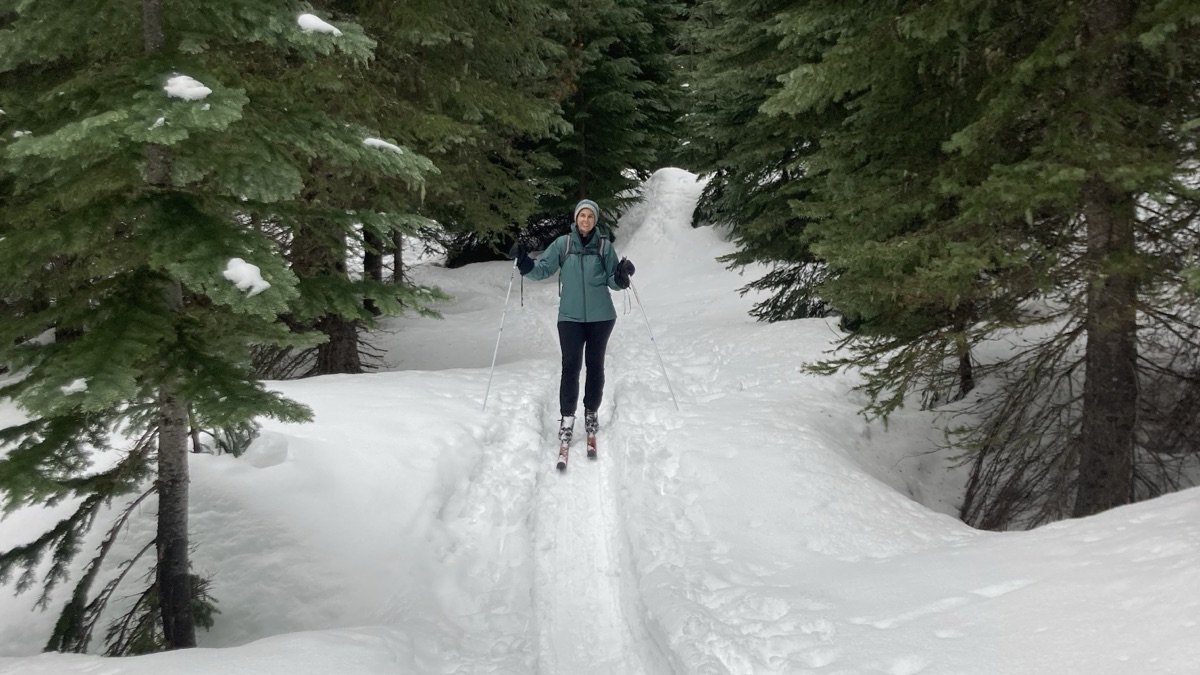
EIB is also common among athletes, especially in winter sports. When members of the 1998 U.S. Winter Olympic Team were tested after a real or simulated competition, 23% of athletes across seven sports met the EIB criterion, including 50% of cross-country skiers. Some of those athletes went on to win Olympic medals in Nagano. With the right plan, EIB doesn't have to keep you off the trail.
Why cold, dry air triggers it
During hard exercise you breathe far more air. Your airways have to warm that air and add moisture to it before it reaches your lungs. In winter, they lose water and heat quickly. The ATS guideline names the two most important factors behind EIB as "the sustained high-level ventilation reached during exercise and the water content of the air inspired."
Dryness seems to matter more than cold itself. ACAAI explains that cold air usually holds less moisture than warm air, and "more recent studies indicate that the dryness of the air, rather than the temperature, is more likely the trigger." When the lining of the airways dries out, cells in the airways release chemical signals such as histamine and leukotrienes, and the muscles around the airways tighten.
The pattern shows up in sports. The ATS links the high rates of airway problems in Nordic skiers to "high ventilation inhalation of cold, dry air," and the roughly 30% EIB rate reported in ice rink athletes to cold, dry air combined with exhaust from fuel-powered ice resurfacers. The CDC lists both "cold, dry air" and exercise that leads to very fast breathing as asthma triggers.
Symptoms and timing
Common symptoms of EIB include:
- Coughing during or after a workout
- Wheezing (a whistling sound when you breathe out)
- Chest tightness
- Shortness of breath
Timing is a clue. The American Academy of Allergy, Asthma & Immunology (AAAAI) says symptoms may start 5–20 minutes after you begin exercising, "but usually will have symptoms after exercise stops." The ATS guideline says the airway narrowing occurs mostly after a short burst of hard breathing ends and, without treatment, lasts 30–90 minutes. ACAAI adds that symptoms can continue for 10–15 minutes after you finish. In children, wheezing after activity is often the first sign of asthma.
Symptoms alone can mislead. The ATS states that symptoms "are neither sensitive nor specific" for EIB: some athletes with EIB have no symptoms, and many people who get breathless during exercise don't have EIB. Being out of shape can cause breathlessness too, and the AAAAI lists vocal cord dysfunction, acid reflux, panic and heart failure among the conditions that can masquerade as EIB. That is why testing matters.
How EIB is diagnosed
The ATS guideline is clear that "the diagnosis of EIB is established by changes in lung function provoked by exercise, not on the basis of symptoms." In practice, that usually means:
- Baseline spirometry. You blow hard into a tube to measure FEV1, the amount of air you can force out in one second. If your resting results are normal or near normal, the 2016 practice parameter says further testing with a standardized exercise or breathing challenge should follow.
- A challenge test. You run on a treadmill or ride a bike hard enough to raise your heart rate to 80–90% of your predicted maximum, usually while breathing dry air with a nose clip, and hold that level for another 4–6 minutes. Some labs use substitute tests that may be easier to run, such as eucapnic voluntary hyperpnea (fast breathing of dry air while resting), inhaled salty mist or dry powder mannitol.
- Repeat spirometry. FEV1 is measured again, usually at 5, 10, 15 and 30 minutes after the challenge.
| Fall in FEV1 after exercise | What it means |
|---|---|
| Less than 10% | Does not meet the usual EIB criterion |
| 10% to less than 25% | Mild EIB |
| 25% to less than 50% | Moderate EIB |
| 50% or more | Severe EIB |
Many labs use a 15% fall as the cutoff because it is more specific, and one negative test doesn't always rule EIB out. The guideline says two tests may be needed. Before testing, ask whether you should pause any inhalers or other medicines, because recent medication and recent warm-up exercise can change the result.
What helps: what the guidelines say
The 2013 ATS clinical practice guideline is still the main EIB-specific guideline in the US. The 2020 update to the national asthma guidelines from the NHLBI's National Asthma Education and Prevention Program focused on six other priority topics. The table below summarizes the ATS recommendations in plain language. "Strong" means the panel was confident that benefits outweigh downsides for most people; "weak" (a suggestion) means it was less certain.
| Measure | ATS position | Evidence quality |
|---|---|---|
| Interval or combination warm-up before planned exercise | Recommended for all patients (strong) | Moderate |
| Mask or device that warms and humidifies air in cold weather | Suggested (weak) | Low |
| Short-acting inhaled bronchodilator (SABA) before exercise | Recommended (strong) | High |
| Daily inhaled corticosteroid if symptoms continue despite SABA, or SABA is needed daily | Recommended (strong) | Moderate |
| Daily leukotriene receptor antagonist in the same situation | Recommended (strong) | Moderate |
| Daily long-acting bronchodilator (LABA) used alone | Recommended against (strong) | Moderate |
| Inhaled corticosteroid only right before exercise | Recommended against (strong) | Moderate |
| Antihistamine | Suggested only if you have allergies (weak); recommended against without allergies (strong) | Moderate |
| Low-salt diet, fish oil or vitamin C | Suggested for people interested in diet changes (weak) | Moderate to low |
1. Warm up with intervals, not just an easy jog
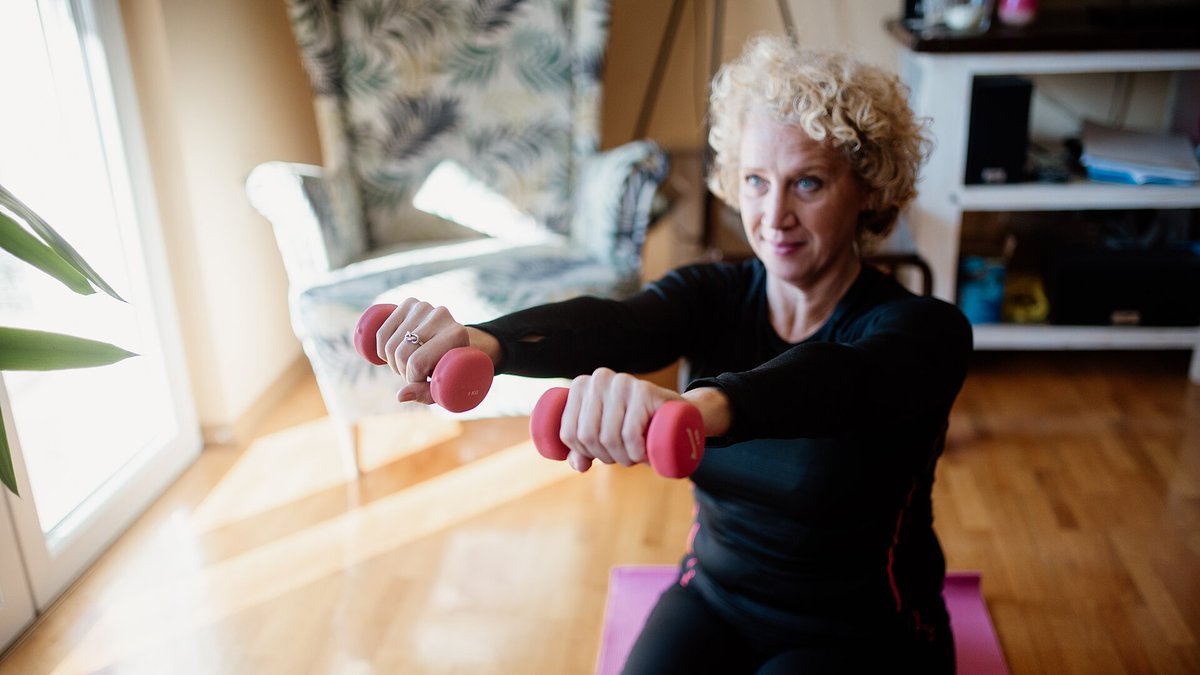
Warming up is the one measure the ATS recommends for everyone with EIB. A warm-up can trigger a "refractory period," a window when the airways react less to exercise. The guideline describes a typical warm-up as 10–15 minutes of moderately vigorous exercise, which reduces EIB for about the next 2 hours. Interval and combination warm-ups (mixing easy work with short, harder bursts) were the only types that produced statistically significant improvement in the trials it reviewed. ACAAI suggests about 15 minutes of gentle exercise before you go harder.
On a cold day, consider doing the first part of your warm-up indoors, then a few short pickups outside before your main workout. The refractory effect doesn't happen for everyone, so it complements, rather than replaces, any medicine your clinician prescribes. The AAAAI also recommends a cool-down at the end.
2. Cover your mouth and nose
The ATS suggests that people with EIB who exercise in cold weather routinely use a mask or similar device that warms and humidifies the air they breathe. The recommendation is weak because the evidence is limited, but it is low-risk. ACAAI's advice is simpler: "Cover your mouth and nose with a scarf or face mask when you exercise in cold weather," and try to breathe through your nose, which warms the air.
One small study at National Jewish in Denver tested a heat-exchanger mask in 13 people with asthma running on a treadmill in air at −13°F to 5°F (−25°C to −15°C). Their FEV1 fell an average of 19% with a placebo mask but only 4.3% with the active mask. In a second, even smaller test of 5 people, the mask worked at least as well as pre-exercise albuterol. A scarf or neck gaiter is a low-tech version of the same idea. For layering details, see our guide to what to wear running in cold weather.
3. Pick the right activity and setting
ACAAI says the activities least likely to cause EIB symptoms are walking, hiking and recreational biking, while sports that "require constant activity or are done in cold weather" are the most likely. On the coldest, driest days, or when pollution or pollen is high, the AAAAI says it is wise to limit exercise. Moving a hard workout inside is a reasonable trade. Our list of indoor workouts for bad air days works just as well for bitter cold.
Swimming is often easier because the warm, humid air helps, according to ACAAI. Indoor pools are not a sure bet, though: the ATS notes 11–29% rates of asthma and EIB in competitive swimmers, linked to chlorine by-products in the air. Ice rinks have their own problem with cold air plus engine exhaust.
Don't forget hard chores. Shoveling heavy snow means hard breathing in cold air, so use the same plan you would for a workout. The heart risks of snow shoveling are a separate reason to pace yourself.
4. Stay fit overall
The ATS notes that better general fitness may help, because a fitter body needs to breathe less air at the same workload. The guideline also calls losing weight if you have obesity prudent. The NHLBI's message is the same: even though exercise is a trigger for some people, "you should not avoid it." If you're building up for a winter sport, our ski season prep workout starts gradually.
5. Medicines your clinician may prescribe
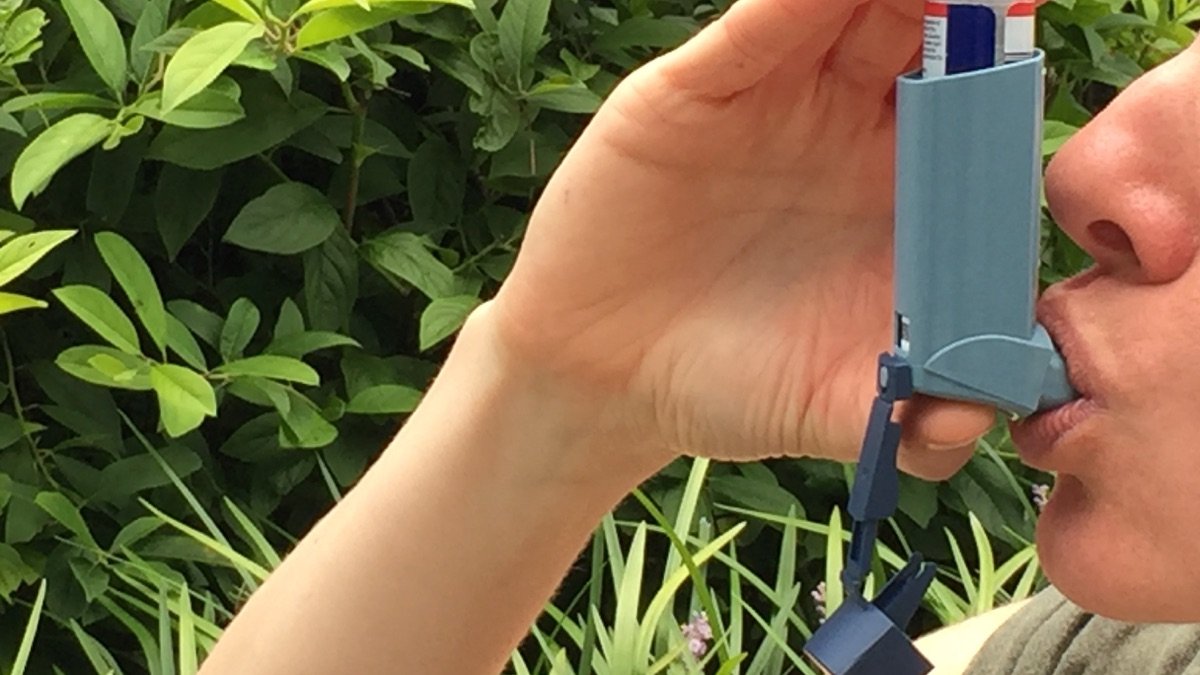
Medicine choices depend on whether you have underlying asthma, your lung function and your preferences, so they belong in a conversation with your clinician. For general understanding, here is how the ATS guideline lays out the options:
- First line: a short-acting bronchodilator before exercise. A SABA such as albuterol relaxes the airway muscles. The guideline says it is typically inhaled 15 minutes before exercise, usually protects for 2–4 hours, and should be used less than daily on average. It doesn't work for everyone: it may fail to prevent EIB in 15–20% of people with asthma.
- If you need it daily or still have symptoms: a daily controller. Frequent bronchodilator use can lead to tolerance, so the guideline recommends adding a daily inhaled corticosteroid or a daily leukotriene receptor antagonist such as montelukast. Full benefit from an inhaled steroid may take 2–4 weeks.
- Not on its own: long-acting bronchodilators. The ATS recommends against daily use of a LABA as the only medicine because of concerns about serious side effects.
- Montelukast safety. In 2020 the FDA added a boxed warning to montelukast about serious mental health side effects, including suicidal thoughts or actions. The FDA notes that montelukast is approved to prevent exercise-induced asthma in people 6 and older. Ask your clinician about the risks and benefits, and report mood or behavior changes.
- Other options play a smaller role. Mast cell stabilizers are strongly supported but, as the guideline notes, are no longer available in the United States. Antihistamines are suggested only for people who also have allergies.
The guideline dates from 2013, and the ATS itself says the overall plan should be discussed with your physician and adjusted over time. Your clinician may choose a different approach based on your full asthma picture. Keep your quick-relief inhaler with you on every outdoor workout. If you compete, check your sport's anti-doping rules for any medicine you use, as ACAAI advises.
The ATS also lists low-salt diets, fish oil and vitamin C as weak suggestions for people interested in diet changes. The evidence is limited, and the 2016 practice parameter notes that the benefit of omega-3 fatty acids "has been challenged." Talk to your clinician before starting supplements.
A cold-day checklist
- Check the forecast, wind chill and air quality before you head out. On bitter or high-pollution days, go indoors.
- If your clinician prescribed a pre-exercise inhaler, take it as directed.
- Warm up for about 10–15 minutes, ideally starting indoors, and add a few short, harder intervals.
- Cover your mouth and nose with a scarf, neck gaiter or cold-weather mask, and breathe through your nose when you can.
- Carry your quick-relief inhaler and tell a training partner what to do if you have trouble breathing.
- Cool down gradually, and keep your face covered when you stop, since symptoms often show up after exercise. If you run before sunrise, our tips for walking and running in the dark apply too.
When to see a doctor
Make an appointment with a primary care doctor, allergist or lung specialist if:
- You cough, wheeze, feel chest tightness or get unusually short of breath during or after exercise, and you've never been evaluated.
- You have an EIB or asthma diagnosis but still get symptoms despite following your plan.
- You need your quick-relief inhaler more often than usual, or daily, before or after workouts.
- Your child wheezes or coughs after play or sports.
- Your breathing trouble doesn't improve with your usual plan or doesn't fit the usual pattern. Other conditions, such as vocal cord dysfunction or heart problems, can look like EIB.
The AAAAI says many people with EIB and asthma benefit from a written treatment plan, often called an asthma action plan, that covers daily care and what to do when symptoms flare.
Emergency warning signs: call 911
EIB is usually mild to moderate, but the ATS notes that severe episodes can happen and, rarely, can be fatal. Stop exercising and use your quick-relief inhaler as your action plan directs. The NHLBI says to call 911 if your medicines are not relieving your symptoms or if breathing is still very hard. MedlinePlus lists these signs that need emergency care:
- Extreme difficulty breathing, or severe shortness of breath at rest
- Bluish color to the lips and face
- Drowsiness or confusion
- Severe chest pain
- Rapid pulse
- Severe anxiety due to shortness of breath
- A peak flow reading below 50% of your personal best, if you use a peak flow meter
Chest pain or pressure during cold-weather exertion can also be a heart problem. Don't assume it is just asthma.
FAQ
Is it safe to run in cold weather with exercise-induced asthma?
For most people with well-managed EIB, yes. The AAAAI says that with proper evaluation and treatment, the vast majority of children and adults can fully take part in exercise. Use a structured warm-up, cover your mouth and nose, carry your inhaler and follow your clinician's plan. Move inside on extremely cold or polluted days.
Why do I cough after a winter run even though I felt fine during it?
Airway narrowing in EIB mostly occurs after you stop, not while you're running. A cough after cold-weather exercise can be a sign of EIB, but it has other possible causes too. If it happens regularly, ask your doctor about testing.
This article is general information, not medical advice. It isn't a substitute for advice from a doctor or other qualified health professional, especially if you have asthma, another medical condition or take medication.
Sources
- Parsons JP, Hallstrand TS, Mastronarde JG, et al. An Official American Thoracic Society Clinical Practice Guideline: Exercise-induced Bronchoconstriction, American Journal of Respiratory and Critical Care Medicine 2013;187(9):1016–1027 (full text, ATS).
- Weiler JM, Brannan JD, Randolph CC, et al. Exercise-induced bronchoconstriction update—2016, Journal of Allergy and Clinical Immunology 2016;138(5):1292–1295.
- Wilber RL, Rundell KW, Szmedra L, et al. Incidence of exercise-induced bronchospasm in Olympic winter sport athletes, Medicine & Science in Sports & Exercise 2000;32(4):732–737.
- Beuther DA, Martin RJ. Efficacy of a heat exchanger mask in cold exercise-induced asthma, Chest 2006;129(5):1188–1193.
- NAEPP Expert Panel Working Group. 2020 Focused Updates to the Asthma Management Guidelines, Journal of Allergy and Clinical Immunology 2020;146(6):1217–1270 (NHLBI).
- American College of Allergy, Asthma and Immunology: Exercise-Induced Bronchoconstriction (EIB).
- American Academy of Allergy, Asthma & Immunology: Exercise-induced bronchoconstriction.
- NHLBI: Asthma, symptoms, asthma attacks and living with asthma.
- MedlinePlus (National Library of Medicine): Asthma.
- CDC: Controlling Asthma.
- FDA Drug Safety Communication: FDA requires Boxed Warning about serious mental health side effects for asthma and allergy drug montelukast (March 4, 2020).
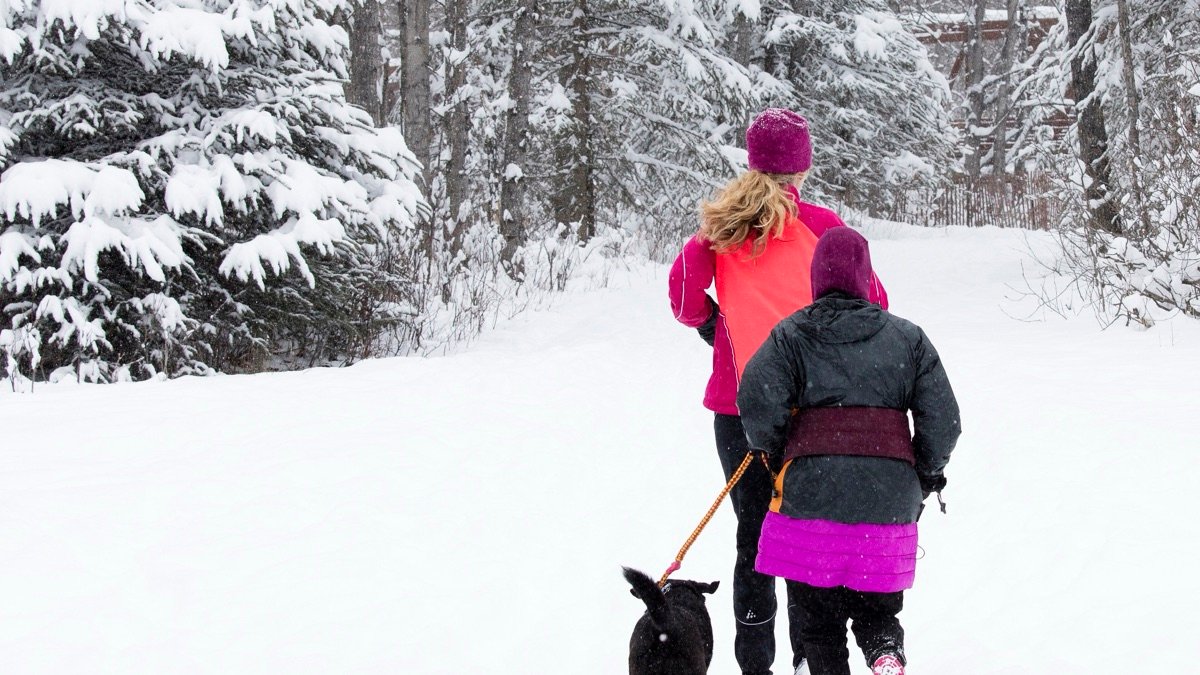
- Banner photo: Winter jogging on BLM Campbell Tract trails (29664733916).jpg by Bureau of Land Management Alaska, public domain (U.S. government work), via Wikimedia Commons (cropped).
- Photo: Woman cross country skis in Mount Hood National Forest.jpg by Mattsjc, CC BY 4.0, via Wikimedia Commons (cropped).
- Photo: Adult Using an Asthma Inhaler (29251369035).jpg by NIAID, CC BY 2.0, via Wikimedia Commons (cropped).