

To walk or run safely in the dark, make drivers recognize you as a person from far away, choose lit routes with sidewalks, and keep your eyes and ears on traffic. In practice, that means retroreflective bands on your ankles, knees or wrists, not only a vest, plus a light. Walk or run on a sidewalk or path when there is one, and face oncoming traffic on the shoulder when there isn't. Cross at lit crosswalks, keep headphones quiet or out, and move icy or very dark sessions indoors.
This matters more from this weekend. Daylight saving time ends at 2 a.m. local time on Sunday, November 1, 2026, according to NIST, so after-work walks and runs that ended in daylight in October will now end at dusk or in full darkness. Our guide to keeping your workouts and sleep on track when daylight saving time ends covers the clock change itself. This article covers what to do once you're out in the dark.
What the crash data show about walking in the dark
In federal crash statistics, a runner is a pedestrian. NHTSA defines a pedestrian as "any person on foot, walking, running, jogging, hiking, sitting, or lying down." Its 2024 pedestrian fact sheet, published in June 2026, reports that 7,080 pedestrians were killed in U.S. traffic crashes in 2024. That is about 19 a day, and 18% of all traffic deaths. Three in four of those deaths happened in the dark.
| Factor | Share of pedestrian deaths |
|---|---|
| In the dark | 76% (daylight 20%, dusk 2%, dawn 2%) |
| Fall months (Sept.–Nov.), 6:00–8:59 p.m. | 29%, the most common 3-hour window; 9:00–11:59 p.m. was next at 19% |
| Urban areas | 84% (rural 16%) |
| Not at an intersection | 73% (intersections 18%, other locations 9%) |
| Alcohol involved (driver and/or pedestrian) | 43% of fatal pedestrian crashes |
| Hit-and-run driver | 24% |
The Governors Highway Safety Association's 2025 preliminary report (July 2026) analyzed the same 2024 federal data and adds several details that matter for route choice:
- Sidewalks: 62.2% of pedestrian deaths happened where no sidewalk was noted.
- Big roads: principal and minor arterials, the main through roads that carry the most traffic, accounted for more than half of deaths where the road type was known.
- Rural roads: most crashes happen in cities, but rural ones are more often fatal: 15.1% of rural pedestrian crashes were fatal, compared with 9.2% in urban areas. GHSA points to higher speeds, fewer sidewalks and longer trips to trauma care.
The trend is improving. GHSA projects 6,732 pedestrian deaths in 2025, 7% fewer than in 2024 and the third yearly decline in a row, though still 5% above 2019.
Part of the problem is simply that there is less light. A University of Michigan study in Accident Analysis & Prevention compared U.S. fatal crashes from 1987 to 1997 before and after clock changes, at times of day that switch abruptly from light to dark or back. Pedestrian crashes were the most sensitive to light level, "in some cases showing up to seven times more risk at night over daytime." These are population figures, not your personal odds, but they show where the risk sits: after dark, away from intersections, on bigger and faster roads.
Drivers see you later than you think
If you can see a car's headlights, it's easy to assume the driver can see you. Experiments by researchers at Clemson University and Queensland University of Technology show how wrong that can be:
- In a 2004 study, 20 volunteers walked in place on a roadside shoulder and pressed a button when they thought an approaching driver could first recognize them. They "overestimated their visibility and dramatically underestimated the benefit of conspicuity treatments" such as reflective clothing.
- In a 2005 study, 20 drivers (10 young, 10 older) drove a closed circuit at night. With low beams, glare and a pedestrian in black clothing, they recognized only 5% of pedestrians. They recognized 100% of pedestrians wearing retroreflective markings in a "biological motion" layout (described below) when there was no glare. Average recognition distances ranged from 0 m (older drivers, low beams, black clothing) to 220 m, or 722 feet (younger drivers, high beams, biomotion markings).
- In a 2015 open-road study, drivers' estimates of how far away they could see a roadside pedestrian were, on average, more than three times the distance at which they actually recognized one. They also wrongly judged that headlight glare wouldn't affect their ability to see a pedestrian in a reflective vest.
The samples were small, so the exact distances won't match your street. The finding is consistent, though: in dark clothing, an oncoming driver may recognize you very late, or not at all.
How to be seen: reflective, fluorescent and lights
Fluorescent is for daylight; retroreflective is for headlights
Neon yellow and orange fabrics stand out in daylight and at dusk. After dark, a fluorescent fabric scatters headlight in all directions, like any other light-colored cloth, so little of it gets back to the driver. Retroreflective material works differently. A 2024 Human Factors paper explains that it reflects "light back towards the source of the illumination," which means the beam from a car's headlights comes straight back toward the driver. Its two experiments found that people underestimate how bright retroreflective materials look and overestimate fluorescent ones. In a 2013 study of cyclists, participants "mistakenly judged that a fluorescent vest that did not include retroreflective material would enhance their night-time conspicuity."
NHTSA's advice for pedestrians matches: wear bright clothing during the day, and "wear reflective materials or use a flashlight at night." A neon top is still useful at dusk. After dark, it needs retroreflective strips or patches to do much good.
Put reflectors where you move ("biomotion")
People recognize a moving human body from just a few moving points of light, an effect researchers call "biological motion," or biomotion. Reflective markings on the ankles, knees, wrists and elbows use it, so a driver sees a person walking or running rather than an unidentified bright spot.
- A 2007 road test found that drivers recognized pedestrians at night significantly better with retroreflective markings on the limb joints than on the torso, and the benefit was greater for middle-aged and older drivers.
- A 2009 study with 24 drivers found that biomotion markings still beat a reflective vest when the pedestrian was surrounded by other points of light, such as the clutter of a city street.
- In a 2017 eye-tracking study of 14 young drivers, a pedestrian wearing a reflective vest plus biomotion markers was recognized from 319 m (about 1,050 feet), compared with 185 m (about 605 feet) for the vest alone.
A 2016 review by the same research groups sums it up: reflective markings on the extremities work best, and markings on the torso, such as vests, "are less effective." All of these were small, controlled studies, and none measured actual crashes. Still, the advice they point to is cheap and easy to follow:
- Wear reflective bands or slap bands on both ankles. They are the cheapest, easiest way to put reflective material on a moving joint.
- Choose tights, shoes or jackets with reflective details on the lower legs, heels and sleeves.
- Keep a vest if you like it, but treat it as an add-on, not the whole plan.
- Check that a jacket, backpack or long top doesn't cover your reflective bits.
Add a light
Reflective material only works when a headlight hits it. A light of your own also makes you visible to drivers whose headlights aren't on you yet, such as cars turning or pulling out, and it lets you see the ground. Angle a headlamp or chest light slightly down, not into drivers' eyes, and add a small blinking light on your back. Clip-on lights on your ankles or wrists follow the biomotion logic, but the studies above tested reflective markers, not lights.
Pick a safer route
Where you go after dark matters as much as what you wear. NHTSA's safety reminders and the GHSA data point to the same choices:
- Use sidewalks and paths. NHTSA's first rule is to walk on a sidewalk or path when one is available. Most pedestrian deaths (62.2%) happened where no sidewalk was noted.
- No sidewalk? Face traffic. If you have to use the road, walk or run on the shoulder facing oncoming traffic, as NHTSA advises. You can see cars coming and step off the road if you need to. (Cyclists are the opposite: they ride with traffic.)
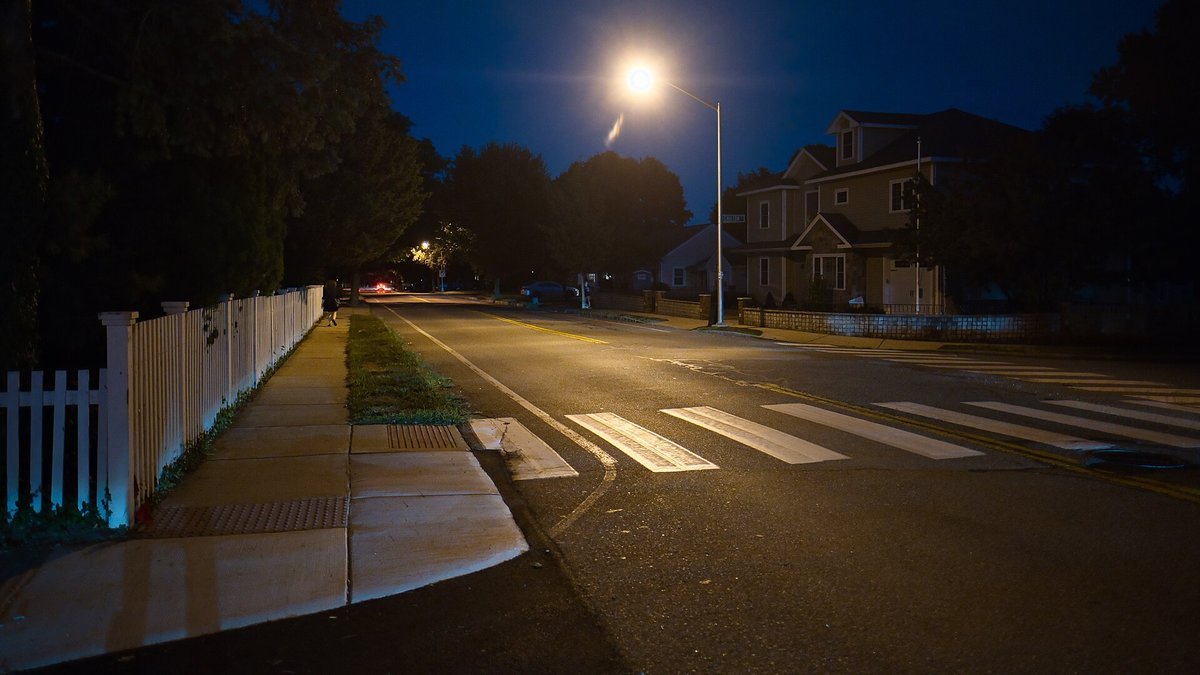
- Prefer lit streets. The Federal Highway Administration lists roadway lighting as a proven safety countermeasure that can reduce nighttime injury pedestrian crashes at intersections by up to 42%. It also notes that good lighting helps pedestrians' personal security.
- Cross where drivers expect you. Use crosswalks or intersections. If there isn't one, NHTSA says to pick a well-lit spot, wait for a gap that gives you enough time and keep watching as you cross. Most pedestrian deaths (73%) happen away from intersections.
- Avoid fast, wide roads. Arterials carry the largest share of pedestrian deaths. A quieter residential loop or a lit park path is a better choice for an evening session than the shoulder of a four-lane road.
- Stick to routes you know. Try new routes in daylight first, when you can spot broken pavement, gaps in the sidewalk and dark stretches.
Keep your eyes and ears on the road
NHTSA tells pedestrians not to be distracted by "smart phones, audio players, and other devices that take your eyes and ears off the road." GHSA's report found that the share of fatal pedestrian crashes in which the pedestrian was reported as distracted has grown and now exceeds the share for drivers. Its definition includes headphone or earbud use. GHSA notes that states have been recording distraction more often, which may explain part of that rise.
- Headphones: on roads after dark, the safest choice is none. Otherwise, keep the volume low enough to hear a car behind you, or wear one earbud or open-ear headphones. Save podcasts for paths away from traffic.
- Phone: start your playlist or tracking app before you leave, and don't look at the screen while crossing.
- Drivers: NHTSA's advice is to "never assume a driver sees you" and to make eye contact with drivers as they approach. If a driver hasn't looked your way, wait.
- Alcohol: in an estimated 27% of fatal pedestrian crashes in 2024, the pedestrian had a blood alcohol level of .08 or higher. If you've been drinking at a party or holiday gathering, don't walk home along busy roads in the dark.
Watch your footing: curbs, leaves and ice
Darkness hides more than you from drivers. It hides potholes, raised sidewalk slabs, curbs, wet leaves and, later in the season, ice. A few habits help:
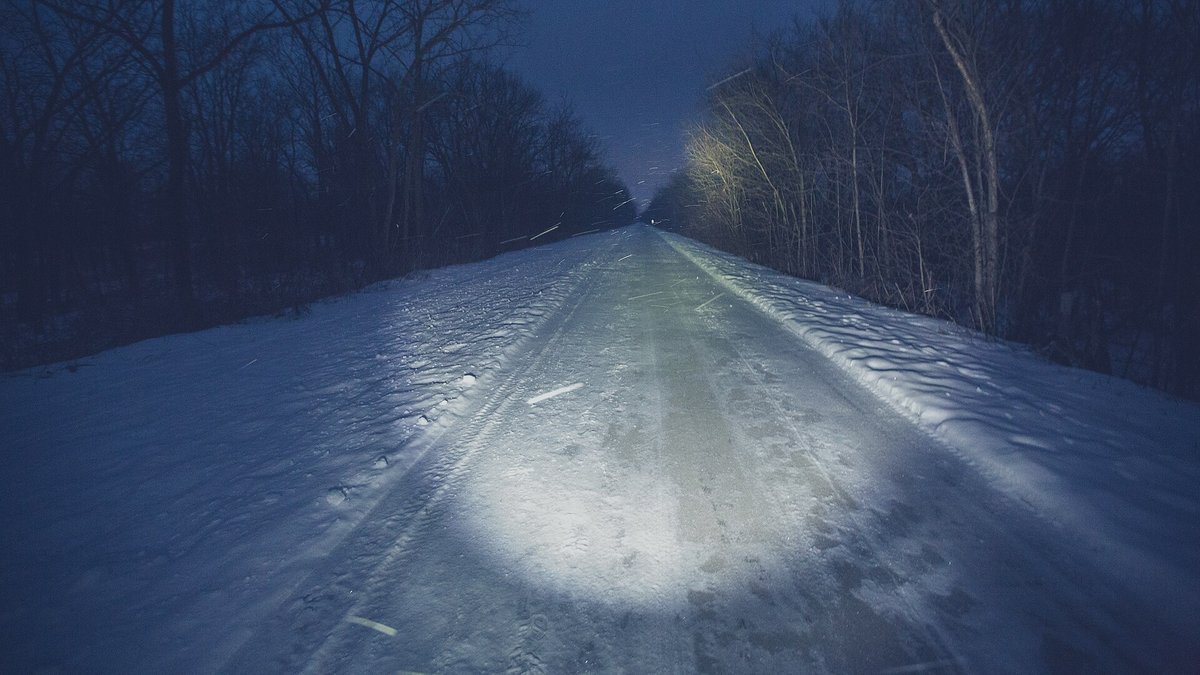
- Angle your headlamp or chest light to light the ground a few steps ahead, not the horizon.
- Slow down on unfamiliar or uneven stretches, and take shorter steps on wet leaves or slick spots.
- Expect ice where water collects and in shaded spots, such as on bridges, under trees, on curb ramps and on driveways.
- If the roads are glazed with ice, take the workout indoors. Our cold-weather running guide covers how to dress for each temperature, wind chill and handling snow and ice.
Personal safety: go with others and share your plan
Traffic is the risk the data measure best, but many people also worry about personal safety after dark. These are common-sense steps rather than research findings:
- Walk or run with a partner, a dog or a club group when you can. A group is also bigger and easier for drivers to see.
- Tell someone your route and when you expect to be back, or use your phone's or watch's live location sharing.
- Carry your phone and some form of ID or emergency contact information.
- Choose lit, populated routes over isolated trails, and turn around if a stretch feels wrong.
When to take it indoors or into daylight
Some sessions are better moved than toughed out. Consider a treadmill, a walking pad or a home workout on days when:
- sidewalks or roads are icy, or heavy rain or fog cuts visibility
- you have no lit route with sidewalks within reach
- the plan is a hard interval session that needs your full attention on effort, not traffic
- you're tired, unwell or have been drinking
If you're new to indoor walking, our walking pad beginner routine gives a simple two-week start. Another option is to move your outdoor walk or run to lunchtime or the weekend, when you get daylight too.
Night walking and running checklist
| Check | What to do | Why |
|---|---|---|
| Reflectors | Bands on both ankles; reflective details on legs, heels and sleeves | Moving joints help drivers recognize a person sooner than torso-only markings |
| Light | Headlamp or chest light angled down; blinking light on your back | Lets you see the ground and be seen by drivers not yet facing you |
| Route | Lit streets with sidewalks or lit paths; avoid wide, fast roads | Most pedestrian deaths occur where no sidewalk is noted |
| No sidewalk | Use the shoulder, facing oncoming traffic | You can see cars coming and step aside |
| Crossings | Use crosswalks or intersections; otherwise a well-lit spot with a long gap | That's where drivers expect pedestrians |
| Ears and eyes | Low volume or one earbud; phone away while crossing; eye contact with drivers | Never assume a driver has seen you |
| Your plan | Phone, ID, someone who knows your route and return time | Help can find you if something goes wrong |
| Conditions | Ice, fog, heavy rain or no safe route: go indoors | Poor footing and visibility add risk |
Who should take extra care
- Older walkers: in 2024, 19% of people 65 and older killed in U.S. traffic crashes were pedestrians (1,535 of 8,019), according to NHTSA. Older drivers in the 2005 study recognized a pedestrian in black clothing with low beams at an average distance of zero, even without glare. Assume that drivers of any age see you later than you think.
- Anyone on rural roads: fewer sidewalks and higher speeds make rural pedestrian crashes more often fatal. Reflectors, a light and facing traffic matter most here.
- People with balance, vision or joint problems: uneven ground is harder to judge in the dark. Lit paths, a strong headlamp and a slower pace help, and indoor walking is a good alternative.
Talk to your doctor before starting regular evening walks or runs if you've had a recent fall, get dizzy, have noticed your night vision getting worse or have a heart or lung condition, especially as the weather turns cold.
Frequently asked questions
Is it safe to run or walk at night?
It can be, but the risk is higher than in daylight. In 2024, 76% of U.S. pedestrian deaths happened in the dark. You can lower your own risk by being easy to recognize (reflectors on moving joints plus a light), choosing lit routes with sidewalks, facing traffic where there's no sidewalk and crossing at lit crosswalks.
Should I walk or run with traffic or against it?
Against it. If there's no sidewalk or path, NHTSA advises using the shoulder and facing oncoming traffic, so you can see cars coming. On a bike, it's the other way around: ride with traffic.
Is a reflective vest enough?
It beats dark clothing, but in controlled studies, adding reflective markings on the ankles, knees and wrists helped drivers recognize a pedestrian sooner than a vest alone. Add ankle bands and a light.
Do neon or fluorescent colors work at night?
Not on their own. Fluorescent colors stand out in daylight and at dusk. At night, retroreflective material, which sends headlight beams back toward the driver, is what makes you visible. Many running jackets and tops combine both.
This article is general safety information for adults, based on the published data and studies listed below. We did not test any gear, and nothing here is medical advice.
Sources
- NIST: Daylight Saving Time: 2026 end date and time.
- NHTSA: Pedestrians, 2024 Data (DOT HS 813 818, June 2026): fatalities, light condition, time, location, alcohol, age and safety reminders.
- Governors Highway Safety Association: Pedestrian Traffic Fatalities by State, 2025 Preliminary Data (July 2026): 2025 projection, sidewalks, roadway type, rural vs. urban, hit-and-runs and distraction.
- Federal Highway Administration: Proven Safety Countermeasures, Lighting.
- Sullivan JM, Flannagan MJ. The role of ambient light level in fatal crashes: inferences from daylight saving time transitions, Accident Analysis & Prevention 2002.
- Tyrrell RA, Wood JM, Carberry TP. On-road measures of pedestrians' estimates of their own nighttime conspicuity, Journal of Safety Research 2004.
- Wood JM, Tyrrell RA, Carberry TP. Limitations in drivers' ability to recognize pedestrians at night, Human Factors 2005.
- Owens DA, Wood JM, Owens JM. Effects of age and illumination on night driving: a road test, Human Factors 2007.
- Tyrrell RA et al. Seeing pedestrians at night: visual clutter does not mask biological motion, Accident Analysis & Prevention 2009.
- Wood JM et al. Bicyclists overestimate their own night-time conspicuity and underestimate the benefits of retroreflective markers on the moveable joints, Accident Analysis & Prevention 2013.
- Whetsel Borzendowski SA et al. Drivers' judgments of the effect of headlight glare on their ability to see pedestrians at night, Journal of Safety Research 2015.
- Tyrrell RA et al. The conspicuity of pedestrians at night: a review, Clinical and Experimental Optometry 2016.
- Wood JM et al. Night-time pedestrian conspicuity: effects of clothing on drivers' eye movements, Ophthalmic and Physiological Optics 2017.
- King SL, Szubski EC, Tyrrell RA. Road users fail to appreciate the special optical properties of retroreflective materials, Human Factors 2024.
- Banner photo: Run with the Winners Glow in the Dark Run 2024 (53857802000).jpg by Erik Drost, CC BY 2.0, via Wikimedia Commons (cropped).
- Photo: Streetlight and pedestrian crossing on Brighton Street at night.jpg by Chris Rycroft, CC BY 2.0, via Wikimedia Commons (cropped).
- Photo: High Trestle Trail in Winter - Night Headlamp - Madrid, Iowa (24196836569).jpg by Tony Webster, CC BY-SA 2.0, via Wikimedia Commons (cropped).