

You do not need a perfect meal plan to train well. You need enough fuel before you train, enough protein and carbohydrate after you train, and enough water throughout. Most of the confusion around workout nutrition comes from supplement marketing, not from the evidence, and the evidence is reassuringly simple: your total daily eating matters far more than any single meal.
Before a workout: fuel, don't fill up
Think of the pre-workout meal as topping up the tank, not filling it to the brim. Carbohydrate is your main fuel for most training, especially sessions over an hour or high-intensity work, because it restores and tops up glycogen, the stored carbohydrate in your muscles. A little protein alongside it is useful, but the pre-workout meal is not the time for a heavy, high-fat feast.
Timing matters more than the exact menu. If you have two to three hours, eat a normal balanced meal: something like rice or oats with chicken, eggs or lentils, plus vegetables. If you have only 30 to 60 minutes, keep it small and easy to digest: a banana, a slice of toast with a thin spread of peanut butter, or a small bowl of yogurt with fruit. The closer you are to training, the simpler the food should be.
| Time before training | What to eat | Examples |
|---|---|---|
| 2 to 3 hours | A normal balanced meal | Rice or oats with chicken, eggs or lentils, plus vegetables |
| 30 to 60 minutes | A small, easy-to-digest snack | A banana, toast with a thin spread of peanut butter, or a small bowl of yogurt with fruit |
A few things are worth avoiding right before a hard session: very fatty foods, very high-fiber foods, spicy food you are not used to, and anything brand new. All of them can sit heavily or upset your stomach while you train. And do not start training thirsty: drink water through the day, and have some water in the hour before you start. For most sessions under an hour, plain water is enough.
If you train first thing in the morning and cannot face food, that is fine. Many people train well on an empty stomach for shorter sessions. Just have something with protein and carbohydrate afterward, and if the session is long or intense, consider a small snack like a banana beforehand rather than nothing at all. If you use coffee or a pre-workout drink, see our guide to pre-workout caffeine dose and timing.
After a workout: protein, carbohydrate and patience
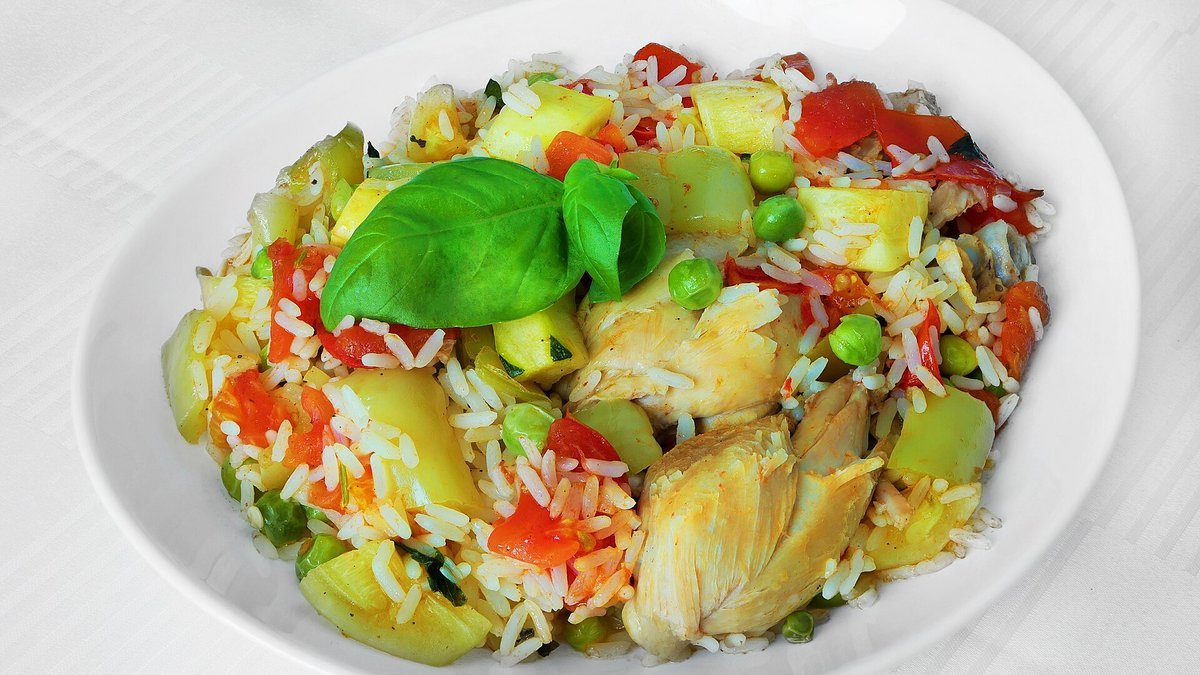
The post-workout meal has two jobs: supply protein for muscle repair and carbohydrate to refill glycogen. A practical plate is a palm-sized portion of a protein food (chicken, fish, eggs, tofu, lentils or Greek yogurt) plus a carbohydrate food such as rice, potatoes, oats or bread, and some vegetables or fruit.
How much protein do you actually need?
For people who train regularly, the International Society of Sports Nutrition's position stand (Jäger et al., 2017) concludes that a daily intake of 1.4 to 2.0 grams of protein per kilogram of body weight (about 0.64 to 0.91 g per pound) is sufficient for most exercising individuals to build and maintain muscle. For a 154 lb (70 kg) person, that works out to roughly 98 to 140 grams across the day, spread over meals, not eaten in one sitting. The same position stand suggests around 20 to 40 grams of good-quality protein per meal as a practical serving.
| Body weight | Daily protein at 1.4 to 2.0 g/kg |
|---|---|
| 154 lb (70 kg) | About 98 to 140 g a day |
| Per meal | About 20 to 40 g of good-quality protein |
To put that in everyday terms, one large egg provides about 6 grams of protein, so a post-workout meal usually needs more than an egg or two: a proper portion of a main protein food, not a garnish. For targets at other body weights and goals, see how much protein you need per day by weight and goal.
Is there a 30-minute window?
The famous "30-minute window" is far less strict than it is often made to sound. A 2013 meta-analysis by Schoenfeld, Aragon and Krieger found that once total daily protein intake was accounted for, the apparent benefit of eating protein immediately after training largely disappeared. In plain terms: eating a protein-rich meal within a couple of hours of training is a sensible habit, but the daily total is what drives results. You have not "wasted" a workout if your meal comes 90 minutes later rather than 20.
Do you need protein powder?
Protein powder can be a convenient way to hit that post-workout protein serving when a full meal is hours away, but it is a convenience, not a requirement; whole foods do the same job. If you are curious about what actually goes into the tub, this guide explains how protein powder is made, from whey and pea to vegan blends and isolate.
Fluids and salt
Finally, do not forget fluids and salt. If you finished a long, sweaty session, your next meal should include something salty as well as water: soup, salted nuts or a normal seasoned meal all help replace what you sweated out. Sports drinks are only really worth considering for sessions lasting well over an hour in the heat; for most gym sessions, water plus a normal meal covers it.
A sample day, three ways
You do not need to eat differently every day. You need a pattern that fits your training time.
- Morning trainer (6 a.m. session): a banana before training if you can manage it; after training, oats with milk and fruit, or eggs on toast.
- Lunchtime trainer: a normal breakfast, a light carbohydrate snack an hour before training (toast or fruit), then a proper lunch after: rice or potatoes with a protein food and vegetables.
- Evening trainer: lunch as normal, a small snack in the late afternoon (yogurt with fruit, or a sandwich), train, then dinner with protein, carbohydrate and vegetables.
Notice that none of these days requires special products. The pattern is the same: carbohydrate before, protein plus carbohydrate after, water throughout.
Quick answers (FAQ)
Do I need supplements?
No. Supplements can be convenient, but no supplement replaces a diet with enough total protein, carbohydrate and energy. If your meals already cover those, you are not missing anything essential.
Should I train fasted to burn more fat?
Fasted training is a preference, not a requirement. Some people like it for shorter sessions; others feel flat. For long or hard sessions, a small carbohydrate snack beforehand usually means better performance.
What if I train twice a day?
Then the gap between sessions matters more: eat carbohydrate and protein after the first session, rehydrate well, and do not leave the second session fueled by nothing.
The takeaway
Eat a carbohydrate-led meal or snack before you train, a protein-plus-carbohydrate meal within a couple of hours after, drink water through the day, and make sure your total daily protein is in the range your training actually needs. Get those four things right and you have covered almost everything workout nutrition has to offer: no magic window, no mandatory products.
This article is general information only and is not medical advice. If you have a medical condition, are pregnant, or follow a restricted diet, talk to your clinician about your own needs.
Sources
- Jäger R, Kerksick CM, Campbell BI, et al. International Society of Sports Nutrition Position Stand: protein and exercise, Journal of the International Society of Sports Nutrition 2017;14:20 (full text). Daily intake of 1.4 to 2.0 g/kg body weight for most exercising individuals; 0.25 g/kg or an absolute dose of 20 to 40 g per serving.
- Schoenfeld BJ, Aragon AA, Krieger JW. The effect of protein timing on muscle strength and hypertrophy: a meta-analysis, Journal of the International Society of Sports Nutrition 2013;10:53 (full text). Timing effects were not significant once covariates including total protein intake were controlled.
- USDA FoodData Central, SR Legacy "Egg, whole, raw, fresh" (FDC ID 171287): 12.56 g protein per 100 g; a large egg is 50 g, or about 6 g of protein.
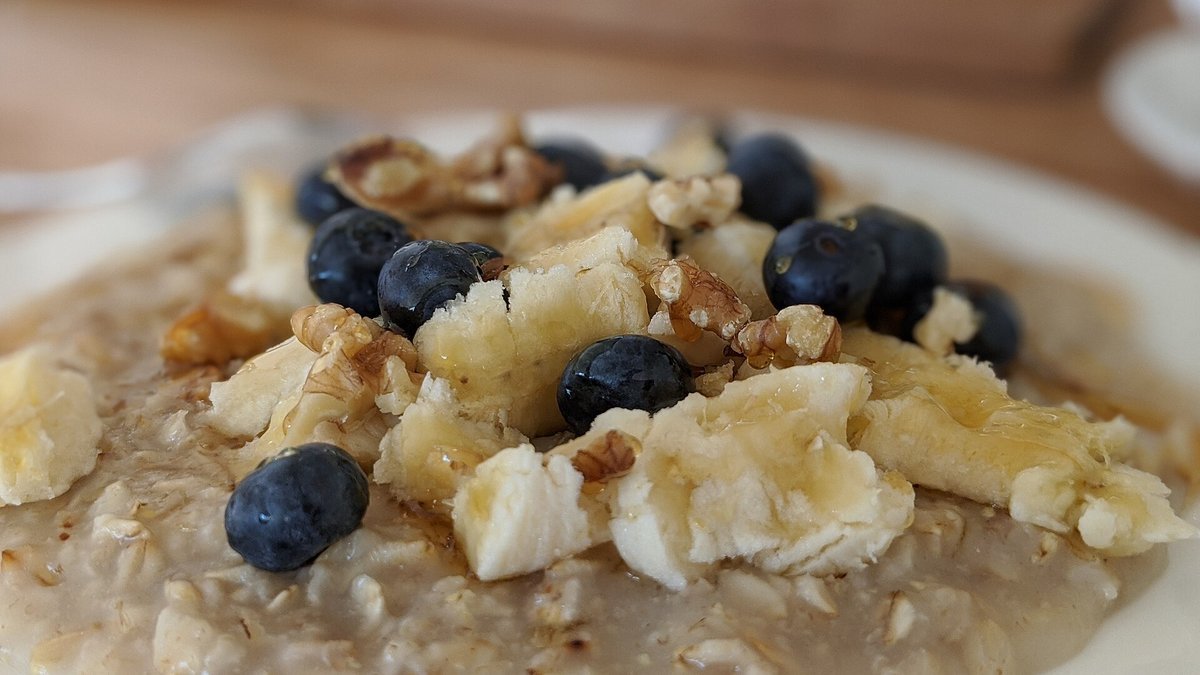
- Banner photo: Banana blueberry oatmeal.jpg by Shisma, CC BY 4.0, via Wikimedia Commons (cropped).
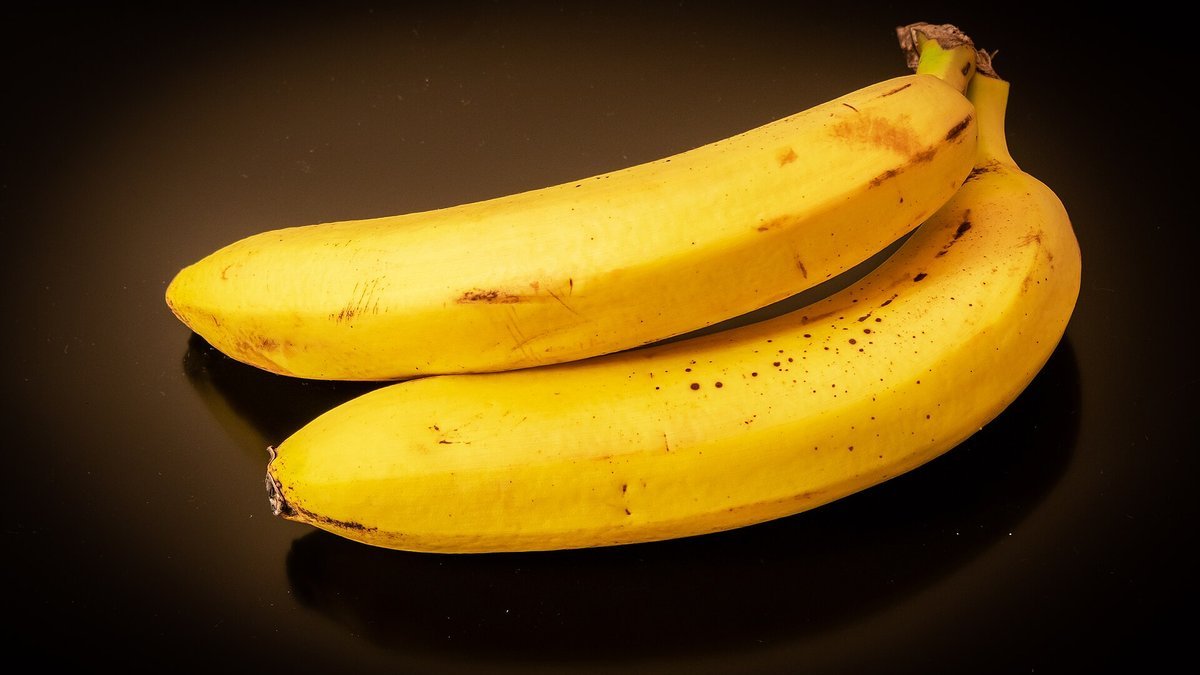
- Photo: Bananas on black background 02.jpg by Krzysztof Golik, CC BY-SA 4.0, via Wikimedia Commons (cropped).
- Photo: Parboiled rice with chicken, peppers, cucurbita, peas and tomato.jpg by Petar Milošević, CC BY-SA 4.0, via Wikimedia Commons (cropped).