


A high-dose fish oil supplement did not protect memory or brain size in a two-year trial of older adults at higher risk of Alzheimer's disease. In the University of Southern California (USC) trial, 365 adults aged 55 to 80 who rarely ate fish took either 2,000 mg a day of DHA, an omega-3 fat that is a building block of brain cell membranes, or a placebo. The DHA reached the brain, raising its level in the spinal fluid by about 17% within six months. But after 24 months, thinking-test scores and the size of the hippocampus, a memory center that shrinks in Alzheimer's, were no different from placebo.
This was a well-designed, double-blind, placebo-controlled trial, so the result deserves weight, with some caveats covered below. It fits a run of earlier trials that also found no brain benefit from omega-3 pills in people without dementia. The study was published in eBioMedicine in June 2026 and drew fresh attention when ScienceDaily reposted USC's news release on October 22, 2026. The practical message: if you take fish oil only to protect your memory, this trial gives you little reason to. Eating seafood, staying active and managing blood pressure and blood sugar are still the better-supported moves.
What the DHA trial found
The trial, called PreventE4, was led by Hussein Yassine and colleagues at USC's Keck School of Medicine. It asked two questions. Does a high dose of DHA actually get into the brain of older adults who eat little fish? And if it does, does it slow brain shrinkage or change thinking scores?
- Who took part: 365 community-dwelling adults with normal thinking skills and an average age of 66.4. 58% were women, 39% were Hispanic and 47% carried APOE4, the gene variant most strongly linked to Alzheimer's risk.
- Low fish eaters at higher risk: everyone ate less than 200 mg of DHA a day from food (the typical intake was under 100 mg) and had at least one risk factor: obesity, high blood pressure, high cholesterol or exercising fewer than 3 days a week. 69% reported low physical activity.
- What they took: 2,000 mg of DHA a day as five 400 mg capsules with meals, or look-alike placebo capsules filled with corn and soybean oil, for 24 months. Everyone also received a vitamin B-complex supplement.
- What was measured: DHA in the cerebrospinal fluid (the fluid around the brain and spinal cord, collected by spinal tap in 181 volunteers) after 6 months, plus MRI brain scans and a standard battery of thinking and memory tests over 2 years.
| Measure | DHA group | Placebo group | What it means |
|---|---|---|---|
| DHA-to-AA ratio in spinal fluid, change at 6 months | +0.17 | −0.02 | DHA reached the brain (difference 0.19, p < 0.0001); spinal-fluid DHA rose about 17% |
| Omega-3 index in red blood cells | Rose from 4.9% to 11.0% | Little change (+0.21 points) | The capsules were taken and absorbed |
| Total thinking-test score (RBANS), change at 24 months | +2.76 points | +2.67 points | No difference (0.09 points; 95% CI −2.21 to 2.39) |
| Hippocampus volume, change at 24 months | Small decline | Small decline | No significant difference on either side of the brain |
| Any side effect reported | 40.3% | 40.9% | Similar; no serious event was attributed to DHA |
AA stands for arachidonic acid, an omega-6 fat the researchers used as a reference point. The thinking scores went up slightly in both groups, which is common when people repeat tests. The point is that the DHA group did no better than the placebo group.
Why this trial matters more than most fish oil studies
Observational studies have linked higher omega-3 intake, and eating more seafood, with a modestly lower risk of cognitive decline. Trials of supplements have been less encouraging. In a systematic review cited by the USC team, only 5 of 24 randomized trials (21%) in people without dementia found a cognitive benefit from DHA, and all 4 trials in people who already had Alzheimer's were negative.
One explanation for those null results was that the doses were too low to reach the brain. VITAL, a large US trial, gave 1 gram a day of omega-3 supplement (840 mg EPA plus DHA) to healthy adults aged 60 and older and found no cognitive benefit over 2 to 3 years. Another idea was that APOE4 carriers handle DHA differently and might benefit if treated early. NCCIH, the federal center for complementary health research, notes that a 2017 review suggested APOE4 carriers might benefit from DHA before signs of Alzheimer's appear.
PreventE4 tested both ideas. Earlier prevention trials used 1 gram a day or less; this one used 2 grams of DHA alone, picked people with low fish intake who had the most room to improve, enrolled many APOE4 carriers and confirmed with spinal taps that the DHA got in. The DHA effect was the same in carriers and non-carriers, and neither group showed a benefit on thinking tests or brain scans. In the authors' words, brain delivery "is not the limiting factor," and future research should shift away from simply testing more supplements.
How strong is the evidence?
The design was strong: randomized, double-blind, placebo-controlled, with participants, investigators and outcome assessors all masked, and analysis by intention to treat. It was funded by the National Institute on Aging and the nonprofit Alzheimer's Drug Discovery Foundation, not by a supplement maker. Still, there are real limits:
- Memory was not the main target. This was a phase 2a trial. Its primary goal was to show that DHA reaches the brain. Brain volume was a secondary outcome and thinking tests were exploratory, so the trial was not built to prove a small memory effect does not exist. With expected dropout, it could detect an effect of about 0.35 standard deviations, a moderate size.
- Many people dropped out. 38% left before 24 months, mainly because of COVID-19 disruptions, and those who left differed from those who stayed (more often Hispanic, with less education and lower starting test scores). That can bias results and reduces statistical power.
- Two years may be too short. Participants started with healthy brains: hippocampal shrinkage was under 0.5% a year and test scores improved in both groups. A slowly developing disease such as Alzheimer's may need longer follow-up to show any difference.
- One site, one population. All participants were recruited in Los Angeles, mostly white (82%), relatively young for dementia research and fairly well educated. The results may not apply to people who already have memory problems.
- Placebo oil and vitamin B. The placebo contained corn and soybean oil, and everyone took B vitamins, so the comparison was DHA vs. this oil, not DHA vs. nothing.
Put together: a single trial cannot rule out every possible benefit, but this one rules out one of the main explanations for earlier null results. Combined with VITAL and the earlier review, the evidence that fish oil pills protect memory in healthy older adults is weak.
Should you stop taking fish oil?
That depends on why you take it. This trial only answers the brain question.
- If you take it to prevent memory loss or Alzheimer's: this study, and the trials before it, do not support that use. You can reasonably stop, or ask your doctor or pharmacist whether it still serves a purpose for you.
- If you take it for your heart or triglycerides: that is a separate question. NCCIH says there is some evidence that people with heart disease or high triglycerides may benefit from omega-3 supplements, and that EPA and DHA lower triglycerides by about 15%. Prescription omega-3 products are different from store-bought supplements. Don't stop a product your clinician recommended without talking to them.
- Safety: side effects are usually mild, such as an unpleasant taste, bad breath, headache, heartburn, nausea or diarrhea. NCCIH advises talking with a health care provider before taking omega-3 supplements if you take a medicine that affects blood clotting, are allergic to seafood, or are pregnant or breastfeeding. In this trial, side effects were no more common with DHA than with placebo.
If you do keep taking fish oil, check the Supplement Facts panel for the actual EPA and DHA amounts per serving rather than the total "fish oil" figure, and remember that the FDA does not approve dietary supplements for safety and effectiveness before they are sold. The same habits we cover in our creatine label checklist (clear doses, no proprietary blends, third-party testing) apply to omega-3 products too.
What to do instead for your brain
The USC researchers themselves point away from single nutrients and toward overall lifestyle. Lead author Hussein Yassine said in the university's release that staying healthy throughout life "remains the most powerful tool we have for reducing Alzheimer's risk." Here is what current US guidance supports.
Eat seafood rather than relying on capsules
The FDA's advice on eating fish recommends that adults eat at least 8 ounces (about 227 g) of seafood a week on a 2,000-calorie diet. The 2025–2030 Dietary Guidelines for Americans list omega-3-rich seafood among healthy fats, and their advice for pregnant women names salmon, sardines and trout as low-mercury, omega-3-rich choices. NCCIH notes that for some conditions the evidence for eating seafood is stronger than for omega-3 pills, possibly because fish brings other nutrients and often replaces less healthful foods.
In practice, that is two 4-ounce servings a week: a salmon fillet one night and a can of sardines or trout on a salad or toast another. Pregnant and breastfeeding women should follow the FDA's low-mercury "Best Choices" list. Our guide to omega-3 fatty acids and the foods that contain them lists more options, including plant sources of ALA such as walnuts, chia and flaxseed.
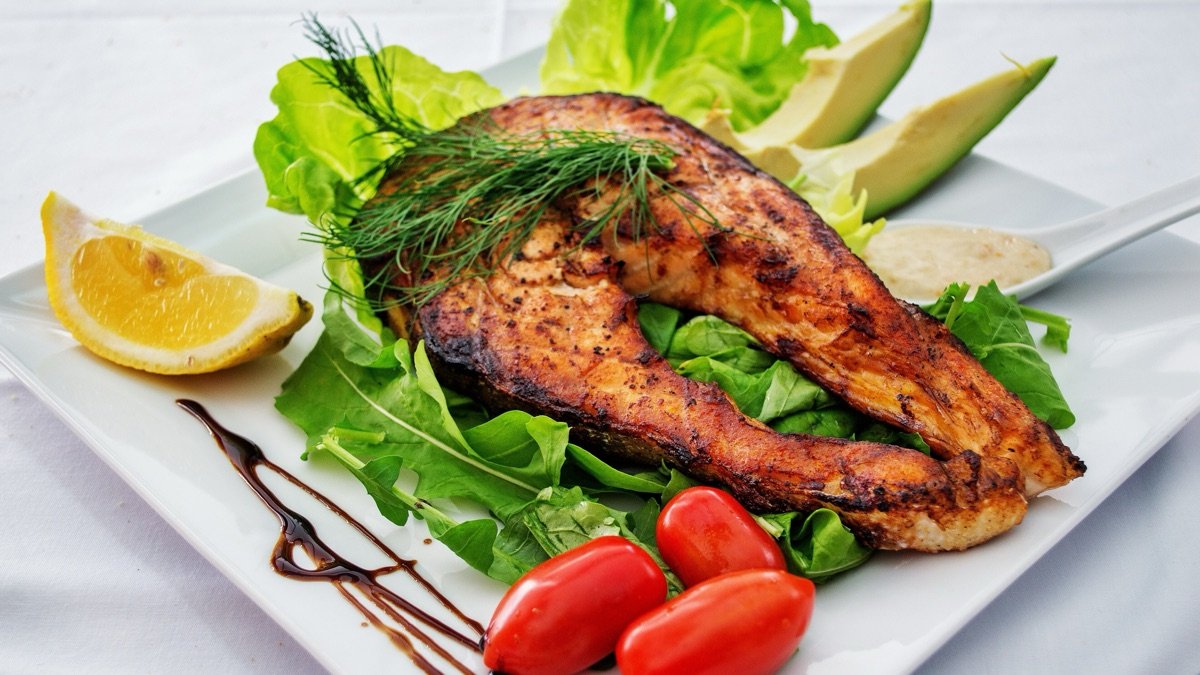
The USC team suggested a Mediterranean-style eating pattern, which supplies omega-3s alongside other nutrients, as one possible reason diet may work where pills have not. For a broader look at what food can and cannot do for the brain, see our article on nutrition for brain health.
Stay active
The Physical Activity Guidelines for Americans state that regular activity reduces the risk of dementia, including Alzheimer's disease. Adults need 150 to 300 minutes of moderate activity a week, such as brisk walking, plus muscle-strengthening activity on at least 2 days. Notably, 69% of the people in this trial reported low physical activity, one of the risk factors no capsule addresses. If you're starting from little, steps are a useful measure: our write-up on the daily steps and dementia risk study covers what step counts were linked to lower risk.

Manage the other risk factors
CDC lists five habits that support brain health: stay physically active, prevent or manage diabetes, manage blood pressure, prevent or treat hearing loss, and limit or avoid alcohol and smoking. CDC also notes that nearly 45% of dementia cases may be prevented or delayed. None of these steps comes in a capsule, but each has better support than fish oil for protecting the brain.
If you or a family member notice possible signs of dementia, such as getting lost in a familiar neighborhood or forgetting the name of a close friend, CDC advises seeing a health care provider. Memory loss has many causes, and a doctor can check for some of them, such as low vitamin B12 or thyroid disease, with blood tests.
FAQ
Does this mean omega-3s don't matter for the brain?
No. DHA is a building block of brain cell membranes, and the researchers say how the brain handles omega-3s is still worth studying, especially in APOE4 carriers. The trial shows that adding a high-dose DHA pill to the diet of healthy older adults did not improve thinking or brain size over two years. Getting omega-3s from food remains part of a healthy diet.
I carry the APOE4 gene. Should I take DHA?
This trial was designed with APOE4 carriers in mind, and they did not benefit any more than non-carriers. DHA reached the brain equally well in both groups. Talk to your doctor about your overall risk, and focus on activity, blood pressure, blood sugar and diet.
Is algae oil any different?
Algal oil is a vegetarian source of DHA, and some products also contain EPA. The trial didn't test algal oil specifically, so there is no evidence that it would do better for memory than the DHA capsules used here.
Is 2,000 mg of DHA a day safe?
In this trial, side effects were about as common with DHA as with placebo, and serious events were not attributed to the supplement. That doesn't make high doses right for everyone. Check with a clinician first, especially if you take blood thinners.
This article is general information about a research study. It isn't a substitute for advice from a doctor or other qualified health professional, especially if you have a medical condition or take medication.
Sources
- Yassine HN, Pour SG, Juarez M, et al. CNS target engagement of high-dose DHA supplementation in older adults at risk for dementia: a randomised, double-blind, placebo-controlled trial, eBioMedicine 2026;129:106316 (full text).
- ClinicalTrials.gov: DHA Brain Delivery Trial (PreventE4), NCT03613844.
- ScienceDaily: Millions take fish oil for brain health. A two-year study found no benefit (University of Southern California – Health Sciences release, posted October 22, 2026).
- Kang JH, Vyas CM, Okereke OI, et al. Marine n-3 fatty acids and cognitive change among older adults in the VITAL randomized trial, Alzheimer's & Dementia: Translational Research & Clinical Interventions 2022 (full text).
- NCCIH: Omega-3 Supplements: What You Need To Know.
- NCCIH: 7 Things To Know About Omega-3 Fatty Acids.
- FDA: Advice about Eating Fish.
- USDA and HHS: Dietary Guidelines for Americans, 2025–2030.
- ODPHP: Top 10 Things to Know About the Second Edition of the Physical Activity Guidelines for Americans.
- CDC: Reducing Risk for Dementia.
- CDC: Signs and Symptoms of Dementia.
- MedlinePlus: Memory loss.
- FDA 101: Dietary Supplements.
- Banner photo: Fish Oil Capsules.jpg by Oddman47, CC0, via Wikimedia Commons (cropped).
- Photo: Grilled plated salmon fillet.jpg by DanaTentis, CC0, via Wikimedia Commons (cropped).
- Photo: US Navy 090114-N-4021H-058 step aerobics class by U.S. Navy Mass Communication Specialist 3rd Class Damien Horvath, public domain, via Wikimedia Commons (cropped).