


Yes, a new US study links an irregular sleep schedule to a higher risk of heart disease, but it shows an association, not proof that a steadier schedule will protect your heart. In a study published online November 2, 2026, in Circulation: Population Health and Outcomes, researchers used months of Fitbit sleep data from 10,362 adults in the NIH's All of Us Research Program. People whose sleep length swung more from night to night had a 24% higher risk of a heart attack, heart failure, cardiomyopathy or ischemic stroke for every 29 extra minutes of swing. How long people slept on average was not linked to that risk.
The practical message is simple, and it's cheap: going to bed and getting up at about the same time every day is already standard CDC sleep advice. This study adds to the evidence that consistency matters alongside total hours. Below: what the researchers found, who was in the study, what it can't tell us, and how to use your own tracker data without overreading it.
What the new sleep study found
The paper, "Sleep and Cardiometabolic Disease: A Wearable-Electronic Health Record Study in the US All of Us Research Program", is by Anh Khoa Tran (University of Maryland Medical System) and Minh Tuan Viet Nguyen (Boston Children's Hospital and Harvard Medical School). It appears in an American Heart Association journal.
The researchers worked out 11 sleep measures for each person from a 180-day baseline period that had at least 90 nights of valid Fitbit data. Those measures covered how long people slept, how much that length varied from night to night, and how much their bedtime, wake time and sleep midpoint varied. They then followed people's electronic health records for new diagnoses. Diagnoses made in the first 180 days after the baseline period were not counted, to reduce the chance that an illness that was already developing was causing the bad sleep rather than the other way round.
Over a median follow-up of 3.7 years, 230 people developed the main heart outcome, a combined measure of heart attack, heart failure, cardiomyopathy or ischemic stroke. After adjusting for demographic, socioeconomic, lifestyle and existing health factors, these were the main results:
| Sleep measure | Outcome | Hazard ratio (95% CI) | What it means |
|---|---|---|---|
| Night-to-night variability in sleep duration (1 SD = 29 minutes) | Heart attack, heart failure, cardiomyopathy or ischemic stroke | 1.24 (1.09–1.41) | 24% higher risk |
| Variability in bedtime | Same combined heart outcome | 1.23 (1.10–1.37) | 23% higher risk |
| Variability in wake time | Same combined heart outcome | 1.20 (1.09–1.32) | 20% higher risk |
| Variability in sleep midpoint | Same combined heart outcome | 1.21 (1.09–1.35) | 21% higher risk |
| Average sleep duration | Same combined heart outcome | 0.96 (0.85–1.08) | No clear link |
| Variability in sleep duration | Heart failure | 1.32 (1.13–1.55) | 32% higher risk |
| Variability in sleep duration | High blood pressure | 1.16 (1.08–1.25) | 16% higher risk |
| Variability in sleep duration | Type 2 diabetes | 1.20 (1.07–1.35) | 20% higher risk |
A hazard ratio of 1.24 means a 24% higher relative risk, not a 24% chance of getting heart disease. Only 230 of the 10,362 participants, about 2.2%, had one of the main heart events during follow-up, so the absolute numbers involved are small for any one person. The abstract gives the size of one standard deviation only for sleep-duration variability (29 minutes), not for bedtime or wake-time variability.
The study also looked at sleep cycles, the repeating rounds of light, deep and REM sleep that a wearable estimates each night. In an exploratory analysis of 7,199 people and more than 1 million nights of sleep-stage data, more sleep cycles per night were linked to a lower risk of atrial arrhythmias such as atrial fibrillation (hazard ratio 0.72), and that held after accounting for sleep duration, regularity and timing (0.58). The authors call this a novel finding that needs confirming, so treat it as a lead for future research rather than something to act on.
Who was in the study
All participants were US adults in the All of Us Research Program, a National Institutes of Health effort that links volunteers' health records with other data, here Fitbit sleep tracking. The median age was 53, and 70% were women. The data spanned 2009 to 2023.
That makes this an unusually large set of real-world, at-home sleep measurements. Most earlier sleep-regularity research used about one week of wrist-device data, which the authors point out in their introduction. Here, each person had at least 90 nights.
But everyone in the study owned a Fitbit and chose to share its data. An earlier paper from the same program's Fitbit data reported that participants were 71% female, 84% white and 71% college-educated (Zheng and colleagues, Nature Medicine, 2024). The new abstract doesn't report race or education, but people who wear sleep trackers for months probably differ from the average American, so the results may not apply equally to everyone.
What this study does not show
This is good research on an important question, but it has clear limits:
- It's observational. Nobody was asked to change their sleep schedule. The study shows that people with irregular sleep developed heart disease more often. It can't show that the irregular sleep caused it. Shift work, caregiving, chronic pain, depression, money stress or an undiagnosed sleep disorder could drive both. The researchers adjusted for many factors and excluded diagnoses made in the first 180 days, but no observational study can rule out every hidden cause.
- Follow-up was short and events were few. A median of 3.7 years and 230 main heart events is modest for heart disease research. Some estimates have fairly wide confidence intervals.
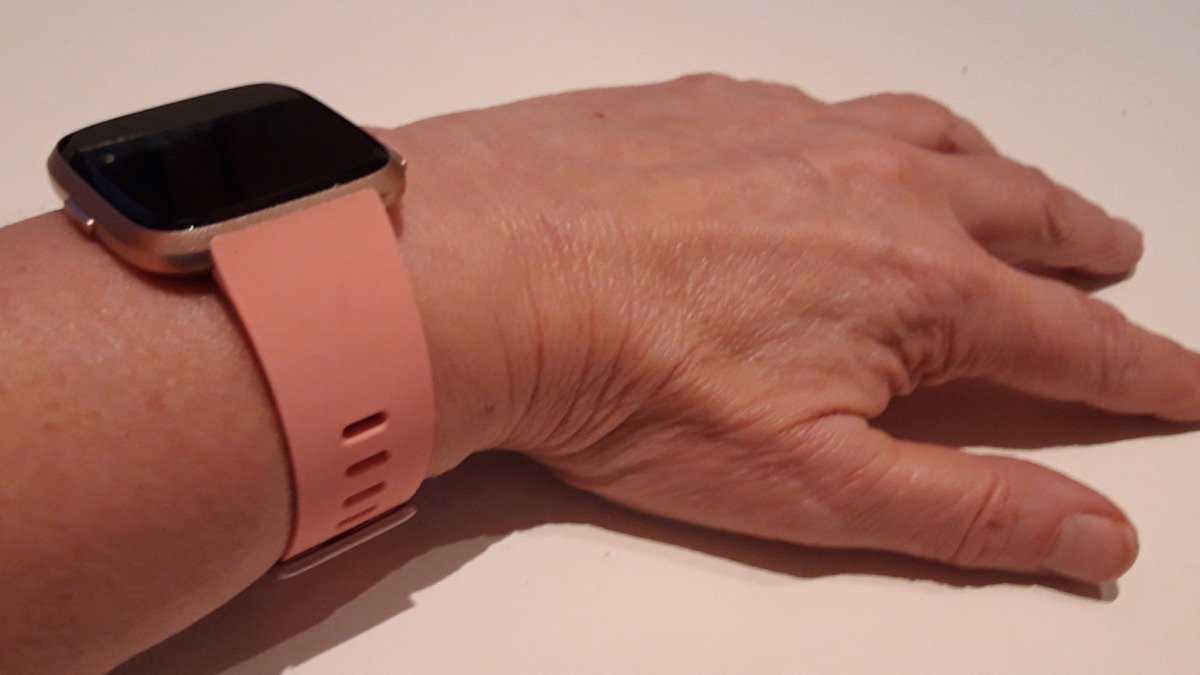
- Consumer trackers are good, not perfect. In a lab test against polysomnography (the gold-standard sleep study), consumer devices including a Fitbit model were good at detecting sleep and mostly as good as or better than research-grade actigraphy at detecting wake. Their sleep-stage estimates were inconsistent, and they did worse on nights of disrupted sleep (Chinoy and colleagues, Sleep, 2021). Bedtime and wake-time data are likely more reliable than the sleep-cycle counts, which depend on stage estimates.
- The sample isn't representative. Fitbit owners who share their data are not a random slice of the US population.
- We could only check the abstract. The full paper is behind a paywall. The abstract doesn't list funding sources, the full set of adjustment factors, or how many people had very irregular schedules, so we haven't reported those details.
How it fits with earlier research
The finding lines up with a growing body of research that suggests sleep regularity matters, not just sleep length:
- All of Us, 2024: Using the same program's Fitbit data, a Nature Medicine study of 6,785 people with a median of 4.5 years of sleep tracking found that greater sleep irregularity was linked to higher odds of new obesity, high cholesterol, high blood pressure, major depression and generalized anxiety disorder (Zheng and colleagues, 2024). That paper included Fitbit and Google employees as authors. They said the companies were not involved in collecting or analyzing the data.
- UK Biobank, 2024: In 60,977 UK adults with a week of wrist-device data, people in the four more regular quintiles of a "sleep regularity index" had a 20% to 48% lower risk of death from any cause than those in the least regular fifth. Sleep regularity predicted death better than sleep duration did (Windred and colleagues, Sleep, 2024).
The new study adds months of data per person and links irregularity directly to heart outcomes such as heart failure. It also adds to the debate about how doctors score sleep. The American Heart Association added sleep health as a new part of its "Life's Essential 8" heart health checklist in 2022 (Lloyd-Jones and colleagues, Circulation, 2022). The new paper's authors note that the checklist scores sleep by duration alone, and they argue that regularity may deserve a place too.
What to do with this: practical takeaways
None of this calls for a new product or a strict routine. These steps are reasonable for most adults, and they match existing public health advice:
- Anchor your wake time. The CDC lists "going to bed and getting up at the same time every day" first among habits that improve sleep (CDC). A fixed wake-up time, weekends included, is a practical place to start.
- Still aim for enough sleep. Average duration wasn't linked to the heart outcome in this study, but that doesn't make short sleep harmless. The CDC recommends 7 or more hours a night for adults 18 to 60, 7 to 9 hours for ages 61 to 64, and 7 to 8 hours for 65 and older.
- Shrink the weekend swing. Late nights and long lie-ins on Saturday and Sunday are an easy way to build an irregular schedule without noticing. Bedtime, wake time and midpoint variability were all linked to higher risk in this study, so a smaller weekend shift is worth trying.
- Watch for clock changes and travel. Daylight saving time ended on November 1, 2026. Our guide to keeping workouts and sleep on track after the clock change covers how to adjust gradually.
- Time caffeine and late workouts with your schedule in mind. The CDC advises avoiding caffeine in the afternoon or evening, and large meals and alcohol before bed. If you train with pre-workout drinks, see how caffeine dose and timing affect your night.
- Use your tracker for trends, not single nights. If you wear a Fitbit, Oura, Apple Watch or Garmin, look at how much your bedtime and wake time vary over a few weeks, not at one night's sleep stages or score. Our explainer on readiness scores and whether to skip a workout covers why one bad reading shouldn't drive decisions.
- Talk to a clinician about persistent sleep problems. Loud snoring, gasping at night, frequent waking or daytime sleepiness can be signs of a sleep disorder such as sleep apnea or insomnia. The CDC advises seeing a healthcare provider if you regularly have trouble sleeping. Shift workers and caregivers often can't keep a fixed schedule, and a clinician can help with strategies that fit.
For broader sleep habits, see our guide on how to sleep better at night naturally.
FAQ
Is an irregular sleep schedule bad for your heart?
Several large studies link irregular sleep with a higher risk of heart and metabolic disease, including this new US study of 10,362 Fitbit users. These are observational studies, so they can't prove that irregular sleep itself causes heart disease. Keeping a steady schedule is low-risk and already recommended by the CDC.
How consistent does my sleep schedule need to be?
There's no proven cutoff. In this study, risk rose with each 29-minute increase in how much sleep length varied from night to night. Keeping your bedtime and wake time within a similar window each day, including weekends, is a sensible goal, but no study has tested a specific target.
Does sleeping longer cancel out an irregular schedule?
This study doesn't answer that directly. Average sleep duration wasn't linked to the main heart outcome, while variability was. Both matter for overall health, so aim for enough sleep on a regular schedule rather than trading one for the other.
Should I trust my fitness tracker's sleep data?
Consumer trackers are fairly good at telling when you're asleep, but less reliable for sleep stages, especially on nights with broken sleep. Bedtime and wake-time trends over weeks are more useful than one night's deep or REM sleep numbers. A tracker can't diagnose a sleep disorder.
This article is for general information, not medical advice. It isn't a substitute for advice from a doctor or other qualified health professional, especially if you have heart disease, a sleep disorder or another medical condition.
Sources
- Tran AK, Nguyen MTV. Sleep and Cardiometabolic Disease: A Wearable-Electronic Health Record Study in the US All of Us Research Program, Circulation: Population Health and Outcomes, published online November 2, 2026 (journal page).
- Zheng NS, Annis J, Master H, et al. Sleep patterns and risk of chronic disease as measured by long-term monitoring with commercial wearable devices in the All of Us Research Program, Nature Medicine 2024;30(9):2648–2656.
- Windred DP, Burns AC, Lane JM, et al. Sleep regularity is a stronger predictor of mortality risk than sleep duration: A prospective cohort study, Sleep 2024;47(1):zsad253.
- Chinoy ED, Cuellar JA, Huwa KE, et al. Performance of seven consumer sleep-tracking devices compared with polysomnography, Sleep 2021;44(5):zsaa291.
- Lloyd-Jones DM, Allen NB, Anderson CAM, et al. Life's Essential 8: Updating and Enhancing the American Heart Association's Construct of Cardiovascular Health, Circulation 2022;146(5):e18–e43.
- Centers for Disease Control and Prevention: About Sleep (May 15, 2024).
- Banner photo: Messy bed and closed blinds (Unsplash).jpg by Quin Stevenson, CC0, via Wikimedia Commons (cropped).
- Photo: Fitbit versa.jpg by Ellywa, CC BY-SA 4.0, via Wikimedia Commons (cropped).
- Photo: A digital alarm clock in Glasgow.jpg by Tbatb, CC BY-SA 4.0, via Wikimedia Commons (cropped).