

The 12-3-30 workout means walking on a treadmill at a 12% incline and 3 mph for 30 minutes. For most people it is a vigorous workout, not an easy walk: it works out to about 8 METs, and a 170-pound person burns roughly 335 calories in the 30 minutes. That is about two and a half times the burn of the same walk on a flat belt and a little less than running at 6 mph for the same time. Only one peer-reviewed study has tested 12-3-30 directly, and it was a single session in 14 young, active adults. So the claims you'll see on social media are well ahead of the evidence.
This guide covers where the workout came from, a calorie table by body weight (with the math shown), what the research does and doesn't show, how holding the handrails changes the workout, who should modify it, and a six-week plan to build up to it.
What is the 12-3-30 workout?
The name is the recipe: 12% incline, 3 miles per hour, 30 minutes. You set the treadmill and walk without changing anything until the time is up.
The routine was popularized by lifestyle YouTuber Lauren Giraldo. According to the University of Nevada, Las Vegas (UNLV) researchers who later studied it, she described it in a YouTube video titled "My Treadmill Routine + Meal Examples" on November 8, 2019. A shorter TikTok repost on November 13, 2020, is what made it go viral. The researchers counted more than 1.6 million YouTube views and 14 million TikTok views. In the TikTok, Giraldo said she had lost 30 pounds and kept it off for about two years without dieting or counting calories, doing the workout about five days a week.
That is one person's account, not evidence that the workout causes weight loss. Uphill treadmill walking itself is not new: the long-standing ACSM walking equation used below already accounts for incline. What 12-3-30 added was a simple, fixed formula that is easy to remember.
How hard is 12-3-30?
Harder than "walking" suggests. US physical activity guidelines rate effort in METs, or multiples of your resting energy use. The Physical Activity Guidelines for Americans class 3.0 to 5.9 METs as moderate and 6.0 METs or more as vigorous. They list walking at 3.0 mph at 3.5 METs and running a 10-minute mile (6.0 mph) at 10 METs.
The American College of Sports Medicine (ACSM) walking equation puts 12-3-30 at about 8.3 METs on paper. In the UNLV study, the measured average worked out to about 7.8 METs. Either way it is well into the vigorous range, closer to a slow run than to a stroll. The main reason is the climb. In the ACSM equation, lifting your body up a 12% grade at 3 mph costs about twice as much energy as moving forward at that speed.
One practical upside: vigorous minutes count roughly double toward the guidelines. Adults are advised to get 150 to 300 minutes a week of moderate activity or 75 to 150 minutes of vigorous activity. Three 12-3-30 sessions a week (90 minutes) would meet the vigorous target on their own.
How many calories does the 12-3-30 workout burn?
We estimated calories with the ACSM walking equation, the standard formula exercise professionals use for treadmill walking. It predicts oxygen use from speed and grade. At 3 mph and 12% it gives about 28.9 mL of oxygen per kilogram per minute, which converts to calories using about 5 calories per liter of oxygen.
| Body weight | 12-3-30 (total) | 12-3-30 (above resting) | Flat walk, 3 mph | Run, 6 mph |
|---|---|---|---|---|
| 130 lb (59 kg) | 256 kcal | 225 kcal | 102 kcal | 310 kcal |
| 150 lb (68 kg) | 295 kcal | 260 kcal | 118 kcal | 357 kcal |
| 170 lb (77 kg) | 335 kcal | 294 kcal | 134 kcal | 405 kcal |
| 200 lb (91 kg) | 394 kcal | 346 kcal | 157 kcal | 476 kcal |
| 230 lb (104 kg) | 453 kcal | 398 kcal | 181 kcal | 548 kcal |
How we calculated this: ACSM walking equation, VO2 = 0.1 × speed + 1.8 × speed × grade + 3.5 (speed in meters per minute, grade as a decimal). 3 mph = 80.5 m/min, so 12-3-30 = 28.9 mL/kg/min and flat walking = 11.5 mL/kg/min. We used 5 kcal per liter of oxygen and 30 minutes. "Above resting" subtracts the 3.5 mL/kg/min resting term, which is what you burn anyway. The running column uses the guidelines' 10 METs for a 10-minute mile. All figures assume steady walking without holding the handrails.
How close are these estimates? In the UNLV study, participants averaging 166 pounds (75.4 kg) burned a measured 308 calories in their 30-minute session, or about 10.2 calories a minute. The ACSM equation predicts about 327 for that body weight, roughly 6% high. That fits other research: a 2021 field study in the Journal of Applied Physiology found the ACSM equation overpredicted measured walking energy use by 13% over a hilly course, and its authors noted consistent overprediction on uphill grades. So treat the table as a fair upper-end estimate. Your own number also varies with fitness, walking mechanics and how well your treadmill's incline is calibrated.
For a clearer picture of what you burn at rest, see our comparison of BMR formulas.
What the research on 12-3-30 actually shows
Short answer: very little so far. A PubMed search for "12-3-30" (November 4, 2026) returns one relevant paper.
The UNLV study (2025)
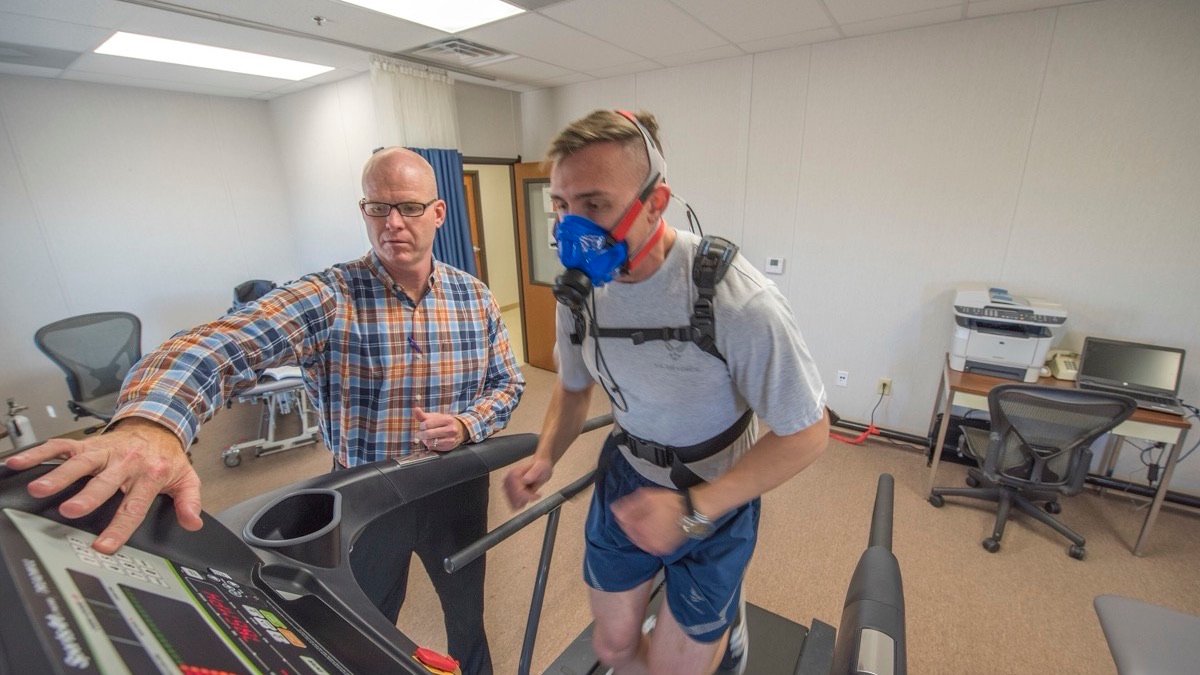
Wong and colleagues, writing in the International Journal of Exercise Science, compared one 12-3-30 session with one self-paced treadmill run. The run lasted until each person had burned the same number of calories as in their 12-3-30 session. Sixteen regularly active adults enrolled (average age 25). One woman couldn't complete the 12-3-30 session and another dropped out, so 14 people were analyzed. Participants were not allowed to hold the handrails.
| Measure | 12-3-30 | Self-paced run |
|---|---|---|
| Time | 30.1 min | 23.9 min |
| Calories burned | 308 kcal | 310 kcal |
| Calories per minute | 10.2 | 13.1 |
| Share of energy from fat | 40.6% | 33.1% |
| Share of energy from carbohydrate | 60.0% | 67.5% |
What this means:
- Running is faster for the same burn. Runners reached the same calorie total about 6 minutes sooner.
- "More fat burning" is a small effect. 12-3-30 drew a larger share of its energy from fat, as lower-intensity exercise usually does. In calorie terms that is about 125 fat calories vs 103 in the run (our arithmetic from the study's means). The authors note that what drives weight loss is the overall energy balance, not the fuel mix during the workout.
- It isn't easy for everyone. One of 16 fit volunteers couldn't finish it.
The limits are big. It was one session in a small group of young, active people recruited from the university community. The study didn't measure weight loss or fitness gains, reports no heart rate data, and didn't measure perceived effort or enjoyment. The authors call it exploratory and say longer randomized trials are needed. We found no trial of 12-3-30 for weight loss or any health outcome.
What broader incline-walking research adds
There is more research on uphill treadmill walking in general:
- Energy cost rises steeply with grade. In a Stanford study, net energy cost was 52% higher than level walking at a 5% incline and 113% higher at 10%, at people's preferred walking speed (about 2.9 mph on average).
- Your hips, thighs and calves work much harder. Walking up a 9-degree slope (about a 16% grade) raised muscle activity in the hamstrings and glutes, thighs and calves well above level walking in a University of Colorado study. That doesn't prove 12-3-30 builds muscle; nobody has measured that.
- Slow uphill walking can be gentler on some knee loads than fast flat walking. In 12 adults with obesity, walking up a 6-degree incline at about 1.7 mph gave a similar workout to level walking at about 3.4 mph with roughly 19% to 26% lower peak knee moments.
12-3-30 vs flat walking vs running
| Flat walk, 3 mph | 12-3-30 | Run, 6 mph | |
|---|---|---|---|
| Intensity | About 3.3–3.5 METs (moderate) | About 8 METs (vigorous) | About 10 METs (vigorous) |
| Calories in 30 minutes | About 134 | About 335 | About 405 |
| Time to burn about 300 calories | About 67 minutes | About 27 minutes | About 22 minutes |
| Flight phase (both feet off the ground) | No | No | Yes |
| Equipment | Any treadmill, walking pad or sidewalk | Treadmill with at least 12% incline | Treadmill or outdoors |
So 12-3-30 sits between the two. It gets much closer to running's calorie burn than flat walking does, without the airborne phase of running. That can make it appealing if you can't or don't want to run. If you have a walking pad, note that most are flat; our walking pad vs treadmill guide explains the difference.
Other ways to make walking harder include adding load. Our guides to weighted vest walking and rucking show that a few extra pounds add far fewer calories than a hill does.
Does holding the handrails change the workout?
Yes, a lot. Gripping the rails lets your arms take some of your weight and pull you along, so your legs lift less.
In a University of Wisconsin–La Crosse study of 10 healthy adults aged 38 to 60, gripping the handrails during steady treadmill exercise cut oxygen use by about 15% to 21% compared with swinging the arms freely. Heart rate and perceived effort also dropped. Just resting the hands on the rails cut oxygen use by about 4% to 8%. A study in women on a step treadmill found that even very light, continuous handrail support lowered oxygen uptake.
The UNLV researchers note that Giraldo herself says she holds the rails about 30% of the time. Their participants weren't allowed to, so the study's numbers reflect the hands-free version.
Practical takeaways:
- If you need to grip the rails to keep up, the incline or speed is too high for you right now. Lower one and walk hands-free.
- A light touch for balance is fine when you need it, especially getting on and off. Safety comes before calories.
- Calorie counts from the treadmill console or a watch won't know if you're holding on. Expect a real burn lower than the table above if you grip.
Who should modify or skip 12-3-30?
12-3-30 is low-impact but not low-intensity. These groups should adjust it or check with a clinician first:
- Heart, metabolic or kidney disease (including diabetes), or symptoms during exercise. ACSM's preparticipation screening model weighs three things: how active you are now, whether you have known heart, metabolic or kidney disease or symptoms, and how hard you plan to exercise. 12-3-30 is vigorous, which is when federal guidelines say it is "particularly appropriate" to seek advice. Stop and get medical advice if you develop new symptoms such as chest pain or pressure or dizziness.
- Beginners and people who have been inactive. The guidelines say inactive people should "start low and go slow." Someone who is already regularly active at moderate intensity can build up to vigorous work gradually without a doctor's visit, as long as no new symptoms appear. Use the plan below.
- Knee pain or knee arthritis. The evidence is mixed. At 3 mph, inclines of 10% to 20% lowered a knee load linked to inner-knee arthritis compared with level walking in healthy men. But uphill walking raised compression forces in the hip, knee and kneecap joint more and more as the slope got steeper. If uphill walking hurts your knees, try a lower incline at a slower speed, and talk to a physical therapist.
- Calf, Achilles or foot problems. Calf muscle activity rises sharply on an incline. People with plantar fasciitis or Achilles pain may need a gentler slope.
- Low back pain. Research is thin. One small study in healthy women found the lower back arched less when walking uphill than on level ground. The authors suggested level or uphill walking may be easier than downhill for people who need to avoid an excessive arch. That doesn't mean 12-3-30 treats back pain. Leaning forward over the console or hanging on the rails changes your posture, so stand tall and lower the incline if your back complains.
- Balance problems or older adults. A steep moving belt is a fall risk. Use a treadmill with a safety key and handrails within reach, and get on and off with the belt stopped and the incline lowered.
- Pregnancy. The guidelines recommend light and moderate activity for uncomplicated pregnancies and advise talking with your provider about adjusting activity. Ask before trying a vigorous session like this.
A 6-week plan to work up to 12-3-30
This is our example progression, not a tested program. It changes one thing per week and builds intensity before duration at the top. Do 3 sessions a week on non-consecutive days, with 3 to 5 minutes of flat, easy walking before and after. You should be able to speak in short sentences throughout. Our talk test guide explains how to judge effort without a heart rate monitor.
| Week | Incline | Speed | Time | Approx. METs |
|---|---|---|---|---|
| 1 | 4% | 3.0 mph | 20 min | 5.0 |
| 2 | 6% | 3.0 mph | 20 min | 5.8 |
| 3 | 8% | 3.0 mph | 20 min | 6.6 |
| 4 | 10% | 3.0 mph | 20 min | 7.4 |
| 5 | 12% | 3.0 mph | 20 min | 8.3 |
| 6 | 12% | 3.0 mph | 25 min, then 30 min | 8.3 |
METs are from the ACSM equation. Some tips:
- Repeat a week if needed. If you had to grab the rails, couldn't talk, or your calves or shins were sore for more than a day or two, stay at that level.
- Prefer a slower climb? Keep the 12% incline and lower the speed instead. 12% at 2.0 mph is about 5.8 METs, and at 2.5 mph about 7.1 METs.
- Not everyone needs the full version. 30 minutes at 8% to 10% is still vigorous for many people. The numbers 12, 3 and 30 have no special status beyond being easy to remember.
- Want a gentler start? Build a walking habit first. Our walking pad beginner routine works on any treadmill.
Frequently asked questions
Is 12-3-30 good for weight loss?
It burns a meaningful number of calories, about 255 to 455 per session depending on body weight, and can help as part of a calorie deficit. But no study has tested it for weight loss. Giraldo's 30-pound result is a personal account.
Can I do 12-3-30 every day?
It is vigorous, so your calves, shins and feet need time to adapt. Giraldo said she did it about five days a week, but there is no research on how often is best. Three or four sessions a week, mixed with easier days, is a sensible ceiling while you adapt.
Is 12-3-30 a zone 2 workout?
For most people, probably not. At about 8 METs it is vigorous by the federal definition, while zone 2 is usually described as easy enough to hold a conversation. For a fit runner it may feel moderate. The UNLV study didn't measure heart rate, so there is no data either way.
Is 12-3-30 better than running?
Not better, different. Running burned the same calories about 6 minutes faster in the only direct comparison. 12-3-30 is a walking gait with no airborne phase, which some people find easier to do consistently.
Can I do 12-3-30 on a walking pad?
Usually not. Most walking pads have no incline or only a slight one. You need a treadmill that reaches 12%; check the incline range in your machine's manual.
This article is general information, not medical advice. It isn't a substitute for advice from a doctor or other qualified health professional, especially if you have a medical condition, an injury or are pregnant.
Sources
- Wong MWH, Davis DW, Perez OR, et al. An Exploratory Study Comparing the Metabolic Responses between the 12-3-30 Treadmill Workout and Self-Paced Treadmill Running, International Journal of Exercise Science 2025;18(6):56–64 (full text).
- Lauren Giraldo: My Treadmill Routine + Meal Examples (YouTube, November 8, 2019; date as cited by Wong et al.).
- US Department of Health and Human Services: Physical Activity Guidelines for Americans, 2nd edition.
- Weyand PG, Ludlow LW, Nollkamper JJ, Buller MJ. Real-world walking economy: can laboratory equations predict field energy expenditure?, Journal of Applied Physiology 2021;131(4):1272–1285 (source of the ACSM walking equation as written above).
- Silder A, Besier T, Delp SL. Predicting the metabolic cost of incline walking from muscle activity and walking mechanics, Journal of Biomechanics 2012.
- Franz JR, Kram R. The effects of grade and speed on leg muscle activations during walking, Gait & Posture 2012.
- Ehlen KA, Reiser RF, Browning RC. Energetics and biomechanics of inclined treadmill walking in obese adults, Medicine & Science in Sports & Exercise 2011.
- Haggerty M, Dickin DC, Popp J, Wang H. The influence of incline walking on joint mechanics, Gait & Posture 2014.
- Alexander N, Schwameder H. Lower limb joint forces during walking on the level and slopes at different inclinations, Gait & Posture 2016.
- Levine D, Colston MA, Whittle MW, et al. Sagittal lumbar spine position during standing, walking, and running at various gradients, Journal of Athletic Training 2007.
- Berling J, Foster C, Gibson M, et al. The effect of handrail support on oxygen uptake during steady-state treadmill exercise, Journal of Cardiopulmonary Rehabilitation 2006.
- Christman SK, Fish AF, Bernhard L, et al. Continuous handrail support, oxygen uptake, and heart rate in women during submaximal step treadmill exercise, Research in Nursing & Health 2000.
- Riebe D, Franklin BA, Thompson PD, et al. Updating ACSM's Recommendations for Exercise Preparticipation Health Screening, Medicine & Science in Sports & Exercise 2015.
- Banner photo: Treadmills at gym.jpg by U.S. Air Force / Staff Sgt. Araceli Alarcon, public domain, via Wikimedia Commons (cropped).
- Photo: Exercise physiologist extends services for Schriever (4861929).jpg by U.S. Air Force / Airman William Tracy, public domain, via Wikimedia Commons (cropped).
- Photo: A woman exercising on a treadmill.jpg by Rwebogora, CC BY-SA 4.0, via Wikimedia Commons (cropped).