

In a new randomized trial, a Mediterranean diet on its own did not lower inflammation over eight weeks, but inflammation did fall once participants added two fasting days a week and lost more weight. The study, published online October 21, 2026, in Cell Metabolism, followed 53 adults with metabolic risk factors at Washington University School of Medicine in St. Louis. The Mediterranean diet improved cholesterol-type blood fats within eight weeks, so it wasn't useless. But the inflammation marker the trial was built around, high-sensitivity C-reactive protein (hsCRP), only dropped after fasting started. The authors conclude that eating fewer calories and losing weight, rather than diet quality alone, looks like the stronger driver of lower inflammation.
That's a useful result, but it's a small, 16-week trial, and it doesn't show that fasting beats a Mediterranean diet. Below: how the trial worked, what changed in each phase, what it can't tell us, and what to take from it if you're trying to eat for your heart and metabolism.
What the new study found
The paper is "Weight loss during intermittent fasting, not Mediterranean diet quality alone, is associated with lower inflammation: A randomized controlled trial" by Moritz V. Warmbrunn, Valeria Tosti and colleagues, with Luigi Fontana of the University of Sydney's Charles Perkins Centre as senior author. Co-authors include researchers at Washington University in St. Louis, the National Cancer Institute and the University of Connecticut. It appeared online October 21 and in the journal's November 3, 2026, issue.
The trial ran in two eight-week phases:
- Weeks 1 to 8, diet only. Participants were randomly assigned either to a Mediterranean diet, with all food provided by the study, or to keep eating their usual Western diet.
- Weeks 9 to 16, diet plus fasting. Both groups stayed on their assigned diet and added two non-consecutive fasting days a week.
Here's what the authors report in the published abstract:
- Diet-only phase: hsCRP "did not change during the diet-only phase despite clear dietary separation." In other words, the two groups really were eating differently, yet inflammation didn't move.
- Blood fats improved early. Lipid improvements "had already emerged during the diet-only phase."
- After fasting was added, hsCRP fell in the Mediterranean-diet group compared with the Western-diet group, "alongside greater weight loss, improved insulin sensitivity, and lower blood pressure."
- Molecular and gut findings. Multi-omic tests (large panels of blood and tissue molecules) showed matching drops in inflammatory signaling. Gut microbiome composition stayed "largely stable."
- Conclusion: "diet quality alone does not lower inflammation over 8 weeks; negative energy balance and weight loss during fasting appear to be the stronger drivers."
| Detail | What the trial did |
|---|---|
| Design | Randomized controlled-feeding trial, 16 weeks, two parallel groups; not blinded (registry lists masking as "None") |
| Participants | 53 adults, 77% female, average age 54.7, all with at least one metabolic risk factor |
| Who could join | Ages 30 to 65, BMI 22 to 28 (normal-to-overweight, not obesity), eating a usual US diet, not exercise-trained, with raised blood pressure, less-than-ideal cholesterol, raised blood sugar or a high-risk waist size |
| Where and when | Washington University School of Medicine, St. Louis; registered 2014, completed June 2017 (ClinicalTrials.gov NCT02148458) |
| Groups | Mediterranean diet (food provided) vs. usual Western diet; both added 2 fasting days a week from week 9 |
| Main outcome | Change in high-sensitivity C-reactive protein (hsCRP) |
| Funding | Australia's National Health and Medical Research Council, the Australian Youth & Health Foundation, the Bakewell Foundation and the Royal Netherlands Academy of Arts and Sciences; authors declared no competing interests |
| Measure | Weeks 1–8: Mediterranean diet vs. Western diet | Weeks 9–16: same diets plus 2 fasting days a week |
|---|---|---|
| hsCRP (inflammation) | No change | Fell in the Mediterranean group relative to controls |
| Blood lipids | Improved | Improvements already present |
| Weight | Not reported as a main finding in the abstract | Greater weight loss in the Mediterranean group |
| Insulin sensitivity | Not reported as changed in the abstract | Improved |
| Blood pressure | Not reported as changed in the abstract | Lower |
| Gut microbiome | Largely stable across the study | |
We could read the abstract and trial registration but not the full paper, so this article reports the direction of each change rather than exact amounts in mg/L, pounds or mmHg. Treat any headline that quotes precise percentages with care unless it links to the full text.
What CRP is and why researchers track it
C-reactive protein is made by your liver in response to inflammation. The high-sensitivity version of the test picks up small rises, and according to the National Library of Medicine's MedlinePlus, it "is used to estimate your risk of heart disease." That's why diet trials often use it: long-running, low-grade inflammation is tied to heart disease, and CRP is a cheap, standard way to measure it.
Two things are worth knowing. CRP is a marker, not a disease, so a lower number in a 16-week trial doesn't prove fewer heart attacks later. And MedlinePlus notes that CRP can also be raised by bacterial and viral infections, smoking and air pollution, so one reading on its own says little.

Does this mean the Mediterranean diet doesn't fight inflammation?
No, and the trial doesn't claim that. It found that eight weeks of a Mediterranean diet, without weight loss, didn't lower hsCRP in this group of people. Several things limit how far that stretches:
- The diet still did something. Blood lipids improved in the diet-only phase, and lipids such as LDL cholesterol are major heart-risk factors in their own right.
- Eight weeks is short. Inflammation may respond more slowly than cholesterol.
- Other trials point the other way. A 2025 meta-analysis in Nutrition Reviews pooled 33 randomized trials with 3,476 participants and reported "significant reductions" in hsCRP and other inflammatory markers with a Mediterranean diet compared with control diets. Many of those trials weren't designed to separate weight loss from diet quality, though, and that's the question this study set out to answer.
- The participants weren't very heavy. Entry BMI was 22 to 28, so these results may not apply to people with obesity, who often start with higher CRP.
A fair reading: in people who are near a healthy weight, switching to a better-quality diet may improve cholesterol quickly, while inflammation seems to respond more to being in a calorie deficit and losing weight. If you want the basics of the fats a Mediterranean pattern leans on, see our guide to monounsaturated vs. polyunsaturated fats.
Does it show intermittent fasting works better?
Not quite. Three design details matter here:
- Both groups fasted in the second phase. The finding is that the Mediterranean-plus-fasting group's hsCRP fell compared with the Western-plus-fasting group, alongside greater weight loss. There was no group that kept eating normally for all 16 weeks, so the trial can't fully separate the effect of fasting from the effect of extra time on the study.
- The link to weight loss is an association. The paper's own title says weight loss "is associated with" lower inflammation. The authors' reading is reasonable, but within the trial, weight loss wasn't assigned at random on its own.
- Fasting is one way to cut calories, not the only one. The authors point to "negative energy balance" (eating less than you burn) as the driver. Nothing in the abstract suggests fasting has a special effect beyond that.
There's also a mixed track record. An earlier randomized trial from Fontana's group, published in Aging Biology in 2023, reported that intermittent fasting led to weight loss of about 8% but, in the University of Sydney's words, "does not reduce markers of inflammation, such as C-reactive protein or any other circulating inflammatory cytokine" (University of Sydney news release). That trial had a different design, but it's a reminder that weight loss through fasting doesn't always move CRP.
What the fasting days looked like
The trial registration describes the fasting phase as "2 non-consecutive days of fasting per week." The abstract doesn't give a calorie target. When Washington University announced the study in 2014, it said that on fasting days participants could have a dinner of "a large salad or raw or cooked green vegetables with a small amount of olive oil," and that "no protein, starchy vegetables like potatoes, or bread are allowed" (Washington University School of Medicine, 2014). That's a stricter routine than many popular 5:2 plans, which allow a small mixed meal. The protocol may have been adjusted later, and we couldn't check the final version in the full paper.
Limitations to keep in mind
- Small sample. 53 people split into two groups is enough to detect clear changes in a lab marker, not to judge long-term health.
- Short and surrogate. Sixteen weeks of blood markers, not heart attacks, strokes or deaths.
- Mostly women. 77% of participants were female, with an average age of about 55.
- Not blinded. Participants knew what they were eating, which is normal for diet trials but still a limitation.
- Older data, new paper. The trial finished in 2017, according to its registration, so this is a newly published analysis of an experiment run years earlier.
- Weight-loss link is observational within the trial. See above.
- We couldn't see the full numbers. Effect sizes, dropouts and side effects aren't in the abstract.
What this means for you
- Keep eating well for your cholesterol. In this trial, a Mediterranean-style diet improved blood lipids within eight weeks even without weight loss.
- If you're carrying extra weight, steady weight loss probably matters more for inflammation than swapping individual foods. The method you can stick with is what counts. Two fasting days a week is one option, and a daily calorie deficit is another. Our healthy eating tips for weight loss cover the basics.
- Protect muscle while you lose. Eating enough protein on non-fasting days and lifting weights helps keep weight loss from coming out of muscle. See how much protein you need per day.
- Move, too. This trial didn't test exercise, but it's one of the most reliable ways to improve insulin sensitivity. Our guide to exercise for preventing type 2 diabetes explains how much helps.
- Check with a clinician before fasting if you take insulin or other glucose-lowering or blood pressure medication, are pregnant or breastfeeding, have a history of disordered eating, or have a chronic health condition. Medication doses sometimes need adjusting when you eat very little.
FAQ
Did the Mediterranean diet lower inflammation in this study?
Not on its own. Over the first eight weeks, hsCRP didn't change in the Mediterranean-diet group compared with people on their usual Western diet, even though blood lipids improved. hsCRP fell only after twice-weekly fasting days were added and participants lost more weight.
Was this a 5:2 diet?
It used two non-consecutive fasting days a week, the same structure as 5:2. The abstract doesn't state the calorie limit. The study's 2014 recruitment notice described a vegetable-only dinner on fasting days, which is stricter than many popular 5:2 plans.
Who was in the trial?
Fifty-three adults aged 30 to 65 in St. Louis with a BMI of 22 to 28 and at least one metabolic risk factor, such as raised blood pressure, cholesterol or blood sugar. 77% were women.
Should I get my CRP tested?
That's a question for your doctor. An hsCRP test can be part of assessing heart risk, but infections and other conditions can raise it too, so one result doesn't mean much on its own. Don't change medication or start fasting because of a single reading.
Is intermittent fasting safe?
This trial wasn't designed to answer that, and the abstract doesn't report side effects. People with diabetes on medication, people who are pregnant, and anyone with a history of eating disorders should get medical advice first.
This article is for general information, not medical advice. It isn't a substitute for advice from a doctor or registered dietitian, especially if you have diabetes, heart disease or another medical condition, or take regular medication.
Sources
- Warmbrunn MV, Tosti V, Biswas RK, et al. Weight loss during intermittent fasting, not Mediterranean diet quality alone, is associated with lower inflammation: A randomized controlled trial, Cell Metabolism 2026;38(11):2208–2223.e5, published online October 21, 2026 (journal page).
- ClinicalTrials.gov NCT02148458: Short Term Intermittent Fasting and Mediterranean Diet (Washington University School of Medicine).
- Washington University School of Medicine: Studies explore intermittent fasting, Mediterranean diet (July 23, 2014).
- MedlinePlus (US National Library of Medicine): C-Reactive Protein (CRP) Test.
- Keshani M, Rafiee S, Heidari H, et al. Mediterranean Diet Reduces Inflammation in Adults: A Systematic Review and Meta-analysis of Randomized Controlled Trials, Nutrition Reviews 2026;84(9):1776, published online November 10, 2025.
- Fontana L, Tosti V, Barve RA, et al. When a Calorie Is Not a Calorie: Metabolic and Molecular Effects of Intermittent Fasting in Humans; Exploratory Outcomes of a Randomized Clinical Trial, Aging Biology 2023.
- University of Sydney: Intermittent fasting leads to weight loss, not improved health (February 10, 2023).
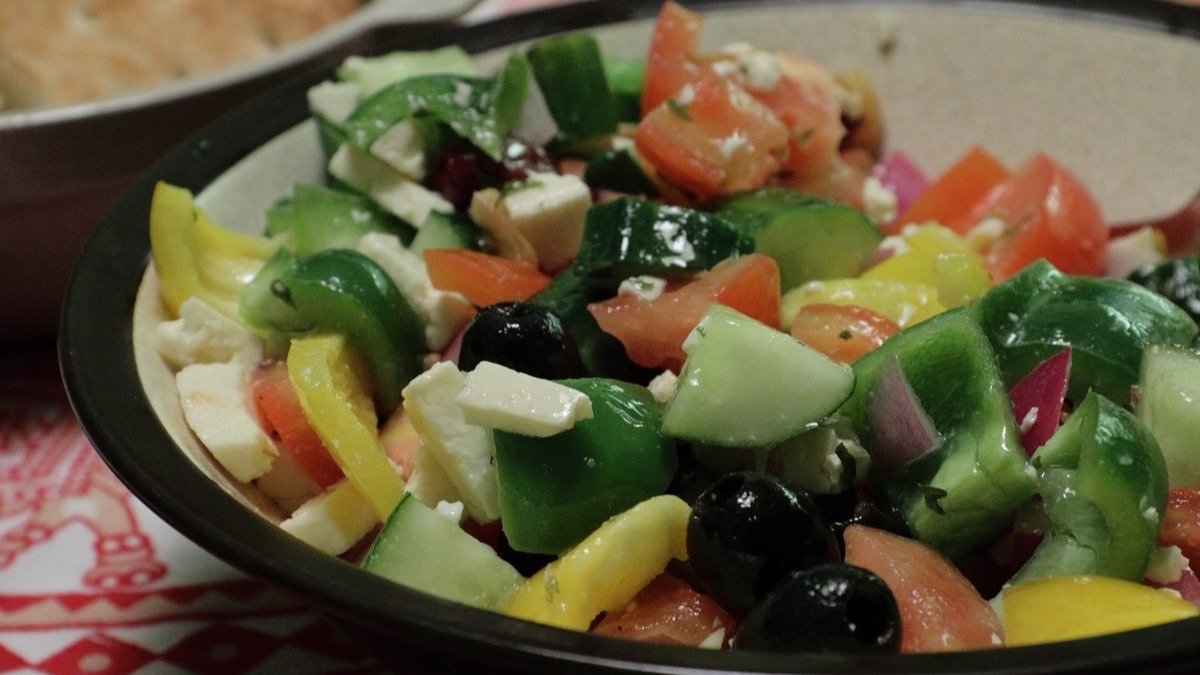
- Banner photo: Greek salad (5178297958).jpg by Geoff Peters, CC BY 2.0, via Wikimedia Commons (cropped).
- Photo: Checking Blood Sample (9955279835).jpg by National Eye Institute, CC BY 2.0, via Wikimedia Commons (cropped).
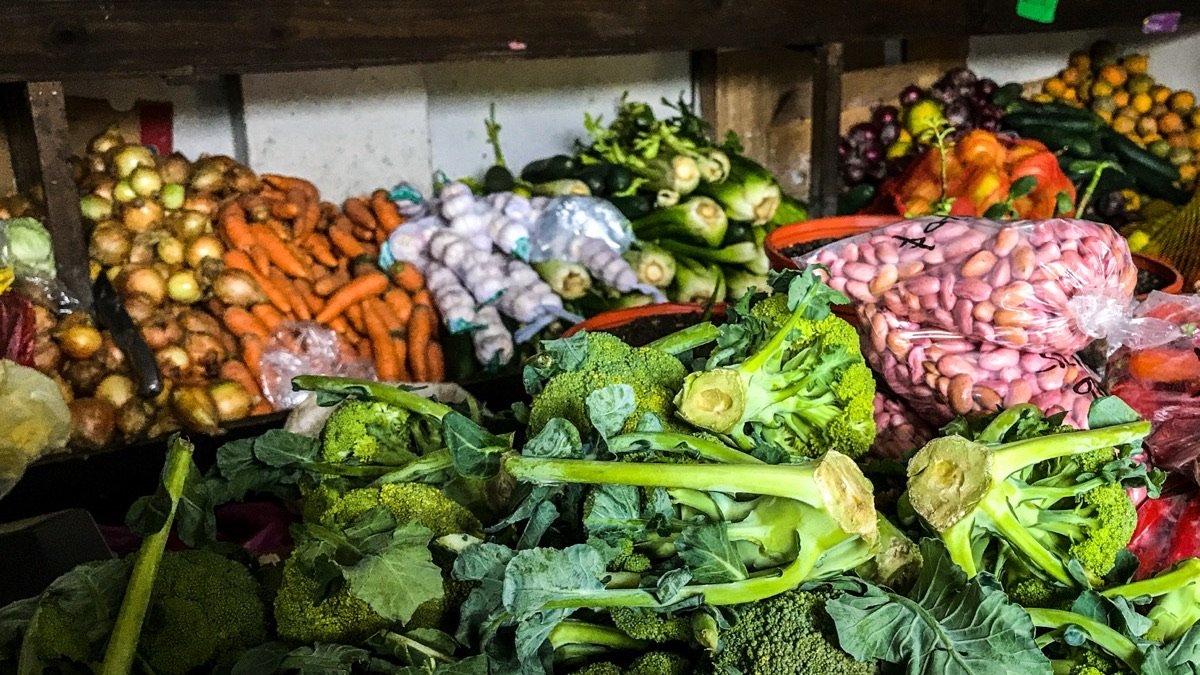
- Photo: Fresh vegetables and fruits at the market.jpg by FranHogan, CC BY-SA 4.0, via Wikimedia Commons (cropped).