



Regular exercise is one of the best-tested ways to prevent type 2 diabetes, and it works best combined with modest weight loss. In the landmark Diabetes Prevention Program (DPP) trial, adults with prediabetes who aimed for at least 150 minutes a week of activity like brisk walking and a 7% weight loss cut their risk of type 2 diabetes by 58% over about three years, compared with placebo. The CDC's National Diabetes Prevention Program is built on the same idea: about 150 minutes of brisk activity a week and a 5% to 7% weight loss.
For most adults with prediabetes, a practical target looks like this:
- 150 minutes of brisk walking or similar activity each week
- Strength training 2 or 3 days a week
- Getting up from your chair at least every 30 minutes
- A short walk after your biggest meal
Below: the evidence, a sample week, the blood test ranges to know and how to find a CDC-recognized program.
Prediabetes is common, and most people don't know they have it
November is American Diabetes Month, the American Diabetes Association's (ADA) annual awareness campaign, which makes it a good time to check your risk. About 115 million U.S. adults have prediabetes, more than 2 in 5, according to the CDC. It usually causes no signs, so 8 in 10 people who have it don't know it. In prediabetes, blood sugar is higher than normal but not high enough for a type 2 diabetes diagnosis. The CDC says prediabetes raises the risk of type 2 diabetes, heart disease and stroke. Lifestyle changes can stop or slow the progression to type 2 diabetes.
Risk factors on the CDC's list include:
- Having overweight
- Being 45 or older
- Having a parent or sibling with type 2 diabetes
- Being physically active fewer than three times a week
- A history of gestational diabetes
- Polycystic ovary syndrome
The CDC also notes higher risk in several racial and ethnic groups.
Start with a 1-minute check. Take the CDC's prediabetes risk test or the ADA's type 2 diabetes risk test. A risk test isn't a diagnosis. If your score is high, ask your health care provider for a blood test.
Know your numbers: A1C and blood sugar ranges
| Test | Normal | Prediabetes | Diabetes |
|---|---|---|---|
| A1C (average blood sugar over about 2–3 months) | Below 5.7% | 5.7% to 6.4% | 6.5% or above |
| Fasting blood sugar | 99 mg/dL or below | 100 to 125 mg/dL | 126 mg/dL or above |
| 2-hour glucose tolerance test | Below 140 mg/dL | 140 to 199 mg/dL | 200 mg/dL or above |
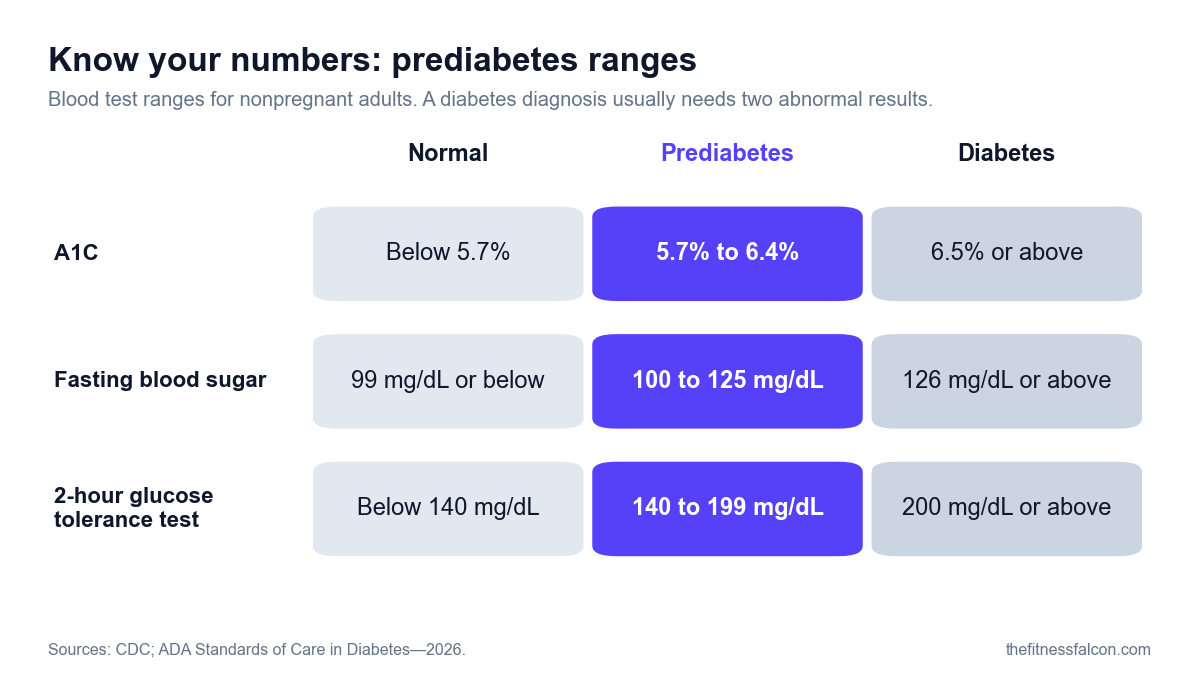
- A diabetes diagnosis needs confirmation. Unless blood sugar is unmistakably high, the ADA requires two abnormal results. These can be two different tests or the same test repeated.
- Risk rises across the range. The ADA notes that risk keeps rising within each prediabetes range and is disproportionately higher toward the top.
- When to get screened. The ADA recommends screening every adult starting at age 35. Adults with overweight or obesity plus another risk factor should be screened at any age. If your results are normal, repeat the test at least every 3 years. If you have prediabetes, test at least once a year.
What the Diabetes Prevention Program showed
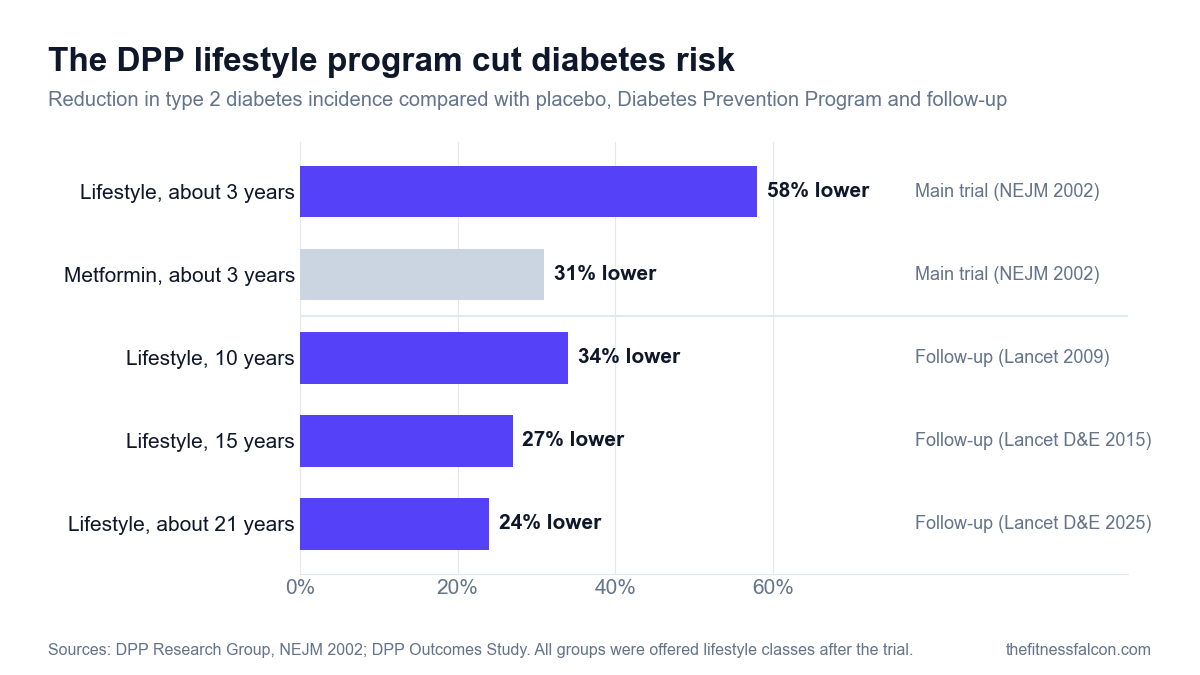
The DPP, published in the New England Journal of Medicine in 2002, randomly assigned 3,234 adults with raised blood sugar to one of three groups: placebo, the drug metformin or an intensive lifestyle program. Their average age was 51 and their average BMI was 34. The lifestyle goals were a weight loss of at least 7% and at least 150 minutes of physical activity a week.
| Time point | Reduction in type 2 diabetes incidence | Note |
|---|---|---|
| About 3 years | 58% | Metformin reduced incidence by 31%. NIDDK reports a 71% reduction for lifestyle participants aged 60 and older. |
| 10 years | 34% | All groups were offered lifestyle classes after the trial. |
| 15 years | 27% | The gap between groups narrowed over time. |
| About 21 years | 24% | Median diabetes-free time was 3.5 years longer. |
Two follow-up analyses are useful if you're focused on exercise:
- Weight loss was the strongest driver. Each kilogram (2.2 pounds) lost was linked to a 16% lower diabetes risk, and activity helped people keep the weight off.
- Activity mattered even without the weight loss. Among participants who hadn't reached the weight loss goal at one year, those who met the activity goal had 44% lower diabetes incidence.
Getting your numbers back to normal pays off. In DPP follow-up data published in The Lancet in 2012, people who returned to normal blood sugar at least once during the trial had a 56% lower diabetes risk afterward than those who stayed in the prediabetes range.
Limitations. The DPP tested diet, activity and coaching together, so it can't isolate exercise, and the 44% figure is an observational analysis rather than a randomized comparison. Most participants had obesity and had close research support. The benefit also shrank as people regained weight. "Reversing" prediabetes means improving your numbers and lowering your risk, not a permanent cure, so keep the habits and keep getting tested.
How much and what kind of exercise
Federal activity guidelines for adults call for at least 150 minutes a week of moderate aerobic activity plus muscle strengthening on 2 or more days. The ADA's 2026 Standards of Care recommend that adults with overweight or obesity at high risk of type 2 diabetes be referred to a diabetes prevention program. That program should aim for at least 5% to 7% weight loss through a reduced-calorie eating pattern and 150 or more minutes a week of moderate activity. The ADA adds that a prevention plan can include resistance training, and its activity recommendations advise interrupting long periods of sitting at least every 30 minutes.
| Component | Weekly target | Basis |
|---|---|---|
| Moderate aerobic activity (brisk walking, cycling, swimming, dancing) | 150+ minutes, on at least 3 days | DPP goal; CDC lifestyle program; federal guidelines |
| Strength training (bands, weights, body weight) | 2–3 sessions on non-consecutive days | Federal guidelines (2+ days); ADA (2–3 sessions for adults with diabetes) |
| Breaking up sitting | Get up at least every 30 minutes | ADA, for people with or at risk of diabetes |
| Walks after meals | 10–15 minutes, especially after your largest meal | Small short-term glucose studies; an add-on, not a replacement |
How brisk is "brisk"? Use the CDC's talk test. At moderate intensity you can talk but not sing. If you can't say more than a few words without pausing for breath, you're at vigorous intensity. More on pacing by feel: easy cardio without a heart rate monitor.
Spread it out. DPP participants were encouraged to be active at least three times a week, for at least 10 minutes at a time. Up to 75 minutes of strength training could count toward their 150 minutes.
Don't skip strength training. The ADA notes that higher relative muscle mass is associated with better insulin sensitivity and lower diabetes risk. In a two-year randomized trial in China, adults with prediabetes did supervised aerobic training, resistance training or both, for 60 minutes three days a week. All three groups developed diabetes far less often than a control group, and resistance training worked about as well as aerobic training. The trial was small (137 people analyzed) and supervised, so home results may differ. For a low-time starting point, see our guide to the minimum effective dose of strength training.
A post-meal walk routine
Several small, short-term studies suggest that light movement after meals or during long sitting spells blunts the rise in blood sugar after eating:
- Older adults with raised fasting glucose (10 people, Diabetes Care, 2013): three 15-minute post-meal walks and one 45-minute walk both improved 24-hour glucose. The post-meal walks lowered blood sugar more in the 3 hours after dinner.
- Adults with overweight or obesity (19 people, Diabetes Care, 2012): taking a 2-minute walk every 20 minutes of sitting lowered glucose and insulin after a test drink.
- Pooled data (a 2022 meta-analysis of seven one-day trials): light walking breaks reduced post-meal glucose and insulin more than standing breaks or continuous sitting.
- Adults with type 2 diabetes (2016 trial): a 10-minute walk after each main meal beat one 30-minute daily walk for post-meal glucose, especially after dinner. We compare the two in 10-minute walks after meals vs. one 30-minute walk.
None of these studies shows that post-meal walks alone prevent diabetes, so add them to your 150 minutes rather than replacing it. A simple routine:
- Start with your biggest meal, often dinner.
- Walk soon after eating for 10 to 15 minutes at an easy-to-brisk pace: around the block, a mall or a parking lot.
- Make it automatic. Leave your shoes by the door, or invite family or a neighbor.
- Have a bad-weather backup, such as marching in place, hallway laps, stairs or a walking pad.
- At a desk, set a 30-minute timer, then stand and walk for 2 to 3 minutes. See our post on exercises to break up a sitting day for ideas.
A sample weekly plan for prediabetes
The main aerobic sessions in this week add up to 150 minutes. Post-meal walks and sitting breaks are extra.
| Day | Main session | Daily habits |
|---|---|---|
| Monday | Brisk walk, 30 min | 10-min walk after dinner; get up every 30 min |
| Tuesday | Strength, 20–30 min: sit-to-stand squats, wall or counter push-ups, resistance-band rows, glute bridges, step-ups | 10-min walk after dinner |
| Wednesday | Brisk walk, cycling or swimming, 30 min | 10-min walk after dinner; get up every 30 min |
| Thursday | Brisk walk, 15 min | 10-min walk after dinner |
| Friday | Strength, 20–30 min (same moves; progress when sets feel easy) | 10-min walk after dinner; get up every 30 min |
| Saturday | Longer activity, 45 min: hike, bike ride or long walk | Walk after your largest meal |
| Sunday | Brisk walk, 30 min, plus optional stretching or balance work | 10-min walk after dinner |
Strength sessions: do 1 to 3 sets of 8 to 12 reps of each move, stopping before your form breaks down. A set of resistance bands is enough to start. Our beginner resistance band routine covers form and progression.
Starting from little activity? Begin with three 10-minute walks a week plus the after-dinner walk, and add a few minutes each week until you reach 150. If you have heart disease, joint problems or another health condition, or haven't exercised in years, check with your clinician before adding vigorous exercise.
Pair it with food changes. Weight loss mattered most in the DPP, and the ADA recommends an evidence-based eating pattern, such as Mediterranean or lower-carbohydrate, for prediabetes. Its nutrition guidance emphasizes vegetables, legumes and whole grains. Our guide to high-fiber foods is a good place to start.
Join a CDC-recognized lifestyle change program
For coaching and structure, consider the CDC's National DPP lifestyle change program. It lasts a year and is led by a trained lifestyle coach. Groups meet about weekly for the first 6 months, then once or twice a month. You can join in person at clinics, community organizations and worksites, online, or through live distance learning. The goals are about 5% to 7% weight loss (10 to 14 pounds for a 200-pound person) and at least 150 minutes of activity a week. The CDC says the program can lower type 2 diabetes risk by 58%, or 71% for people over 60.
Who can join: adults 18 or older with a BMI of 25 or higher (23 or higher for Asian American people) who aren't pregnant and have never been diagnosed with diabetes. You also need one of these: a prediabetes-range blood test within the past year, a history of gestational diabetes, or a score of 5 or higher on the CDC risk test.
How to find one: search the CDC's National DPP registry by city, state or ZIP code, language and format, including online. Costs vary. Some programs are free, and some employers and insurers cover the cost.
On Medicare? The Medicare Diabetes Prevention Program costs nothing if you qualify. You need one of these results within 12 months: A1C 5.7% to 6.4%, fasting glucose 110 to 125 mg/dL, or a 2-hour glucose of 140 to 199 mg/dL. You also need a BMI of 25 or more (23 or more if you're Asian) and no history of diabetes or end-stage renal disease.
When to see a clinician
- Your risk test score is high, or you're 35 or older and have never had a diabetes blood test.
- You have prediabetes. The ADA advises testing for diabetes at least once a year. For some higher-risk adults, it also suggests considering metformin, especially those with a BMI of 35 or more, higher glucose or A1C, or past gestational diabetes.
- A result falls in the diabetes range. You'll need confirmation and a care plan, not just an exercise plan.
- You have possible diabetes symptoms. The CDC lists frequent urination, increased thirst and hunger, unexplained weight loss, fatigue, blurry vision, and frequent urinary tract or yeast infections.
FAQ
Can exercise alone reverse prediabetes?
It can help, but the strongest evidence is for exercise combined with weight loss and healthier eating. In the DPP, meeting the activity goal was still linked to lower risk in people who didn't reach the weight loss goal. The ADA says people with prediabetes who are at a healthy weight should also be considered for programs that build aerobic and resistance exercise habits.
How long does it take to see a change in A1C?
A1C reflects average blood sugar over about the past 2 to 3 months, so it changes slowly. Ask your clinician when to retest. A test a few months after you change your habits, or at your yearly check, shows the trend better than single readings.
This article is general information, not medical advice. It doesn't replace testing, diagnosis or care from a qualified health professional, especially if you take medications or have other health conditions.
Sources
- CDC: Preventing Type 2 Diabetes (115 million adults; 8 in 10 unaware).
- CDC: The Surprising Truth About Prediabetes.
- CDC: Prediabetes – Your Chance to Prevent Type 2 Diabetes (risk factors; program goals).
- CDC: Prediabetes Risk Test; ADA: Type 2 Diabetes Risk Test.
- CDC: Diabetes Testing; CDC: Diabetes Symptoms.
- CDC: Lifestyle Change Program Details; eligibility; Find a Lifestyle Change Program.
- Medicare.gov: Medicare Diabetes Prevention Program.
- American Diabetes Association, Standards of Care in Diabetes—2026: 2. Diagnosis and Classification; 3. Prevention or Delay of Diabetes; 5. Facilitating Positive Health Behaviors.
- DPP Research Group, Reduction in the incidence of type 2 diabetes with lifestyle intervention or metformin, NEJM 2002; NIDDK: Diabetes Prevention Program.
- DPP Outcomes Study: 10-year follow-up, Lancet 2009; 15-year follow-up, Lancet Diabetes & Endocrinology 2015; 21-year follow-up, Lancet Diabetes & Endocrinology 2025.
- Hamman et al., Effect of weight loss with lifestyle intervention on risk of diabetes, Diabetes Care 2006.
- Perreault et al., Regression from prediabetes to normal glucose regulation and long-term diabetes risk, Lancet 2012.
- Dai et al., Two-year supervised resistance training prevented diabetes incidence in people with prediabetes, Diabetes/Metabolism Research and Reviews 2019.
- DiPietro et al., Three 15-min bouts of moderate postmeal walking, Diabetes Care 2013.
- Dunstan et al., Breaking up prolonged sitting reduces postprandial glucose and insulin responses, Diabetes Care 2012.
- Buffey et al., Interrupting prolonged sitting with standing and light-intensity walking, Sports Medicine 2022.
- Reynolds et al., Advice to walk after meals in type 2 diabetes, Diabetologia 2016.
- CDC: Physical Activity Guidelines for Adults; CDC: Measuring Physical Activity Intensity.
- American Diabetes Association: American Diabetes Month.
- Banner photo: Couple walking in park (1).jpg by Bill Branson, National Cancer Institute, public domain, via Wikimedia Commons.