

If you are over 40 and want one exercise for your bones, brisk walking or jogging has the most consistent support from a new review of 124 trials. The review, published in The BMJ on September 9, 2026, pooled trials with 18,429 middle-aged and older adults. Brisk walking or jogging was linked to small gains in bone mineral density (BMD) at the spine, the femoral neck (the top of the thigh bone) and the whole hip. Combined aerobic and resistance training did as well at the spine. Benefits looked meaningful from about 600 MET-minutes a week, which the authors put at roughly 2 to 3 hours of brisk walking or jogging.
The caveats matter: most of the evidence was low to moderate certainty, the gains were small, and the exercise types linked with fewer fractures were different ones. Below is what the study found, what 600 MET-minutes looks like in a real week, and a routine built on US guidelines, with changes for osteoporosis.
What the BMJ study did
The study was led by Changbo Lu and Xiaojiang Yang, with colleagues at hospitals and universities in China. It is a network meta-analysis, which compares many exercise types at once by linking trials through shared comparison groups.
- Trials included: 124 randomized controlled trials, 18,429 participants in total.
- Who: adults 40 and older, grouped as middle-aged (40 to 60) and older (over 60).
- Comparisons: structured exercise programs against a non-exercise control group or another type of exercise.
- Main outcomes: change in BMD at the lumbar spine (lower back), femoral neck and total hip. Fractures were a secondary outcome.
- Dose: a dose-response analysis measured exercise in MET-minutes per week (explained below).
- Certainty: each result was graded with a standard tool called CINeMA (Confidence in Network Meta-Analysis).
- Funding: the National Natural Science Foundation of China. The authors reported no financial ties to organizations with an interest in the results.
A note on our reporting: we couldn't access the full text, so every study figure here comes from the published abstract on PubMed. We left out extra numbers from news coverage that we couldn't check against the paper.
What it found: which exercise helped bone density most
"Mean difference" is the average extra BMD compared with control groups, in grams per square centimeter (g/cm²). The range in brackets is the 95% credible interval, where the true effect most likely lies.
| Bone site | Exercise type | Mean difference vs. control (g/cm²) | Certainty of evidence |
|---|---|---|---|
| Lumbar spine | Brisk walking or jogging | 0.013 (0.006 to 0.021) | Low |
| Lumbar spine | Combined aerobic and resistance exercise | 0.013 (0.010 to 0.016) | Low to moderate |
| Femoral neck | Brisk walking or jogging | 0.009 (0.001 to 0.018) | Low to moderate |
| Femoral neck | Mind-body exercise | 0.007 (0.002 to 0.013) | Moderate |
| Total hip | Brisk walking or jogging (the only type the abstract names for this site) | 0.021 (0.005 to 0.038) | Low |
Brisk walking or jogging is the one activity that appears at all three sites, which is why it is being called the "best" exercise for bones. The authors are more careful: they say it "may provide the greatest benefit" at the hip and that, together with combined aerobic-resistance training, it "probably" offers favorable benefits for BMD.
The dose: about 400 to 600 MET-minutes a week
More exercise was not always better: the dose-response curves were "generally an inverted U-shape," rising and then falling. The abstract gives two thresholds where the change might become clinically meaningful:
- about 400 MET-minutes a week for the lumbar spine
- about 600 MET-minutes a week for the femoral neck and total hip
The authors sum this up as "around 600 METs-min/week," or "about 2-3 hours of brisk walking or jogging" a week. The abstract doesn't say where the curves peak, so we can't tell you how much is too much.
Fractures: a different set of winners
Only 26 of the trials (11,132 people) tracked fractures. In that smaller set, two exercise types were linked with fewer fractures, both on low-certainty evidence:
- Mixed aerobic exercise: odds ratio 0.29 (0.11 to 0.78). That is much lower odds of a fracture than controls, but the wide range shows how imprecise the estimate is.
- Mind-body exercise: odds ratio 0.58 (0.36 to 0.93).
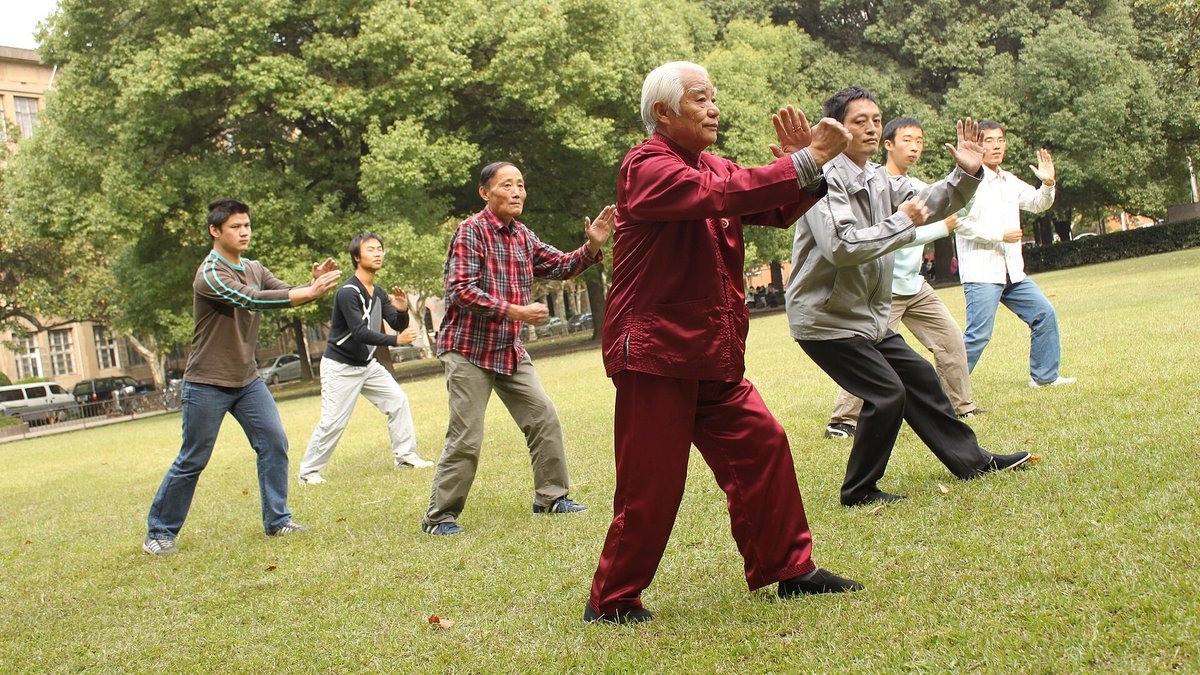
The other exercise types had "neutral effects" on fractures. The abstract doesn't define "mixed aerobic" or "mind-body," or list which activities fall into each group. Mind-body is usually taken to cover practices like tai chi, qigong and yoga, but treat that as a likely reading, not a confirmed detail of this paper.
What this study can't tell you
- The certainty is mostly low to moderate. The authors call their findings "cautious support" for prescribing exercise by type and dose.
- The bone density gains are small. Differences of 0.007 to 0.021 g/cm² are modest. The authors describe exercise as "attenuating," or slowing, the age-related decline in BMD.
- Denser bones on a scan don't guarantee fewer fractures. Brisk walking or jogging led on BMD, yet the abstract does not single it out for fractures. Fractures also depend on falls, muscle strength and balance. The USPSTF notes that BMD alone "may not be the most useful predictor of fracture risk."
- MET-minutes measure energy, not impact. Bones respond to the force placed on them, and two activities with the same MET-minutes can load your skeleton very differently. Treat the dose as a rough target.
- Details we couldn't check: the abstract doesn't report the share of women, how many were postmenopausal, how long the trials lasted, or what the exercise categories contained.
What 600 MET-minutes a week looks like
A MET (metabolic equivalent of task) compares an activity's energy cost with sitting quietly, which counts as 1 MET. Multiply an activity's METs by the minutes you do it to get MET-minutes. The HHS Physical Activity Guidelines example: 30 minutes of a 4-MET activity is 120 MET-minutes.
We used the MET values in the 2024 Adult Compendium of Physical Activities, the reference the HHS guidelines point readers to, to turn the study's targets into weekly minutes:
| Activity (Compendium code) | METs | Minutes a week for ~400 | Minutes a week for ~600 |
|---|---|---|---|
| Walking, 2.8–3.4 mph (4.5–5.5 km/h), moderate pace (17190) | 3.8 | 105 | 158 |
| Walking, 3.5–3.9 mph (5.6–6.3 km/h), brisk (17200) | 4.8 | 83 | 125 |
| Walking, 4.0–4.4 mph (6.4–7.1 km/h), very brisk (17220) | 5.5 | 73 | 109 |
| Jogging, self-selected pace (12020) | 7.5 | 53 | 80 |
| Tai chi or qigong, general (15670) | 3.3 | 121 | 182 |
| Weight training, multiple exercises, 8–15 reps (02054) | 3.5 | 114 | 171 |
At a true brisk pace, about 125 minutes a week reaches 600 MET-minutes: 25 minutes five days a week, or about 40 minutes three times a week. At a gentler pace it takes closer to 160 minutes, within the authors' "2 to 3 hours." Some cautions:
- The Adult Compendium is built for ages 19 to 59. Its team publishes a separate Older Adult Compendium for people 60 and over, with different values, so treat the table as an estimate.
- The abstract doesn't say the thresholds apply equally to tai chi or weight training. Those rows only show the arithmetic.
- NIAMS defines brisk walking as "3 to 4 miles per hour" in its bone health guidance.
How this fits US guidelines on exercise for bone health
The study backs up existing US advice rather than overturning it. The Physical Activity Guidelines for Americans describe bone-strengthening activity as movement that "produces a force on the bones of the body that promotes bone growth and strength," usually through impact with the ground, such as running, brisk walking and weight lifting. Adults should get at least 150 minutes a week of moderate activity (or 75 minutes of vigorous activity) and do muscle-strengthening work on 2 or more days. Older adults should add balance training to make their routine "multicomponent."
Two points in the guidelines connect directly to the new findings. Physically active people, "especially women, appear to have a lower risk of hip fracture." And programs that mix strength and balance training work best for preventing falls, while "doing only low-intensity walking does not seem to reduce the risk of fall-related injuries and fractures." The bone results in the BMJ review were for brisk walking or jogging, and fracture prevention seems to need more than walking alone.
The National Institute of Arthritis and Musculoskeletal and Skin Diseases (NIAMS) recommends combining weight-bearing exercise (brisk walking, jogging, stair climbing, dancing, racket sports), resistance training and balance training such as tai chi. The Bone Health & Osteoporosis Foundation (BHOF) names weight-bearing and muscle-strengthening exercise as the two types that matter most for bone density.
A weekly bone-friendly routine
This sample week combines the study's dose with the federal guidelines. It is our example, not a protocol from any trial in the review. If you have osteoporosis or past fractures, read the next section first.
| Day | Activity | How |
|---|---|---|
| Monday | Brisk walk, 40 min | 3.5 mph or faster on a level path or treadmill. Include a few hills or stairs if your joints allow. |
| Tuesday | Strength, 20 min | Sit-to-stands from a chair, step-ups on a low step, wall push-ups, resistance-band rows, heel raises. 1 to 2 sets of 8 to 12 reps each. |
| Wednesday | Brisk walk, 40 min | If you have no osteoporosis and your doctor agrees, you can add 1-minute jogging intervals. |
| Thursday | Tai chi or a balance class, 30 min | A class, a video or a community program. It adds balance training for fall prevention. |
| Friday | Brisk walk, 40 min | Same pace as Monday. |
| Saturday | Strength, 20 min | Repeat Tuesday. Add weight or reps when the last 2 reps of a set feel easy. |
| Sunday | Rest or an easy walk | Recovery day. |
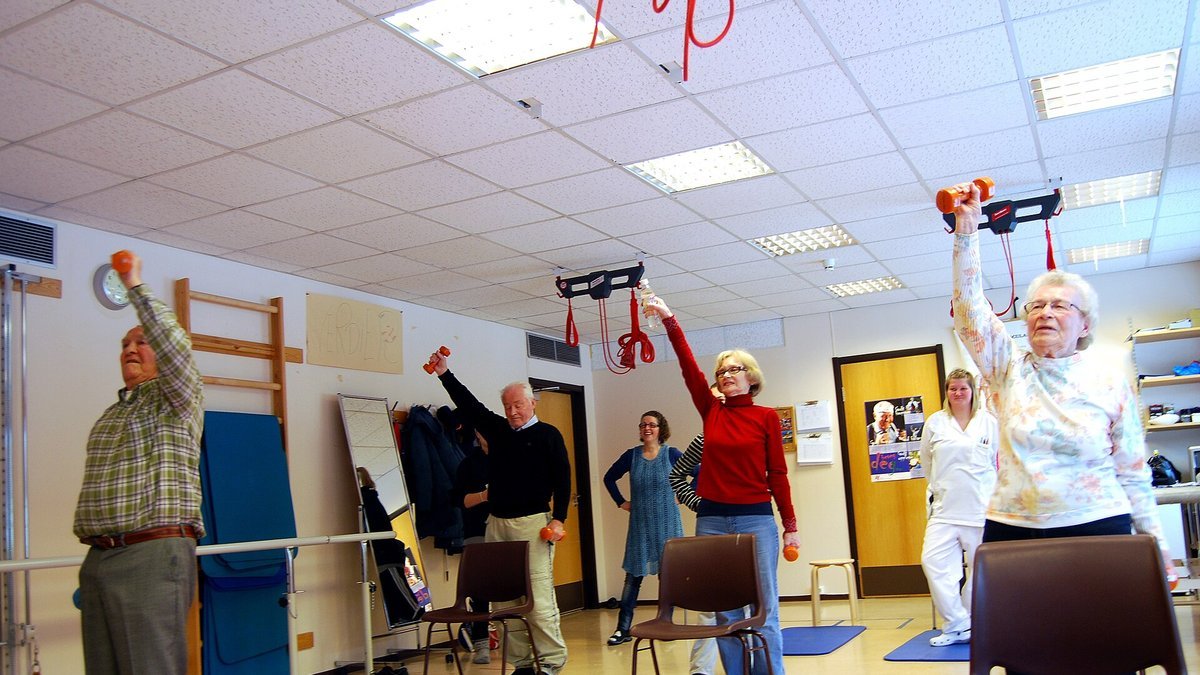
Using the Compendium values above, this week comes to roughly 800 MET-minutes (about 576 from walking, 140 from strength work and 99 from tai chi). It covers all three exercise types NIAMS recommends and meets the HHS minimums. If you are starting from very little activity, begin with 10- to 15-minute walks and build up over several weeks. For a simpler strength starting point, see our guide to how little strength training is enough for beginners. If you are in your 80s or 90s, our safe strength, balance and walking routine for seniors over 80 starts more gently.
Exercising safely with osteoporosis or low bone density
Exercise is still recommended if you have osteoporosis, but how you move matters. NIAMS says that in osteoporosis, fractures can happen after a minor fall or even from "normal stresses such as bending, lifting, or even coughing." Most happen at the hip, spine or wrist.
BHOF advises people with bone loss in the spine to avoid:
- bending forward from the waist, and toe-touches, sit-ups or abdominal crunches
- twisting and bending the trunk "to an extreme"
- carrying packages that are too heavy
- reaching for objects on a high shelf
- bending forward when you cough or sneeze (gently pressing a hand against your chest helps)
After a spine fracture, BHOF also says to be very careful with reaching down, rapid twisting and anything that raises your chance of a fall. In practice:
- Keep impact low if your fracture risk is high. BHOF says you may need to avoid high-impact exercise such as jogging, jumping or stair climbing if you've broken a bone from osteoporosis or are at risk of one. It lists brisk walking among the low-impact alternatives.
- Keep your spine tall. In sit-to-stands and step-ups, keep your back straight and chest up.
- Be careful with yoga and Pilates. Some poses involve the forward bends and twists BHOF advises against. BHOF publishes separate safe-yoga and safe-Pilates guides for people with osteoporosis.
- Work with a physical therapist if you're at high risk of fracture. BHOF recommends this, and a therapist can adapt each move.
- Stay pain-free. BHOF says to exercise in a pain-free range of motion and to ease up if soreness lasts more than a day or two.
Calcium, vitamin D and bone density screening
Exercise works alongside nutrition and screening. The NIH Office of Dietary Supplements (ODS) gives these daily targets:
| Group | Calcium | Vitamin D |
|---|---|---|
| Adults 19–50 | 1,000 mg | 600 IU (15 mcg) |
| Men 51–70 | 1,000 mg | 600 IU (15 mcg) |
| Women 51–70 | 1,200 mg | 600 IU (15 mcg) |
| Adults 71 and older | 1,200 mg | 800 IU (20 mcg) |
ODS notes that the body absorbs and retains less calcium after menopause, and that calcium is absorbed best in doses of 500 mg or less at a time. It also says calcium and vitamin D supplements slightly increase bone strength in older adults, but "it's not clear whether they reduce the risk of falling or breaking a bone." Our guides to calcium-rich foods and whether you need vitamin D in winter go into the details.
On screening, the US Preventive Services Task Force (January 2025) recommends:
- Women 65 and older: osteoporosis screening with a DXA bone density scan.
- Postmenopausal women under 65: screening if a clinical risk assessment shows increased fracture risk.
- Men: the evidence is insufficient to recommend for or against screening, so clinicians decide case by case.
The USPSTF puts osteoporosis prevalence at 12.6% of US adults 50 and older (age-adjusted), and at 27.1% of women and 5.7% of men 65 and older. Because it usually causes no symptoms until a bone breaks, a scan is often the only way to know how cautious you need to be.
When to talk to your doctor
- You have osteoporosis or low bone density (osteopenia). NIAMS advises talking to a health care provider before starting an exercise program.
- You broke a bone in a minor fall, such as from standing height.
- You have osteoporosis and develop back pain, or you've lost height. BHOF says a loss of half an inch or more in a year may be a cause for concern.
- You have heart disease, diabetes or high blood pressure and haven't exercised in a while.
- You're a woman 65 or older who hasn't had a bone density test, or you're a postmenopausal woman with risk factors such as a parent who broke a hip.
- You take medicine for osteoporosis and want to know which activities are safe for you.
This article is general information, not medical advice. A clinician who knows your bone density and fracture history can tell you how much impact and load is right for you.
FAQ
What is the best exercise for bone density?
In the 2026 BMJ review of 124 trials, brisk walking or jogging was the only exercise linked to bone density gains at the spine, femoral neck and total hip. US guidelines still recommend mixing weight-bearing, strength and balance exercise.
How much walking do you need for bone density?
The study suggests benefits may become meaningful at about 600 MET-minutes a week, or about 2 to 3 hours of brisk walking or jogging. Using the 2024 Compendium, that is about 125 minutes a week at 3.5 to 3.9 mph.
Can exercise reverse osteoporosis?
The evidence doesn't show that. In this review, exercise slowed age-related bone loss with small BMD gains. If you have osteoporosis, exercise is one part of care alongside nutrition, fall prevention and, when prescribed, medication.
Is tai chi good for your bones?
Possibly. Mind-body exercise was linked with a small femoral neck benefit (moderate certainty) and fewer fractures (low certainty), though the abstract doesn't list which practices it included. NIAMS lists tai chi as balance training that helps prevent falls.
Sources
- Lu C, Li L, Zhang L, et al. Effect of exercise on bone health in middle aged and older adults: hierarchical network meta-analysis of randomised trials, BMJ 2026;394:e100561 (abstract on PubMed; doi:10.1136/bmj-2026-100561).
- Compendium of Physical Activities: Herrmann SD et al. 2024 Adult Compendium of Physical Activities: a third update of the energy costs of human activities, Journal of Sport and Health Science 2024;13(1):6–12 (walking, running, sports and conditioning MET tables).
- US Department of Health and Human Services: Physical Activity Guidelines for Americans, 2nd edition.
- NIAMS: Exercise for Your Bone Health.
- NIAMS: Osteoporosis.
- Bone Health & Osteoporosis Foundation: Be Bone Strong – Exercise/Safe Movement.
- Bone Health & Osteoporosis Foundation: Protecting Your Spine.
- Bone Health & Osteoporosis Foundation: Starting a New Exercise Program.
- US Preventive Services Task Force: Osteoporosis to Prevent Fractures: Screening (final recommendation, January 14, 2025).
- NIH Office of Dietary Supplements: Calcium fact sheet for consumers.
- NIH Office of Dietary Supplements: Vitamin D fact sheet for consumers.
- Banner photo: Walking for Health in Epsom-5Aug2009 (3).jpg by Paul Glendell / Natural England (Walking for Health), CC BY-SA 2.0, via Wikimedia Commons (cropped).
- Photo: Tai Chi Chuan In The Park.jpg by Seattletaijiquan, CC BY-SA 4.0, via Wikimedia Commons (cropped).
- Photo: Vekttrening for eldre.jpg by Bamble Kommune, CC BY-SA 2.0, via Wikimedia Commons (cropped).