

Suunto announced the Race 3S on October 15, 2026, and its US store lists the watch at $599. It is the successor to the Race S: a compact 46 mm GPS watch with a titanium bezel, sapphire glass, a 1.32-inch AMOLED screen rated at 2,000 nits, up to 38 hours of dual-band GPS, 64 GB of storage for free offline maps, and a new chat-based Suunto AI Coach in the Suunto app. Suunto's own US comparison page lists the Race S at $349, so the real question for most buyers is whether a brighter screen, eight more hours of dual-band GPS, tougher glass, a newer heart rate sensor and AI coaching are worth $250 more.
This is a news and specs summary based on Suunto's product page, its Race 3S vs. Race S comparison and its launch news page, all checked on November 4, 2026. We have not worn the Race 3S, so this is not a hands-on review. When we talk about accuracy, we say clearly whether it comes from Suunto or from independent research.
Suunto Race 3S at a glance
| Item | Official detail |
|---|---|
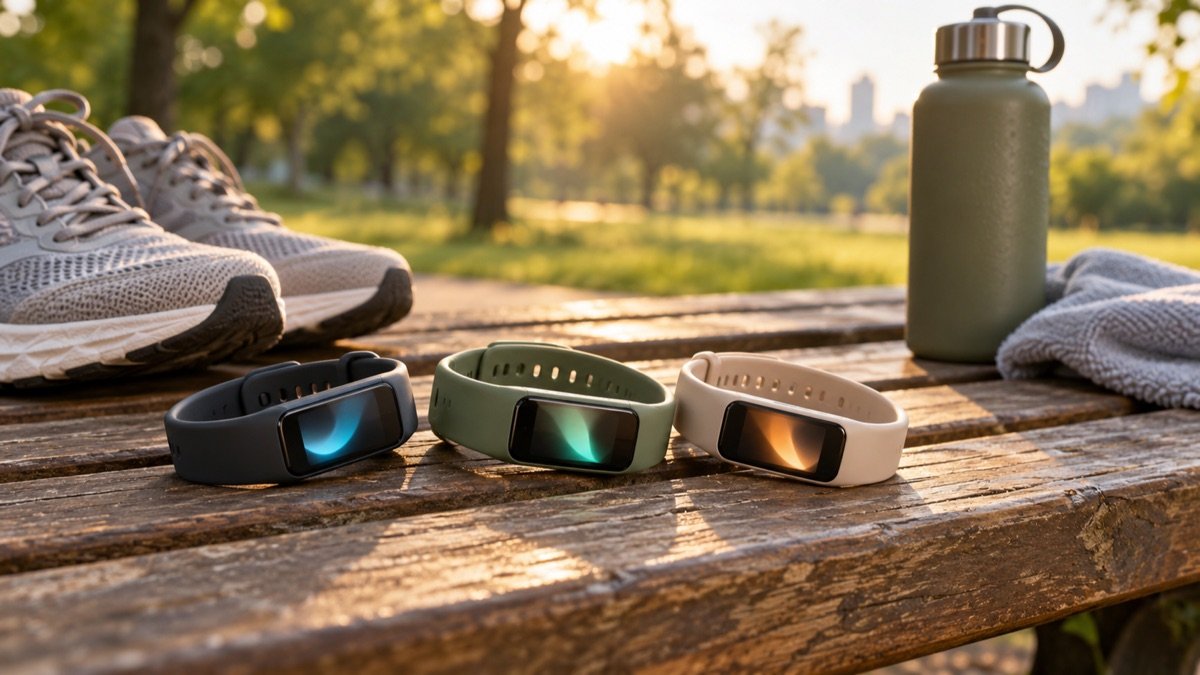
| US price | $599 (Titanium Black, Titanium Feather and Titanium Orchid, same price) |
| Announced | October 15, 2026 |
| Display | 1.32-inch AMOLED, 466 x 466 pixels, up to 2,000 nits, always-on option, 5–60 Hz adaptive refresh |
| Case and glass | 46 x 46 x 11.4 mm; titanium bezel and caseback, glass-fiber-reinforced polyamide case, sapphire crystal lens |
| Weight | 56 g (about 2.0 oz) with the silicone strap |
| Fit | 22 mm quick-release strap for 125–175 mm wrists (about 4.9–6.9 in); accessory strap up to 215 mm |
| Water rating | 5 ATM (50 m); swimming and snorkeling, not scuba diving |
| Battery | Up to 38 hours dual-band GPS; up to 12 days daily use |
| Processor | Apollo 510 |
| Storage | 64 GB for maps, routes, training data and music |
| GPS | Dual-band (L1 + L5); GPS, GLONASS, Galileo, BeiDou and QZSS |
| Sensors | Optical wrist heart rate (6 LEDs, 4 photodiodes), blood oxygen, barometric altimeter, compass, temperature |
| Connectivity | Bluetooth (phone, chest straps, power meters, foot pods, headphones); syncs with Strava, TrainingPeaks and others |
| Sport modes | More than 120, plus SuuntoPlus sport apps |
| Warranty | Two years on the watch, one year on accessories |
Price and availability
Suunto's US comparison page lists the Race 3S at $599 in all three colorways, and Suunto's news page dates the launch to October 15, 2026. Suunto's pages that we could read do not give a separate US shipping date, and Suunto's US store was rate-limiting our requests when we checked stock, so we have not stated one. Check Suunto's US store for current stock before you count on delivery by a race or a holiday.
The same Suunto comparison page lists the Race S at $349. That $250 gap is the real decision. The next section shows exactly what the extra money buys.
Every Race 3S that is paired and activated in the Suunto app by December 31, 2026 includes three months of Suunto AI Coach. Suunto has not published what AI Coach costs after that, so treat the long-term cost of ownership as unknown for now.
What's new vs. the Race S
We put Suunto's own US specs for both watches side by side. The screen size, resolution and water rating are the same. The differences are brightness, battery, glass, processor, heart rate sensor, storage and software.
| Spec | Race 3S | Race S |
|---|---|---|
| Price on Suunto's US page | $599 | $349 |
| Case size | 46 x 46 x 11.4 mm | 45 x 45 x 11.4 mm |
| Weight | 56 g with strap | 53 g titanium (60 g stainless steel) |
| Front glass | Sapphire | Corning Gorilla Glass |
| Display brightness | 2,000 nits | 600 nits |
| Resolution | 466 x 466 | 466 x 466 |
| Processor | Apollo 510 | Apollo 4 Plus |
| Wrist heart rate sensor | 6 LEDs + 4 photodiodes | 4 LEDs + 2 photodiodes |
| Dual-band GPS battery | Up to 38 hours | Up to 30 hours |
| Daily-use battery | Up to 12 days | Up to 9 days |
| Storage | 64 GB | 32 GB |
| Water rating | 5 ATM | 5 ATM |
| Suunto AI Coach at launch | Yes (3 months included if activated by Dec. 31, 2026) | No; Suunto says more watches get access in early 2027 |
In plain terms, the Race 3S is a bit heavier and a lot brighter. The brightness jump matters most in full sun, on snow and at altitude. The extra eight hours of dual-band GPS matter mainly if your long days, ultras or back-to-back training sessions push past 30 hours between charges. Suunto credits a higher-density silicon-carbon battery for the gain. If your longest run is a half marathon, the Race S battery is already far more than you need.
Suunto also says the Race 3S fast-charges: about 20 minutes on the charger gives roughly 10 hours of dual-frequency GPS, and a full charge takes about 1.5 to 2 hours.
Fitness and health features
Most of the Race 3S's training software is shared with other current Suunto watches. Suunto's product page lists these features.
Training and running
- Heart rate training: personal heart rate zones, training effect, recovery time, VO2 max estimate and lactate threshold detection.
- Running metrics from the wrist: running power, plus cadence, ground contact time and vertical oscillation, without an extra pod. You can still pair a Stryd or other Bluetooth power meter.
- ZoneSense: with a Suunto heart rate belt, Suunto says ZoneSense "reads true intensity straight from your body's response, so your training zones set themselves." It needs the chest strap; it is not a wrist-only feature.
- Structured workouts and intervals: interval guidance by pace, heart rate or distance, plus workouts built in the app or by AI Coach.
- More than 120 sport modes and SuuntoPlus sport apps.
Trail and navigation
- Free offline maps with contour lines, place names, roads and water features, downloaded through the Suunto app with no subscription.
- Climb Guidance: when you follow a route, it shows distance, ascent, average grade and steepest grade for each climb ahead.
- Route navigation with GPX/KML import, off-route alerts and estimated time of arrival.
- Barometric altimeter, compass and storm alarm.
24/7 health tracking
- Sleep: duration, time awake, light, deep and REM sleep, sleep quality, and average and minimum heart rate during sleep.
- HRV and recovery: HRV measured during sleep, a stress and recovery status, and a "daily resource level." If you want to know what these numbers can and cannot tell you, see our guides to what heart rate variability actually tells you and whether to skip a workout when a readiness score is low.
- Blood oxygen (SpO2): on demand and during sleep, and an altitude acclimation readout. Suunto says the readings "are for reference only and aren't intended for medical diagnosis."
- Daily activity: steps, calories, activity goals and daily minimum heart rate.
There is no ECG, blood pressure or irregular rhythm feature listed for the Race 3S. If you have a heart condition or symptoms such as chest pain, fainting or a racing heartbeat, a sports watch is not a substitute for seeing a clinician.
Features that are not there yet
Two features on the product page are promised for later, not shipped at launch:
- Race Planner: a pacing plan built from the route's elevation, the weather and your goal, with live ahead/behind guidance. Suunto says it "is planned for launch via a future Suunto app and firmware update" and that timing is subject to change.
- Offline music: a first for the Race series, but Suunto says it is "available via an over-the-air software update following product launch" with timing "subject to official announcement."
Buy the watch for what it does today. Treat promised updates as a bonus if they arrive.
Suunto AI Coach: what it is, and what we know about AI coaching
Suunto AI Coach is a chat feature that lives in the Suunto app; the plans, workouts and routes it creates sync to the watch. Suunto says it answers questions from your own Suunto data (workouts, daily activity, sleep stages, HRV, recovery and training load), builds a personalized running plan around a goal, and creates structured workouts and route options that you can save and sync to the watch. Examples Suunto gives include asking whether to swap planned intervals for an easy run when your legs feel heavy.
Suunto also adds its own caveat: AI Coach "is not a medical service, and AI-generated answers can occasionally be incomplete or incorrect," and it tells users to review any route before following it.
No independent study has tested Suunto AI Coach. The broader research on large language models for exercise advice is still early. A 2025 scoping review in JMIR Medical Informatics found only 11 eligible studies and concluded that these tools "remain a supplement to human expertise" and that expert validation is essential for safety (Lai and colleagues, 2025). That fits how we would use it: a convenient way to query your own data and draft a plan, not an authority that overrides how you feel, a coach, or medical advice.
Manufacturer claims vs. independent evidence
No peer-reviewed study of the Race 3S exists yet; it has been on sale for only a few weeks. The table separates what Suunto says from what research on similar sensors shows.
| Feature | Suunto's claim | Independent evidence |
|---|---|---|
| Wrist heart rate | Upgraded sensor and algorithm; Suunto's FAQ calls it "accurate for everyday wear and steady-effort exercise" | No Race 3S data. Wrist optical sensors are generally good at rest and steady effort but less accurate when intensity changes quickly. |
| Dual-band GPS | "Holds steady where terrain and buildings scatter the signal" | No Race 3S data. Older single-band sport watches, including Suunto models, tended to record distance short in forests and cities. |
| Calories | Tracked during exercise and daily activity | Weakest metric across brands; recent devices still show roughly 10%–40% error. |
| Sleep stages, HRV, recovery | Deep, light and REM sleep; HRV from sleep; recovery status | No Suunto-specific sleep validation found. Other brands show moderate accuracy for sleep stages vs. a sleep lab. |
| SpO2 | "For reference only," not for diagnosis | Not evaluated for this watch. |
| ZoneSense, AI Coach | Intensity from the body's response; personalized plans | No independent studies found on PubMed (searched November 4, 2026). |
Heart rate: wrist vs. chest strap
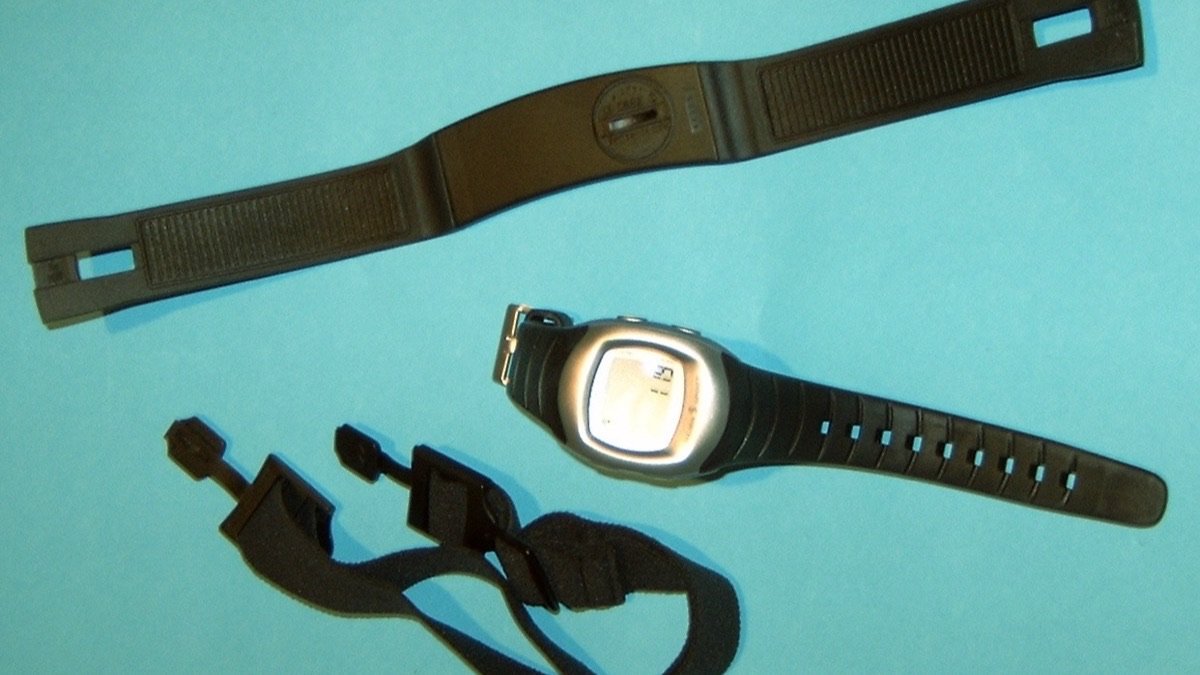
Here is the clearest finding. In a 2020 study of 21 adults on a 3.22 km (2-mile) uphill-then-downhill trail run, every optical (PPG) device, worn on the wrist, ear, finger or forearm, showed "poor heart rate agreement" with a chest-strap reference. The Garmin Fenix 5 wrist sensor had a mean absolute percentage error of 13%. The Suunto Spartan Sport, worn with its ECG chest strap, had an error of 2%. The authors recommended a chest strap for heart rate on trails (Navalta and colleagues, 2020). The same group found the same pattern in mountain biking, where only the Suunto setup with a chest strap met their validity thresholds (Carrier and colleagues, 2023).
Note that those good Suunto results came from the chest strap, not from a Suunto wrist sensor. A separate Duke study found no significant difference in optical heart rate accuracy across skin tones, but absolute error during activity was on average 30% higher than at rest (Bent and colleagues, 2020). Sensors have improved since then: a 2026 systematic review of 47 studies found that modern devices such as the Apple Watch and Garmin vivosmart typically reach correlations above 0.80 with reference heart rate during exercise (Hogue and colleagues, 2026).
Suunto's own wording is cautious too: its FAQ promises accuracy for "everyday wear and steady-effort exercise," not for intervals or technical descents. If you train by heart rate zones on hilly trails, or want ZoneSense, budget for a chest strap. If you mostly run steady and easy, the wrist sensor will probably be fine, and you can also run easy by feel without a heart rate monitor.
GPS distance
A Swiss Federal Institute of Sport study tested eight sport watches from Apple, Coros, Garmin, Polar and Suunto in urban, forest and track settings. Mean absolute errors ranged from 3.2% to 6.1%, distances were usually recorded short, and urban and forest areas were the hardest; distances "might be underestimated by up to 9%" (Gilgen-Ammann and colleagues, 2020). Those watches predate dual-band GPS, which is meant to reduce exactly these errors. Whether the Race 3S does better on real trails is a fair question that only independent testing will answer.
Calories
Do not plan your eating around the calorie number. In one lab study, an older Suunto Ambit2 overestimated energy use by about 36%–38% at slow running speeds, and all three watches tested underestimated it at fast speeds (Roos and colleagues, 2017). The 2026 systematic review found energy expenditure was the least improved metric, with recent devices still showing 10%–40% error against lab measurement (Hogue and colleagues, 2026).
Sleep tracking
We found no peer-reviewed validation of Suunto sleep staging. For context, a 2024 systematic review of the Fitbit Charge 4, Garmin Vivosmart 4 and WHOOP against sleep-lab polysomnography found moderate accuracy for total sleep time and sleep stages, and concluded all devices could still improve at staging (Schyvens and colleagues, 2024). Use sleep and HRV numbers as trends over weeks, not as a nightly verdict.
Who the Race 3S is for, and who should skip it
Good fit
- Trail runners and hikers with smaller wrists who want maps, Climb Guidance and dual-band GPS in a 56 g watch.
- People who often train in bright sun, snow or at altitude, where the 2,000-nit screen is the biggest visible upgrade.
- Ultra and long-day athletes whose efforts or training blocks push past the Race S's 30 hours of dual-band GPS.
- People who want a free-maps outdoor watch without a maps subscription, and who are curious to try AI coaching during the free three months.
Probably skip it
- Road runners training for 5Ks to half marathons. The Race S, at $349 on Suunto's page, covers that battery and feature load. If you are just getting started, a plan such as our beginner Turkey Trot 5K plan needs nothing more than a basic GPS watch or phone.
- Anyone who wants ECG, contactless payments or a full smartwatch app store. None of these appears in Suunto's Race 3S specifications.
- Buyers on a budget. If you mainly want steps, sleep and heart rate, see our list of budget fitness trackers under $200.
- People who want the longest possible battery. A larger ultra watch such as the Garmin Enduro 4 claims far longer GPS battery life, at a much higher price and weight.
Open questions
- Battery figures disagree on Suunto's own page. The spec comparison says up to 38 hours of dual-band GPS and up to 12 days of daily use. The FAQ on the same product page says "about 45 hours" with dual-frequency GPS and "around 10 days" in daily use. We used the 38-hour and 12-day figures because they appear in Suunto's spec tables and comparison page, but Suunto should clarify.
- Display type is described two ways. The comparison page says "LTPS Hybrid AMOLED"; the product FAQ says "LTPO AMOLED." Both agree on 1.32 inches, 466 x 466 and 2,000 nits.
- AI Coach price after the trial has not been published.
- Race Planner and offline music have no confirmed release dates.
- US shipping date was not stated on the Suunto pages we could read.
- Real-world accuracy of the new heart rate sensor and dual-band GPS has not been independently tested yet.
Frequently asked questions
How much does the Suunto Race 3S cost?
Suunto's US page lists it at $599 in Titanium Black, Titanium Feather and Titanium Orchid. The Race S is listed at $349 on the same page.
What is the battery life of the Suunto Race 3S?
Suunto's spec tables give up to 38 hours of dual-band GPS and up to 12 days of daily use, up from 30 hours and 9 days on the Race S. Lower-power GPS modes last longer. One FAQ answer on Suunto's page gives different figures (about 45 hours and around 10 days), so expect real use to vary with settings such as always-on display.
Is the Suunto Race 3S waterproof?
It is rated 5 ATM (50 m). Suunto says that suits swimming, everyday water exposure and snorkeling, but not scuba diving, saunas or hot baths.
Do I need a subscription?
Not for maps or the Suunto app's training analysis, which Suunto says are free. Suunto AI Coach is included for three months if you activate the watch by December 31, 2026; Suunto has not published its price after that.
Is the Race 3S heart rate accurate?
No independent study has tested it yet. Suunto describes it as accurate for everyday wear and steady effort. Research on other wrist sensors shows larger errors when intensity changes quickly, so use a chest strap for hard intervals, hilly trails or ZoneSense.
Sources
- Suunto: Suunto Race 3S Titanium Black product page (specifications, features and FAQ, checked November 4, 2026).
- Suunto US: Suunto Race 3S vs Race S: What's New (October 15, 2026; US prices and comparison table, checked November 4, 2026).
- Suunto News: Race 3S launch announcement (dated October 15, 2026).
- Navalta JW, Montes J, Bodell NG, et al. Concurrent heart rate validity of wearable technology devices during trail running, PLoS One 2020.
- Carrier B, Salatto RW, Davis DW, et al. Assessing the Validity of Several Heart Rate Monitors in Wearable Technology While Mountain Biking, International Journal of Exercise Science 2023.
- Bent B, Goldstein BA, Kibbe WA, Dunn JP. Investigating sources of inaccuracy in wearable optical heart rate sensors, npj Digital Medicine 2020.
- Hogue T, Khoury A, Njeim P, et al. Advancement in wrist worn physical activity trackers: technological developments and measurement accuracy: a systematic review, Frontiers in Digital Health 2026.
- Gilgen-Ammann R, Schweizer T, Wyss T. Accuracy of Distance Recordings in Eight Positioning-Enabled Sport Watches: Instrument Validation Study, JMIR mHealth and uHealth 2020.
- Roos L, Taube W, Beeler N, Wyss T. Validity of sports watches when estimating energy expenditure during running, BMC Sports Science, Medicine and Rehabilitation 2017.
- Schyvens AM, Van Oost NC, Aerts JM, et al. Accuracy of Fitbit Charge 4, Garmin Vivosmart 4, and WHOOP Versus Polysomnography: Systematic Review, JMIR mHealth and uHealth 2024.
- Lai X, Chen J, Lai Y, et al. Using Large Language Models to Enhance Exercise Recommendations and Physical Activity in Clinical and Healthy Populations: Scoping Review, JMIR Medical Informatics 2025.
- Banner photo: Mountain Runner on Becca d'Aver.jpg by Rollopack, CC BY-SA 4.0, via Wikimedia Commons (cropped).
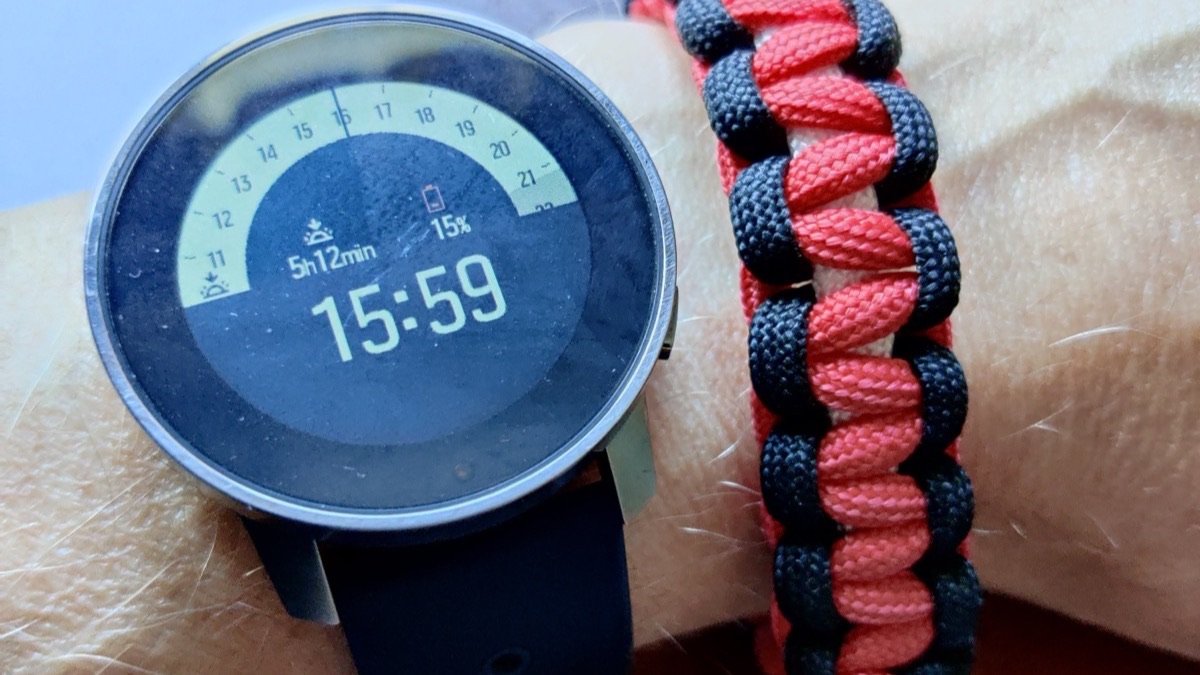
- Photo: Suunto 9 Peak on the wrist.jpg by Micke V 69, CC BY-SA 4.0, via Wikimedia Commons (cropped).
- Photo: Chest belt with heart beat registration.jpg by Sönke Kraft (Arnulf zu Linden), CC BY-SA 3.0, via Wikimedia Commons (cropped).