

Pickleball is real exercise: for most recreational players it's moderate-intensity activity, similar to walking at about 3 mph, and its biggest risk for beginners isn't overuse but falling. In US emergency department data, falls cause most pickleball injuries, fractures are the most common diagnosis, and the wrist is the most often injured body part. Players over 60 account for most of those visits. A 10-minute warm-up, court shoes, protective eyewear, a slow build-up in playing time and a firm rule against backpedaling for lobs all target the most common ways players get hurt.
This guide covers how much exercise pickleball actually gives you, what the injury research shows (with the numbers checked against the original studies), a warm-up routine, what to wear, a beginner progression and who should check with a clinician before playing.
How popular is pickleball in the US?
About 24.3 million Americans played pickleball in 2025, up from 4.2 million in 2020, according to the Sports & Fitness Industry Association's 2026 Pickleball Single Sport Report (June 4, 2026). SFIA counted 7.5 million "core" players, meaning people who play eight or more times a year, and said women now make up 42.9% of players. Its 2026 Topline report, which tracks Americans aged 6 and older, called pickleball the fastest-growing sport for the fifth year in a row.
Growth that fast means a lot of people are learning a quick-reaction court sport in middle or older age, often without a coach. That's why the injury research below matters.
Is pickleball good exercise?
Yes. For most people it counts as moderate-intensity activity, and singles can push into vigorous intensity. Here's the evidence.
Heart rate and steps
A University of Manitoba study fitted 53 recreational players (average age 62) with heart-rate watches and accelerometers. Average heart rate was about 112 beats per minute in both singles and doubles, roughly 70% of predicted maximum. More than 70% of playing time fell in moderate-to-vigorous heart-rate zones. Singles players took about 3,320 steps an hour; doubles players about 2,790 (Webber and colleagues, 2023). The authors concluded that both formats "can contribute substantially" toward meeting activity guidelines.
The US Physical Activity Guidelines for Americans call for 150 to 300 minutes of moderate activity a week, so three 60-minute sessions of doubles a week would take most people past the 150-minute minimum. If you don't wear a heart-rate monitor, the talk test works: during rallies you should be able to talk but not sing. Our guide to pacing cardio without a heart-rate monitor explains how.
METs and calories
The 2024 Adult Compendium of Physical Activities, the standard reference researchers use for the energy cost of activities, doesn't list pickleball at all. The Older Adult Compendium, built from studies of people 60 and older, does: "Pickleball, competitive" is rated 5.3 METs. That's the same value it gives walking at 2.8 to 3.2 mph, and a little less than brisk walking at 3.3 to 3.7 mph (6.0). The older-adult version uses a slightly lower resting baseline (2.7 instead of 3.5 mL of oxygen per kg per minute) to reflect lower resting metabolism after 60 (Willis and colleagues, 2024).
| Body weight | Pickleball, competitive (5.3 METs) | Walking 2.8–3.2 mph (5.3 METs) | Brisk walking 3.3–3.7 mph (6.0 METs) |
|---|---|---|---|
| 150 lb (68 kg) | about 290 kcal | about 290 kcal | about 330 kcal |
| 170 lb (77 kg) | about 330 kcal | about 330 kcal | about 375 kcal |
| 200 lb (91 kg) | about 390 kcal | about 390 kcal | about 440 kcal |
How we calculated this: METs × 2.7 mL/kg/min × body weight in kg = oxygen use, converted at 5 calories per liter of oxygen (the Compendium's own conversion), for 60 minutes of continuous play. These are total calories, including what you'd burn at rest. Real games include breaks between points and games, so most social sessions will burn less. The Compendium has no separate value for casual doubles, and no pickleball value for adults under 60.
Don't rely on your watch's calorie count either. In a University of Nevada, Las Vegas test of simulated pickleball, wearables measured heart rate accurately, but their calorie estimates were off by about 19% to 28% (Navalta and colleagues, 2024).
What are the health benefits of pickleball?
The research is young, and most of it comes from older adults, but a few small randomized trials now exist:
- Frailty and fitness: in a Hong Kong trial of 72 pre-frail older adults (median age 67), 42% of the group that played supervised pickleball for 8 weeks moved out of pre-frailty, compared with 8% of controls. Chair-stand, arm-curl and 6-minute walk scores also improved (Zeng and colleagues, 2026).
- Balance and gait: in an Iranian trial of 36 women aged 60 to 75, three supervised sessions a week for 8 weeks improved balance test scores by about 28% and walking speed measures, while the control group declined (Sheikhbahaie and colleagues, 2025).
- Sticking with it: a 6-week study in previously inactive mid-life and older adults in rural Utah reported good attendance, high satisfaction and improved vertical jump and cognitive test scores, though it had no control group (Wray and colleagues, 2021).
- Mood and social connection: a systematic review of 13 studies found better well-being, life satisfaction and lower stress and depression scores in players (Cerezuela and colleagues, 2023). A national survey of 825 US adults over 50 linked current play with lower odds of loneliness (Kurth and colleagues, 2025). These are observational studies, so people who already feel connected may be more likely to play.
The trials are short and small, and none measured long-term outcomes like heart attacks or falls in daily life. What they do show is that pickleball is an easy-to-learn, social way to get moderate activity, which is often the hardest part. If you're weighing it against other options, our list of sports for beginners with no fitness background may help.
Common pickleball injuries
Most of what we know comes from the National Electronic Injury Surveillance System (NEISS), a national sample of US hospital emergency departments run by the Consumer Product Safety Commission. NEISS only captures ER visits, so it shows the serious end of the spectrum and misses injuries treated at clinics, urgent care or at home.
Falls and fractures
Falls are the main problem. A Mount Sinai analysis of NEISS data from 2013 to 2022 estimated 66,350 pickleball injuries treated in US emergency departments. Falls caused 65.5% of them, fractures were the most common diagnosis (32.7%), and the wrist was the most injured body part (12.7%). Adults aged 65 to 80 accounted for 61% of visits, and 69% of fractures were in women (Yu and colleagues, 2025).
A separate NEISS study of pickleball fractures from 2002 to 2022 found that 87% happened in players over 60 and 69% in women. Two-thirds were in the upper limb, most often the radius (the main forearm bone at the wrist), and 92% were caused by falls (Ghattas and colleagues, 2024). That fits the classic injury pattern: a fall onto an outstretched hand. Among older players, women were 3.7 times more likely than men to have a pickleball-related fracture and 9.3 times more likely to have a wrist fracture (Weiss and colleagues, 2021).
Injury numbers have climbed with participation. ER visits rose from an estimated 1,313 in 2014 to 24,461 in 2023 (McMillan and colleagues, 2026), and hospital admissions jumped 257% between 2020 and 2022, with players 65 and older at higher risk of being admitted (Cheng and colleagues, 2025). These are counts, not rates: they rise partly because millions more people are playing.
If you're a woman past menopause, or you've had a fracture before, bone strength matters here. Our article on the best exercise for bone density covers what helps.
Achilles tendon ruptures
The quick forward lunge for a short ball is the classic way to tear an Achilles tendon. At one US foot and ankle practice, Achilles rupture was the most common pickleball diagnosis (39.4% of 198 patients). Running or lunging forward, planting the foot and rolling the ankle were the leading causes (Kingston and colleagues, 2024). In a large orthopedic group, people who ruptured an Achilles playing pickleball had a median age of 60, compared with 45 for tennis, and 82.5% were over 50 (Padley and colleagues, 2026). Many of these ruptures needed surgery.
Sprains, strains and overuse
Younger players get injured differently. In a NEISS study comparing age groups, players under 65 were more likely to have strains or sprains from sudden stops and lunging, while older players were about three times as likely to have fractures (Kulkarni and colleagues, 2025).
Surveys catch the milder injuries that never reach an ER. In a 2025 national survey of 1,758 US players (average age 63), 68.5% reported some injury or physical complaint in the past year, and 40.8% had one that stopped them playing for at least a day. The knee was most often affected (29.1%), followed by the leg and foot, shoulder, back and elbow. Players with less than five years' experience, those who played more often each week, and those who didn't take injury prevention seriously had higher odds of injury (Owoeye and colleagues, 2025).
Eye injuries
Pickleball balls are hard plastic and doubles players stand close together at the net. An estimated 1,262 people were treated in US emergency departments for pickleball eye injuries in 2024 alone, and the annual number rose by about 405 cases a year from 2021 to 2024. Serious injuries included retinal detachment, orbital fracture and bleeding inside the eye (Lacher and colleagues, 2025). A second NEISS analysis found most eye-area injuries were minor and that falls with facial trauma caused 61% of them, ahead of being hit by a paddle (15%) or the ball (10%) (Kamboj and colleagues, 2026).
Heart events
Not every ER visit is an injury. In a NEISS study of players 60 and older, 11.1% of pickleball-related cases were non-injury problems, mainly cardiovascular events (Weiss and colleagues, 2021), and the 2014–2023 analysis recorded five deaths from cardiac arrest (McMillan and colleagues, 2026). The risk to any one player is very small, but it's a reason to take warning symptoms seriously (see below).
| Injury | Typical player | Usual cause | Best prevention |
|---|---|---|---|
| Wrist and arm fractures | Over 60, especially women | Falling onto an outstretched hand | No backpedaling, court shoes, leg strength and balance training |
| Achilles tendon rupture | Men and women in their 50s and 60s | Sudden forward lunge or push-off | Gradual build-up, calf strengthening, warm-up before play |
| Ankle sprains, muscle strains | Under 65 | Quick stops, lunges, rolling an ankle | Dynamic warm-up, court shoes with lateral support |
| Knee, shoulder and elbow overuse | Frequent players | Too much play too soon, poor technique | Limit session length at first, lessons, rest days |
| Eye injuries | All ages, especially 50+ | Ball or paddle to the eye, falls onto the face | Protective eyewear rated for racket sports |
How to prevent pickleball injuries
There are no large trials of injury-prevention programs in pickleball yet, so the advice below combines what the injury studies point to with guidance from the American Academy of Orthopaedic Surgeons (AAOS) and the American Academy of Ophthalmology.
1. Don't backpedal
Among 92 recreational players studied at the University of Tennessee at Chattanooga, 42% had fallen while playing and 30% more than once. Lunging and moving backward were the leading reasons. Players who had fallen were older and slower at changing direction on court (Myers and Hanks, 2024). When a lob goes over your head, turn sideways and shuffle or cross-step back, or let your partner take it. Better still, let it go. No point is worth a broken wrist.
2. Build leg strength, balance and footwork off the court
The same researchers then gave older players who had fallen or were afraid of falling a 10-week program of strength, balance, change-of-direction and agility drills. Compared with players who didn't train, the group got quicker at changing direction and became less afraid of falling. At 5-month follow-up, 25% of the trained group reported a fall during play versus 44% of the comparison group (Myers and Hanks, 2025). The study was small (29 people) and not randomized, so treat it as encouraging rather than proof.
Two short strength sessions a week focused on legs and hips, plus some balance work, is a sensible add-on. Our minimum-effective strength training guide shows how little you need to start, and the strength and balance routine for seniors includes simple balance drills that suit any older beginner.
3. Limit your playing time at first
Playing more often each week raised injury odds in the national survey (Owoeye, 2025), and AAOS warns that playing too hard or too long can make arthritic knees swell. Short sessions with rest days between them give tendons time to adapt.
4. Take a lesson
AAOS recommends lessons because poor technique leads to injuries. A coach will teach you the ready position, how to split-step and how to move sideways, which reduces the lunging that drives many injuries.
5. Stay hydrated and watch the court surface
AAOS notes that dehydration can cause weakness and slower reactions. Before you play, check the court for water, sand, leaves or stray balls, all of which can turn a normal step into a fall.
A 10-minute pickleball warm-up
AAOS advises light calisthenics and stretches before play and starting with easy hitting drills before going all-out. Here's a simple routine built on that advice. It's our example, not a tested program, so adjust it to how your body feels.
- Easy movement (2 minutes): walk a few laps around the court, then march in place with high knees.
- Side shuffles and carioca (1 minute): shuffle sideways along the baseline and back, staying low. Add a slow crossover step if your balance is good.
- Leg swings and calf raises (1 minute): 10 front-to-back and side-to-side leg swings each leg, holding the fence, then 15 slow calf raises to prepare your Achilles tendons.
- Walking lunges (1 minute): 6 to 8 short lunges each leg, forward and to the side, at a comfortable depth.
- Arm and shoulder circles (1 minute): small to large circles forward and backward, then gentle trunk rotations.
- Dinking at the kitchen line (2 minutes): soft shots with your partner near the net.
- Groundstrokes and volleys (2 minutes): easy hitting from mid-court, building to normal pace.
Save longer static stretches for after you play, when your muscles are warm.
Shoes and eye protection
Wear court shoes, not running shoes
AAOS recommends shoes designed for pickleball or tennis "to ensure proper support and court traction." Running shoes are designed mainly for forward motion, while court shoes are made for the quick side-to-side steps pickleball demands. A 2026 review of lower-limb pickleball injuries also lists sport-specific footwear among its prevention recommendations (Okhovat and colleagues, 2026). Skip sandals and slip-ons. Replace shoes when the tread wears smooth, especially if you play outdoors.
Wear protective eyewear
Unlike racquetball and squash, pickleball doesn't require eye protection at any level. The American Academy of Ophthalmology says the ideal protection is polycarbonate safety goggles with front and side coverage, and that even sunglasses or regular glasses are better than nothing (AAO, 2026).
Look for eyewear certified to ASTM F3164, the US standard for racket-sport eye protectors. Its 2024 revision added test methods specifically for pickleball and covers both non-prescription and prescription eyewear (ASTM International, 2024). Ordinary prescription glasses may not meet that standard. In a Yale survey, 45% of amateur players said they wore eye protection, but 61% of those were using their everyday glasses. Only 11% of beginners reported wearing eye protection at all (Henick and colleagues, 2026).
If you're hit in the eye, the AAO advises seeing an ophthalmologist right away if you notice any change or loss in vision, or substantial pain, bleeding or bruising.
A beginner pickleball progression
Pickleball is easy to learn, which is why people overdo it. Beginners who play for hours on their first weekend are the ones most likely to end up sore or hurt. This 6-week progression is our conservative example, based on the injury predictors above (inexperience and frequent play) rather than a tested program.
| Weeks | Sessions per week | Time on court | Focus |
|---|---|---|---|
| 1–2 | 2 | 45–60 minutes, including warm-up | A lesson or beginner clinic; rules, ready position, dinking, serving; doubles only |
| 3–4 | 2–3 | 60 minutes | Recreational doubles; sideways footwork; letting lobs go |
| 5–6 | 3 | 60–90 minutes | Longer open play if you feel fine the next day; consider singles only if you're fit and moving well |
- Leave at least one rest day between sessions while you're new, and add strength and balance work on two other days.
- Start with doubles. It covers less court per player, which means less sprinting and lunging. Singles is more demanding (more steps per hour in the Manitoba study) and better saved for later.
- Use the next-morning check. If your Achilles, knees, shoulder or elbow are sore the next day, keep the next session the same length or shorter.
- Stop for sharp pain or swelling, especially sudden pain in the back of your heel or calf, and get it checked.
Who should check with a clinician before playing pickleball?
Most healthy adults can start playing without a medical check. The American College of Sports Medicine's screening approach looks at three things: how active you are now, whether you have signs or symptoms or known heart, metabolic or kidney disease, and how intense the planned exercise is (Riebe and colleagues, 2015). Talk to your doctor before you start if:
- You're currently inactive and have heart disease, diabetes or kidney disease.
- You've had chest discomfort, unusual breathlessness, dizziness or fainting during exertion. Stop playing and get medical help right away if these happen on court.
- You have osteoporosis or have broken a bone in a minor fall, because falls are the main cause of pickleball fractures.
- You've had recent falls, balance problems or take medications that make you dizzy.
- You've had a previous Achilles tendon problem, a joint replacement, or surgery on your shoulder, knee or back.
- You've had eye surgery, a retinal detachment or other eye problems.
- You're pregnant, since pickleball involves quick changes of direction and a risk of falls.
Frequently asked questions
Is pickleball hard on your knees?
The knee was the most commonly reported problem area in a large national player survey, at 29%. AAOS notes that playing too hard or too long can make knees with arthritis swell, and suggests shorter sessions. Building up gradually and strengthening your thigh and hip muscles can help.
Can I wear my regular glasses for pickleball?
They're better than nothing, according to the American Academy of Ophthalmology, but everyday glasses may not be impact-rated. Sports eyewear certified to ASTM F3164 is safer and is available with prescription lenses.
This article is general information, not medical advice. It isn't a substitute for advice from a doctor or other qualified health professional, especially if you have a medical condition, an injury or are pregnant.
Sources
- Sports & Fitness Industry Association: SFIA Releases 2026 Pickleball Single Sport Report (June 4, 2026).
- Sports & Fitness Industry Association: 2026 Topline Participation Report release (March 12, 2026).
- Webber SC, Anderson S, Biccum L, et al. Physical Activity Intensity of Singles and Doubles Pickleball in Older Adults, Journal of Aging and Physical Activity 2023;31(3):365–370.
- Willis EA, Herrmann SD, Hastert M, et al. Older Adult Compendium of Physical Activities: Energy costs of human activities in adults aged 60 and older, Journal of Sport and Health Science 2024;13(1):13–17 (Older Adult Compendium tables).
- Herrmann SD, Willis EA, Ainsworth BE, et al. 2024 Adult Compendium of Physical Activities, Journal of Sport and Health Science 2024;13(1):6–12 (sports tables).
- Navalta JW, Carrier B, Blank M, et al. Validity and Reliability of Wearable Technology Devices during Simulated Pickleball Game Play, Sports 2024;12(9):234.
- Zeng Z, Zheng X, Sit CH, et al. Effects of pickleball on pre-frailty, physical fitness, 24-hour movement behaviors, and quality of life in older adults: A randomized controlled trial, International Journal of Nursing Studies 2026;180:105549.
- Sheikhbahaie S, Sahebozamani M, Bahiraei S, et al. The Effect of 8 Weeks of Pickleball Program on Balance, Spatiotemporal Gait Parameters, and Psychosocial Factors in Older Adult Women, Journal of Aging and Physical Activity 2025.
- Wray P, Ward CK, Nelson C, et al. Pickleball for Inactive Mid-Life and Older Adults in Rural Utah: A Feasibility Study, International Journal of Environmental Research and Public Health 2021;18(16):8374.
- Cerezuela JL, Lirola MJ, Cangas AJ. Pickleball and mental health in adults: A systematic review, Frontiers in Psychology 2023;14:1137047.
- Kurth JD, Casper J, Sciamanna CN, et al. Association of Pickleball Participation With Decreased Perceived Loneliness and Social Isolation: Results of a National Survey, Journal of Primary Care & Community Health 2025.
- Yu J, Yendluri A, Linden GS, et al. Increasing Incidence of Pickleball Injuries Presenting to US Emergency Departments: A 10-year Epidemiologic Analysis of Mechanisms and Trends, Orthopaedic Journal of Sports Medicine 2025;13(1).
- Ghattas YS, Zeblisky P, Cassinat J, et al. Pickleball-Related Fractures in the United States From 2002 to 2022: An Analysis Using the NEISS Database, Orthopaedic Journal of Sports Medicine 2024;12(6).
- Weiss H, Dougherty J, DiMaggio C. Non-fatal senior pickleball and tennis-related injuries treated in United States emergency departments, 2010-2019, Injury Epidemiology 2021;8(1):34.
- McMillan P, Lake LP, Burkhart A, et al. The Epidemiology of Pickleball Injuries Presenting to US Emergency Departments, Sports Health 2026;18(4):749–755.
- Cheng R, Moran J, Kim B, et al. A Substantial Increase in Injuries and Hospitalizations Associated With Playing Pickleball From 2020 to 2022, Arthroscopy, Sports Medicine, and Rehabilitation 2025;7(2):101067.
- Kulkarni R, Morningstar J, Otten M, et al. Epidemiology of pickleball injuries by age group treated in emergency departments in the United States, The Physician and Sportsmedicine 2025;53(6):435–440.
- Kingston K, Parker EB, Higgins A, Smith JT. Emerging Patterns of Foot and Ankle Injuries in Pickleball Players: A Short Report, Foot & Ankle International 2024;45(11):1266–1269.
- Padley JH, Averkamp B, Rieker M, et al. Pickleball-Associated Achilles Tendon Ruptures: Shifting Achilles Repair Demographics, Foot & Ankle Orthopaedics 2026;11(1).
- Okhovat A, Ferkel E, Richards SA. Lower Extremity Injuries in Adult Pickleball Players: A Systematic Review of Injury Types, Mechanisms, and Risk Factors, Cureus 2026;18(5):e108841.
- Owoeye OBA, Yemm T, Blechle R, et al. Understanding Injury Patterns and Predictors in Pickleball Players: A Nationwide Study of 1,758 Participants, Sports Medicine – Open 2025;11(1):100.
- Lacher CR, Koc I, Tsui JC. Pickleball-Related Ocular Injuries Among Patients Presenting to Emergency Departments, JAMA Ophthalmology 2025;143(11):938–944.
- Kamboj A, Kistamgari S, Mokhtarzadeh A, et al. Pickleball-related eye injuries presenting to United States emergency departments, 2010-2023, Digital Journal of Ophthalmology 2026;32(2):26–31.
- Henick D, Debroff B, Tahvildari M. Pickleball Players' Reported Use of Protective Eyewear, JAMA Ophthalmology 2026;144(4):309–313.
- Myers B, Hanks J. Hip Strength, Change of Direction, and Falls in Recreational Pickleball Players, International Journal of Sports Physical Therapy 2024;19(9):1116–1125.
- Myers B, Hanks J. Effect of a Multi-Faceted Training Program on Falls in Senior Pickleball Players, Healthcare 2025;13(18):2298.
- Riebe D, Franklin BA, Thompson PD, et al. Updating ACSM's Recommendations for Exercise Preparticipation Health Screening, Medicine & Science in Sports & Exercise 2015;47(11):2473–2479.
- American Academy of Orthopaedic Surgeons (OrthoInfo): 5 Pickleball Injury Prevention Tips.
- American Academy of Ophthalmology: Wear Eye Protection When Playing Pickleball (March 31, 2026).
- ASTM F3164-24: Standard Specification for Eye Protectors for Racket Sports (that is, Racquetball, Squash, Tennis, Pickleball), and ASTM newsroom: Sports Equipment Committee Revises Eye Protector Standard (December 17, 2024).
- US Department of Health and Human Services: Physical Activity Guidelines for Americans, 2nd edition.
- Banner photo: Pickleball Pros.jpg by Picklerpeej, CC BY-SA 4.0, via Wikimedia Commons (cropped).
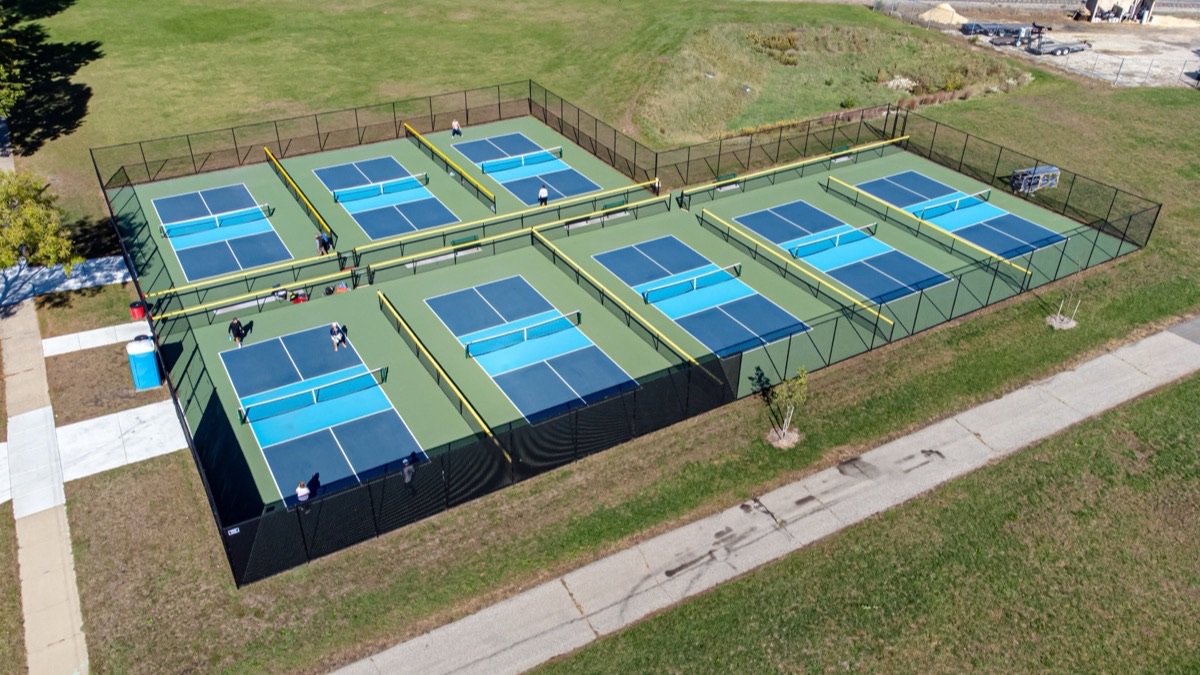
- Photo: Pickleball court in La Crosse, Wisconsin 01.jpg by Wikideas1, CC0, via Wikimedia Commons (cropped).
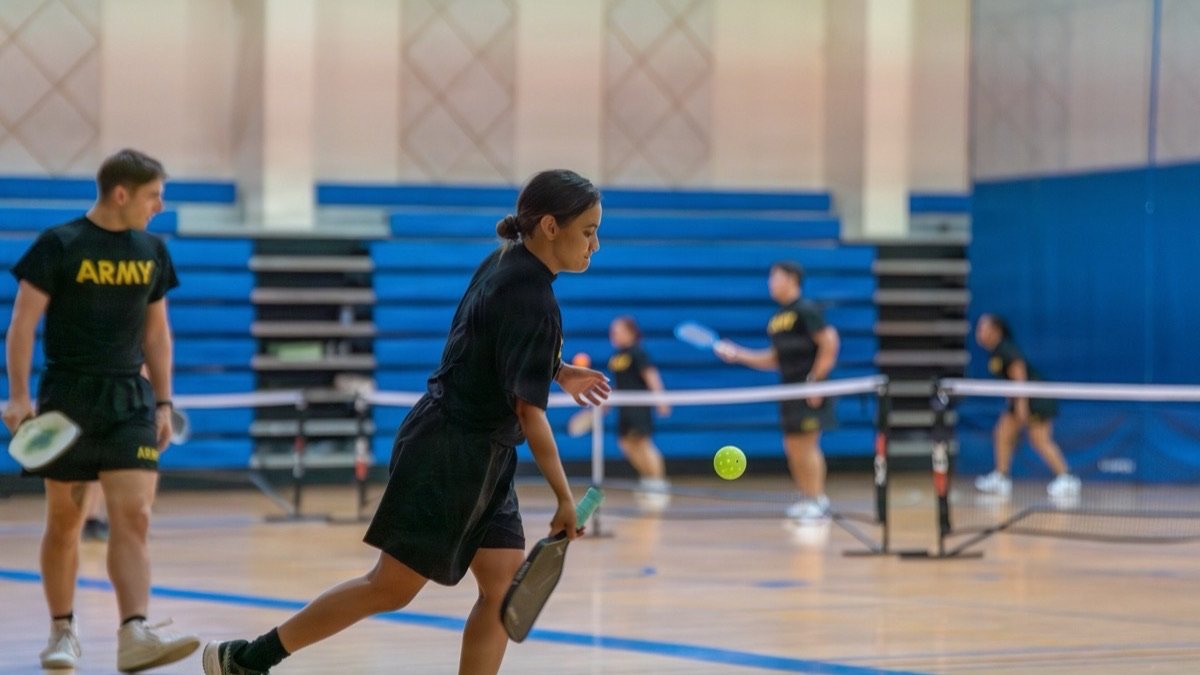
- Photo: KATUSA Friendship Week- PickleBall (9741910).jpg by U.S. Army / Cpl. Eun Jun Choi, public domain, via Wikimedia Commons (cropped).