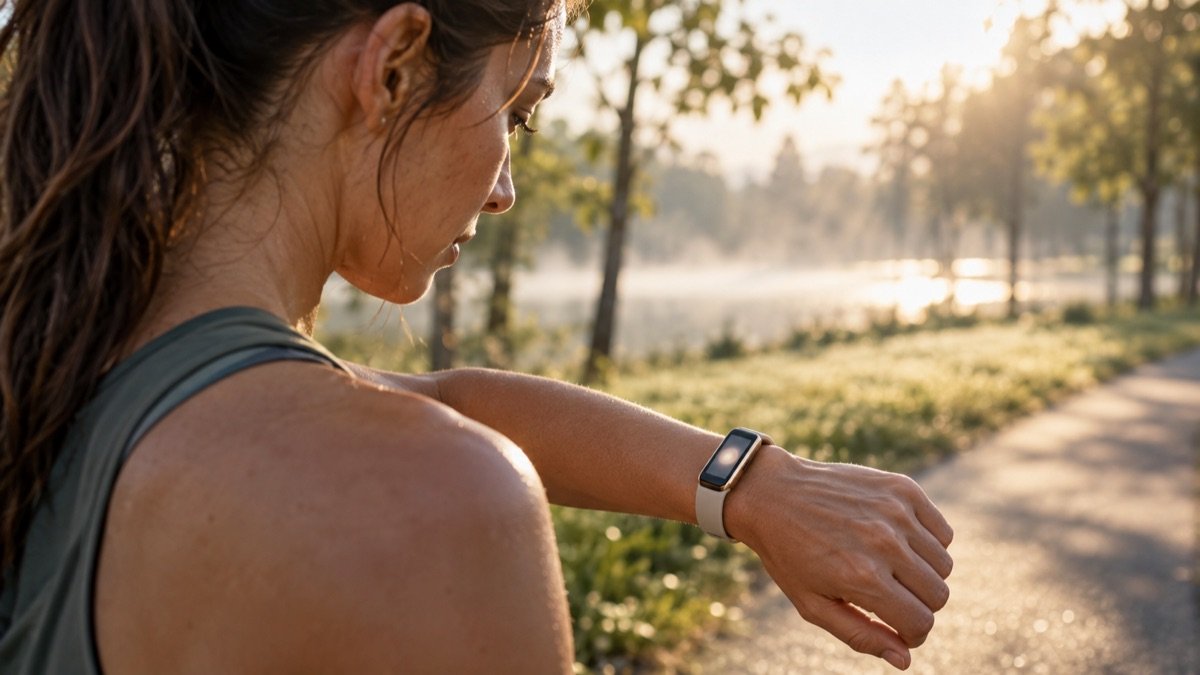


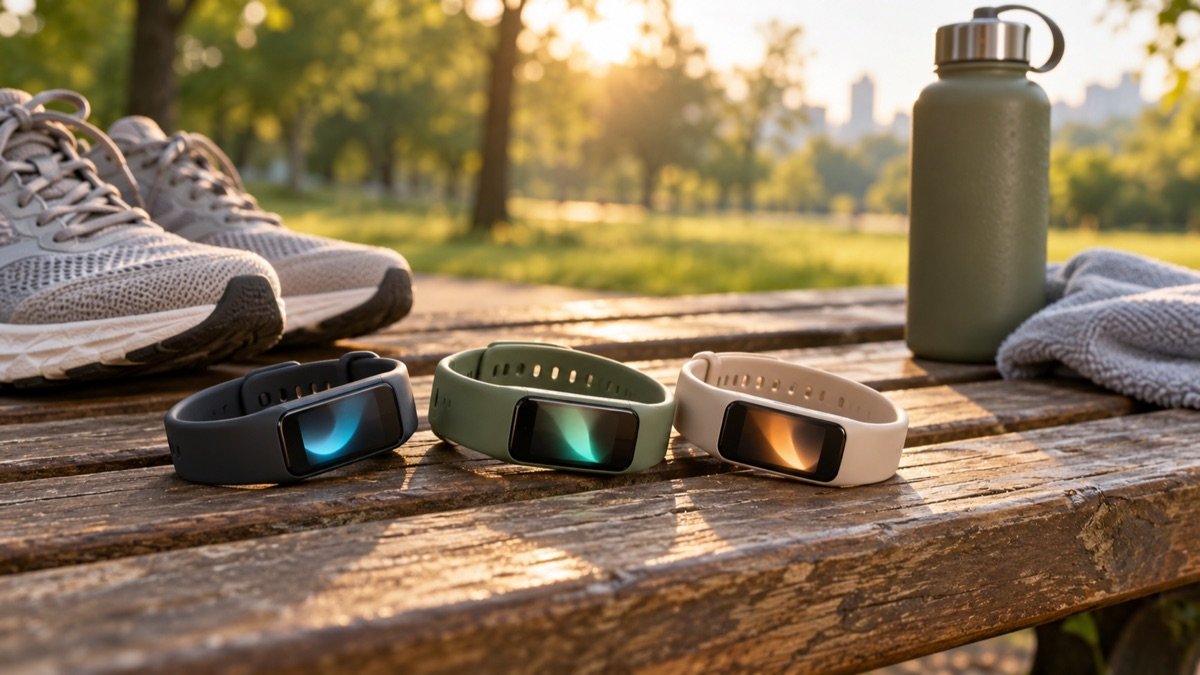
For most people, the best budget fitness tracker in 2026 is the Google Fitbit Air ($99.99). It is screenless, rated for up to 7 days per charge, works with iPhone and Android, and its core tracking needs no subscription. If you want a screen and built-in GPS, look at the new Google Fitbit Edge ($179.99, on pre-order) or the older Fitbit Charge 6 ($159.95). If you never want a paywall, consider the Garmin Vivosmart 5 ($149.99) or the Polar Loop ($199.99). For the lowest price with built-in GPS, there's the Amazfit Bip 6 ($79.99).
All prices are US list prices on each manufacturer's own store, checked on October 16, 2026. They change often, especially around holiday sales. This guide is desk research based on manufacturer specs and published independent reviews. We have not tested these devices hands-on.
Best budget fitness trackers under $200: quick comparison
| Tracker | Price (Oct 16, 2026) | Battery (maker's claim) | GPS | Subscription needed? | Best for |
|---|---|---|---|---|---|
| Google Fitbit Air | $99.99 | Up to 7 days | None built in | No (Google Health Premium optional) | Most people; screen-free sleep and activity tracking |
| Google Fitbit Edge | $179.99 (pre-order) | Up to 7 days | Built in (GPS, Galileo) | No (Gemini coaching needs Premium) | A screen, built-in GPS and the newest Fitbit hardware |
| Fitbit Charge 6 | $159.95 | Up to 7 days | Built in (GPS + GLONASS) | No (some features need Premium) | A proven band with GPS, ECG and Google Wallet |
| Garmin Vivosmart 5 | $149.99 | Up to 7 days | Connected (uses your phone) | No | Garmin's health data with no paywall |
| Amazfit Helio Strap | $99.99 | Up to 10 days | None built in | No | Gym training and recovery scores without a membership |
| Amazfit Bip 6 | $79.99 | Up to 14 days (typical use) | Built in (5 satellite systems) | No | Lowest price with a big screen and built-in GPS |
| Polar Loop | $199.99 | Up to 8 days | Via phone (Polar Flow app) | No ("no monthly fees") | Screen-free recovery tracking with no subscription |
"Subscription needed?" means whether you must pay monthly to use the device's core tracking. Google bundles three months of Google Health Premium with the Fitbit Air, Edge and Charge 6. After the trial, Premium costs $9.99 a month according to the Google Store.
1. Google Fitbit Air: best budget fitness tracker for most people
Price: $99.99 on the US Google Store for the standard version. Google also lists Stephen Curry and Pokémon Sleep special editions.
Who it's for: Beginners and sleep- or recovery-focused people who want a small, distraction-free band that works with both iPhone and Android.
Key specs
- Design: screenless pod, 5.2 g on its own or 12 g with the band, according to Google's spec sheet.
- Battery: up to 7 days. A full charge takes about 90 minutes, and 5 minutes of charging gives about 1 day.
- Sensors: optical heart rate, 3-axis accelerometer and gyroscope, red and infrared sensors for SpO2, and a device temperature sensor (the app shows skin temperature variation). It vibrates for alerts.
- Water resistance: up to 50 meters.
- GPS: none listed on the device.
- Phones: Android 11 or newer, or iOS 16.4 or newer, through the Google Health app.
Independent results are encouraging. In testing by UK consumer group Which?, the Air's resting heart rate error was 0.83%. Its running distance error was 2.35%.
Honest con: With no screen, you can't check the time, stats or notifications on your wrist. In the same Which? test, total daily distance was off by 10.8% when the phone wasn't connected. Google also sells its Gemini-based Health Coach as part of the paid Premium membership.
2. Google Fitbit Edge: best new tracker with a screen and GPS
Price: $179.99 on the US Google Store, where it is available to pre-order as of October 16, 2026; Google says retail availability starts October 27 (Google launch post). Google also lists a Stephen Curry special edition.
Who it's for: People who want a classic band with a screen, built-in GPS for phone-free runs, and a battery that should outlast a typical smartwatch's. We cover the launch in more detail in our Fitbit Edge price, specs and features guide.
Key specs (from Google's tech specs page)
- Display: 1.3-inch AMOLED color display with always-on mode, Gorilla Glass 3.
- Battery: up to 7 days. A full charge takes about 90 minutes. Google says the battery is user-replaceable.
- GPS: built in (GPS and Galileo), plus an altimeter for elevation and floors.
- Health features: SpO2, an ECG app, AFib detection, high and low heart rate notifications, skin temperature and VO2 Max. Google also lists monthly blood pressure and insulin resistance trends.
- Durability: 5 ATM and IP68.
- Weight: 17.7 g without the band, 32 g with it.
- Phones: Android 11 or newer, or iOS 16.4 or newer.
Honest con: It's brand new, so no independent accuracy testing is available yet. GPS performance in particular is unproven, and that was the weak spot of its predecessor (see below). Google labels its Health Guardian features "coming soon", and the Gemini coaching it promotes requires Google Health Premium.
3. Fitbit Charge 6: proven screen-and-GPS band
Price: $159.95 on the US Google Store.
Who it's for: People who want a screen, built-in GPS, contactless payments and an ECG app on a band that has been on sale, and reviewed, since 2023.
Key specs
- Display: AMOLED color touchscreen.
- Battery: up to 7 days. Google notes that the always-on display and SpO2 tracking mean more frequent charging.
- GPS: built in (GPS + GLONASS).
- Sensors: optical heart rate, SpO2, skin temperature variation, NFC, and electrical sensors for the ECG and EDA Scan apps.
- Extras: Google Wallet and Google Maps on the wrist, and 50-meter water resistance.
- Phones: Android 11 or newer, or iOS 16.4 or newer.
Honest con: TechRadar's review called the GPS "severely flaky" when the strap is worn snugly, which is how you need to wear it for good heart rate readings. On the Google Store, Daily Readiness is marked "Available with Google Health Premium". Now that the Edge has launched at $179.99, the Charge 6 makes most sense if you find it discounted well below its list price.
4. Garmin Vivosmart 5: best for no-paywall health data
Price: $149.99 on garmin.com (US).
Who it's for: Data-minded people who want Garmin features such as Body Battery, sleep scores and stress tracking without any subscription. It also suits people who already use Garmin Connect with a Garmin watch.
Key specs
- Display: small monochrome OLED touchscreen, 0.41 x 0.73 inches.
- Battery: up to 7 days in smartwatch mode.
- GPS: connected GPS, meaning it uses your phone's GPS. It has no GPS chip of its own.
- Tracking: wrist heart rate, Pulse Ox, sleep, stress, Body Battery and built-in sports apps, including pool swimming.
- Subscription: Garmin's launch announcement says "no subscription required".
- Phones: iPhone and Android.
Honest con: In DC Rainmaker's review, the small screen was hard to read outdoors, and the band no longer tracks flights of stairs because Garmin removed the barometric altimeter. The reviewer also judged the price high for what it offers. It launched in 2022, so it is the oldest design here. If you're comparing Garmin's step counting with other brands, see our Apple Watch vs Garmin step-tracking accuracy breakdown.
5. Amazfit Helio Strap: best WHOOP-style band without a subscription
Price: $99.99 on us.amazfit.com.
Who it's for: Gym-goers and hybrid athletes who want strain, recovery and readiness-style data without a recurring membership.
Key specs
- Design: screenless, 20 g. Amazfit says you can wear it on the wrist day to day, or on the upper arm for training, where the arm position helps reduce movement interference.
- Battery: up to 10 days of typical use.
- Tracking: heart rate every second, HRV, sleep, blood oxygen, stress and VO2 max. It can broadcast your live heart rate to other devices and supports HYROX race mode.
- GPS: none on the band.
- Water resistance: 5 ATM.
- Subscription: none required; it uses the free Zepp app.
- Phones and apps: iPhone and Android. Amazfit lists syncing with Strava, TrainingPeaks, Apple Health and others.
Honest con: Tom's Guide found its automatic workout detection "extremely unreliable". For example, the strap logged a bike ride to a yoga class but not the class itself. Plan to start workouts manually. To make sense of the recovery numbers, read our guides to what HRV tells you and what to do when your readiness score is low.
6. Amazfit Bip 6: cheapest pick with built-in GPS
Price: $79.99 on us.amazfit.com.
Who it's for: Runners, walkers and cyclists on a tight budget who want a big, bright screen and phone-free GPS. Strictly speaking it's a smartwatch, but at this price it competes with fitness bands.
Key specs
- Display: 1.97-inch AMOLED touchscreen, up to 2,000 nits.
- Battery: up to 14 days of typical use, 6 days of heavy use, and up to 32 hours of continuous GPS.
- GPS: built in, with support for five satellite systems.
- Sensors: BioTracker PPG heart rate sensor, accelerometer, gyroscope, ambient light and geomagnetic sensors.
- Water resistance: 5 ATM.
- Extras: 140+ sports modes, a microphone and speaker, and syncing with Strava, Apple Health and Google Fit.
- Phones: Android 7.0 or newer, or iOS 14.0 or newer.
Honest con: It is a full-size watch rather than a slim band: 46.3 x 40.2 mm and 27.9 g without the strap. That's bulkier to sleep in than anything else on this list. The box includes only a magnetic charging head, so you need your own USB-C cable. Amazfit's FAQ also says it doesn't sync with Samsung Health or MyFitnessPal.
7. Polar Loop: best screen-free tracker with no fees
Price: $199.99 on polar.com (US), right at the top of our budget.
Who it's for: Recovery-focused people who want Polar's sleep and Nightly Recharge insights in a slim, screen-free band, with every feature included in the price.
Key specs
- Design: screenless, with a stainless steel case. It weighs about 1 oz with the wristband.
- Battery: up to 8 days, with 4 weeks of onboard memory.
- Sensors: Polar Precision Prime optical heart rate (Gen 3.5) and an accelerometer.
- Tracking: 24/7 activity, continuous heart rate, Nightly Recharge, SleepWise, sleep stages and Training Load Pro.
- GPS: none on the band. You start a session in the Polar Flow app and it uses your phone's GPS.
- Water resistance: WR30.
- Subscription: none. Polar promises "no monthly fees. No locked features."
Honest con: It costs twice as much as the Fitbit Air and the Helio Strap, and it has no screen. TechRadar's review headline sums up its weak spot: "good on heart rate, but a software let-down".
Also worth knowing
- Amazfit Helio Strap Pro ($199.99): adds a multi-position movement system for muscle load analysis and official HYROX race support. Amazfit rates it for up to 11 days. It's only worth the extra $100 over the standard strap if you train for hybrid racing.
- Subscription-based trackers such as WHOOP: these bundle the hardware into a recurring membership rather than a one-time price. WHOOP's site blocked our automated checks, so we couldn't confirm current US pricing and haven't ranked it here.
- Left out: We dropped the Samsung Galaxy Fit3 because we couldn't find a current Samsung US store listing with a price, and it doesn't support iPhone. Huawei and Xiaomi bands aren't sold through official US channels.
How to choose a budget fitness tracker
Count the subscription cost, not just the sticker price
None of the seven trackers above needs a subscription for basic step, heart rate and sleep tracking. Paid tiers can still add up. Google Health Premium is $9.99 a month after the 3-month trial included with Fitbit devices. If you keep it for two years, that's 21 paid months, or about $210, which is more than the Fitbit Air itself. Garmin, Polar and Amazfit sell the trackers above without a required membership.
Decide whether you need built-in GPS
Built-in GPS (Fitbit Edge, Charge 6, Bip 6) lets you leave your phone at home and still get pace and distance for outdoor runs, walks and rides. "Connected" or phone-based GPS (Vivosmart 5, Polar Loop) borrows your phone's location, so you need to carry the phone. If you mostly lift weights, walk indoors or use a treadmill, you don't need GPS. If you walk on a treadmill desk, our walking pad step-counting fixes explain why wrist trackers can miss steps.
Screen or no screen
Screenless bands (Fitbit Air, Helio Strap, Polar Loop) are lighter, less distracting and comfortable for sleep tracking. In return, you check everything on your phone. If you want the time, notifications or live workout stats on your wrist, choose a model with a display. For a wider look at form factors, see our smart ring vs smartwatch comparison.
Treat battery claims as best-case figures
Every battery figure here is the manufacturer's claim. Always-on displays, SpO2 tracking and GPS workouts shorten it. Google says so explicitly for the Charge 6, and TechRadar's reviewer got up to about six days with a couple of GPS sessions a week.
Know what heart rate accuracy research says
Wrist trackers use optical (PPG) sensors. A 2020 systematic review of 158 studies in JMIR mHealth and uHealth found that consumer wearables measure steps and heart rate accurately in lab settings, though results vary by brand and model. It also found that "for energy expenditure, no brand was accurate". A separate 2020 study in npj Digital Medicine found heart rate error was, on average, 30% higher during activity than at rest. It found no statistically significant difference in accuracy across skin tones. In practice, trust resting heart rate and long-term trends more than calorie counts or second-by-second readings during intervals. Think of your tracker as a motivation tool, not a medical device. Our 7,000 vs 10,000 steps guide covers how to set a sensible daily target.
Check phone compatibility
All seven picks work with both iPhone and Android. Check the minimum versions: Google's trackers need Android 11 or newer, or iOS 16.4 or newer.
Frequently asked questions
What is the best budget fitness tracker in 2026?
For most people, the Google Fitbit Air at $99.99. It works with iPhone and Android, is rated for up to 7 days of battery, and needs no subscription for core tracking. If you want a screen and built-in GPS, the Fitbit Edge ($179.99) or Amazfit Bip 6 ($79.99) are better fits.
Which fitness trackers work without a subscription?
All seven in this guide track steps, heart rate and sleep without a paid plan. Garmin, Polar and Amazfit don't require memberships for the models listed. Google's Fitbit devices work free, but some features, such as Gemini coaching and Daily Readiness on the Charge 6, need Google Health Premium ($9.99 a month after the trial).
What is the cheapest fitness tracker with built-in GPS?
Of the trackers we checked, the Amazfit Bip 6 at $79.99. The Fitbit Charge 6 ($159.95) and Fitbit Edge ($179.99) also have built-in GPS in a slimmer band.
Are budget fitness trackers accurate?
For steps and resting heart rate, generally yes. Research reviews find good accuracy in lab conditions. Heart rate is less accurate during intense activity, and calorie estimates are unreliable across brands. Use trends over weeks rather than single readings.
How we chose and our disclaimer
This guide is desk research based on manufacturer specs. We did not test these devices hands-on. We shortlisted trackers sold through official US channels at or under $200. Then we checked each one's price, battery claim, GPS, sensors, compatibility and subscription terms on the manufacturer's own store or spec page on October 16, 2026. Real-world comments come from independent reviews and studies that we name and link. Prices and promotions change frequently, so confirm the price before you buy. This article is general information, not medical advice. Wearable health features are not a substitute for a doctor's diagnosis.
Sources
- Google Store: Google Fitbit Air and Fitbit Air tech specs: price, battery, sensors, compatibility.
- Google Store: Google Fitbit Edge and Fitbit Edge tech specs: pre-order price, display, battery, GPS, sensors.
- Google Store: Fitbit Charge 6 and Charge 6 tech specs: price, battery, GPS, Premium-only features.
- Google Store: Google Health Premium: $9.99/month after trial.
- Garmin: vívosmart 5: price and specs.
- Garmin: vívosmart 5 launch announcement: "no subscription required".
- Amazfit: Helio Strap, Helio Strap Pro and Bip 6: prices, specs, FAQs.
- Polar: Polar Loop (US): price, specs, no-fee policy.
- Which?: Fitbit Air review: heart rate and distance error rates.
- TechRadar: Fitbit Charge 6 review: GPS reliability and observed battery life.
- DC Rainmaker: Garmin Vivosmart 5 review: display, stair tracking, battery.
- Tom's Guide: Amazfit Helio Strap review: automatic workout detection.
- TechRadar: Polar Loop review: verdict headline.
- Fuller et al., 2020, JMIR mHealth and uHealth: systematic review of wearable step, heart rate and energy expenditure validity.
- Bent et al., 2020, npj Digital Medicine: sources of inaccuracy in wearable optical heart rate sensors.