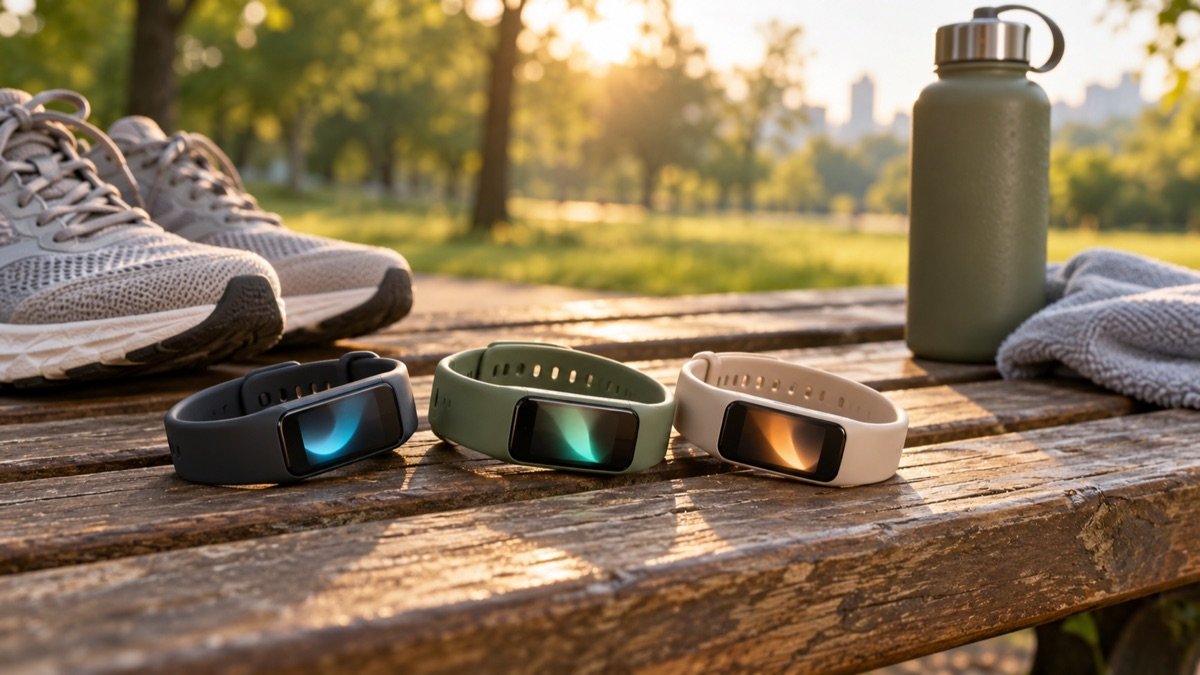



Google officially launched the Fitbit Edge on October 12, 2026. It costs $179.99 in the US, pre-orders are open now, and it goes on sale in stores on October 27. The Edge is a slim band-style tracker that sits between the screenless Fitbit Air and the Pixel Watch 5. Google lists a 1.3-inch AMOLED always-on display, built-in GPS, ECG and AFib detection, up to 7 days of battery, and a battery you can replace. A Stephen Curry Special Edition costs $219.99. Every purchase includes three months of Google Health Premium. After that, Premium is needed for the Gemini coach and for the new blood pressure and insulin resistance trends.
This guide covers what Google itself has published: its launch announcement, the US Google Store page and the official tech specs, all checked on October 16, 2026. We have not used the Edge, so this is a news summary, not a review.
Fitbit Edge at a glance
| Item | Official detail |
|---|---|
| US price | $179.99; Stephen Curry Special Edition $219.99 |
| Release date | Pre-orders opened October 12, 2026; on shelves October 27, 2026 |
| Display | 1.3-inch AMOLED color display, always-on option, Gorilla Glass 3 |
| Battery | Up to 7 days; 65 mAh; user-replaceable; full charge in about 90 minutes; 5 minutes gives up to 1 day |
| GPS | Built-in GPS and Galileo, plus an altimeter |
| Heart health | ECG app, AFib detection, irregular and high/low heart rate notifications, SpO2 |
| Water and dust | 5 ATM and IP68 |
| Size and weight | 39.2 x 25.6 x 11.6 mm; 17.7 g without band, 32 g with band |
| Connectivity | Bluetooth 5.4; no NFC or Wi-Fi listed |
| Phones | Android 11 or newer, iOS 16.4 or newer; Google Account and Google Health app required |
| Subscription | 3 months of Google Health Premium included; then $9.99 a month |
Fitbit Edge price and release date
In the US, the Fitbit Edge costs $179.99. That price includes a silicone Active Band in both small and large sizes. The Stephen Curry Special Edition costs $219.99 and swaps in a recycled-polyester band with a water-repellent coating. Google says the Special Edition is available while supplies last. According to Google's announcement, pre-orders are open on the Google Store and at retail partners, and the Edge will be "on shelves October 27."
The Edge comes in four standard finishes, each matched to a band color:
- Matte Black aluminum case with an Obsidian band
- Satin Silver aluminum case with a Fog band
- Satin Pyrite aluminum case with an Olive band
- Champagne Gold case with a Canyon band
Extra bands are sold separately. Google says the Performance Loop band is "coming soon."
Prices outside the US
On October 16 we also found pre-order listings on Google Store sites outside the US:
- UK: from £159.99
- Canada: from CA$229.99
- Australia: A$269
- Eurozone: €179.99 in Germany, France, Ireland, Spain, Italy and the Netherlands
- Japan: pre-orders are open
Google's announcement does not include a full list of countries. The India Google Store had no Edge page when we checked; it redirected to the store's home page.
Display, design and the replaceable battery
The Edge is a Charge-style band, not a smartwatch. According to Google's Store FAQ, its display is 45% bigger and over 40% brighter than the Fitbit Charge 6's, which makes the Edge that tracker's successor in practice. The spec sheet lists a 1.3-inch AMOLED color screen with an always-on option, adjustable brightness and Gorilla Glass 3. There is also a mechanical side button. The aluminum housing is 100% recycled, the body is 11.6 mm thick, and it weighs 17.7 g without a band.
The bigger news is repairability. Google calls the Edge its "first repairable fitness tracker," and the spec sheet confirms a user-replaceable battery. Battery wear is a common reason trackers get replaced after a few years, so this could extend the Edge's life. Google's fine print adds two caveats: repair options "may vary depending on region and availability," and self-repair is not recommended unless you are an adult with the skills to do it safely. Google has not published the price of a replacement battery.
Official battery claims:
- Up to 7 days on a charge. Google says it tested this on pre-production hardware using a typical usage profile in Battery Saver mode. Real-world battery life may be lower, and it drops with continuous GPS.
- About 90 minutes for a full charge, using the in-box USB-C cable.
- 5 minutes of charging gives up to 1 day when the battery is low. Google's footnote says this was tested with a 30W adapter, which is sold separately.
The water rating is 5 ATM and IP68, but Google says the Edge is "not waterproof or dust proof." It also says water resistance can diminish over time, and the Edge is meant for shallow water.
Fitness tracking: GPS, workouts and coaching
The Edge has built-in GPS (GPS and Galileo), so it can map runs and rides without your phone. Google claims "up to 40% improved tracking accuracy over previous generations." That is Google's own claim; we have not seen independent tests yet. An altimeter tracks floors and elevation. Other fitness features Google lists:
- more than 50 exercise modes, with live metrics and on-wrist coaching cues
- automatic recognition of up to 100 workout types. Google says this expanded detection reaches Fitbit Air, Fitbit Edge and Pixel Watch 3, 4 and 5 later in October.
- Cardio Load, Readiness, VO2 Max, Active Zone Minutes, steps, distance and pace
- live heart rate sharing with compatible gym equipment
- turn-by-turn Google Maps directions on the wrist, listed as "coming soon"
Readiness and Cardio Load are guidance, not instructions. Our guide to what a readiness score means when it's low explains how to use them. If you train by heart rate zones, our Zone 2 cardio guide shows how to check what your tracker tells you against the talk test.
Health features: ECG, AFib, SpO2 and sleep
The sensor list includes:
- an optical heart rate sensor
- red and infrared sensors for SpO2
- electrical sensors for the ECG app
- two temperature sensors
- an accelerometer, a gyroscope, an altimeter and an ambient light sensor
Google lists these health features:
- the ECG app and AFib detection
- irregular heart rate notifications and high/low heart rate notifications
- SpO2
- skin temperature variation, HRV, breathing rate and resting heart rate
- advanced sleep tracking with a Sleep Score
- menstrual cycle tracking
Some of these come with limits in Google's footnotes. The ECG app is "only available in select countries" and is not intended for people under 22. SpO2 and skin temperature are "not available in all countries." For more on the numbers behind recovery, see our explainers on what HRV tells you about training and sleeping better naturally.
Blood pressure and insulin resistance trends: wellness signals, not diagnosis
The Edge supports Google's Health Guardian features. These include monthly blood pressure trends and monthly insulin resistance trends, built from data collected passively in the background. They will not be ready on day one. Google says Health Guardian features "are rolling out to Fitbit Air and Fitbit Edge for users with a Google Health Premium subscription later this month" (Google Health update, October 12). The Edge Store page lists them as "coming soon." On Pixel Watch 3, 4 and 5, by contrast, Google includes these tools free (Health Guardian announcement, September 24).
Google's own wording is careful, and so should yours be. The Store page says the trends are "intended for general wellness and informational purposes only." It also says they are "not a prescreener for diabetes or hypertension," "do not provide real-time clinical readings," and should not be used to adjust medication or treatment plans, or by people who are pregnant. Google says availability "varies by region/country and device." These trends are not a blood pressure reading and not a diabetes test. At most, they may flag a pattern worth raising with a clinician, who can check it with a cuff or a blood test. Oura takes a similar ring-based approach; our Oura Health Radar guide explains how its blood pressure signals differ from cuff readings.
Google Health Premium: what needs a subscription
Google's footnotes say "some features require a Google Health Premium subscription (sold separately)." From the official pages, Premium covers:
- the Gemini-built Google Health Coach, including adaptive fitness plans and on-demand questions
- blood pressure and insulin resistance trends on the Edge
- detailed sleep insights, and nutrition and cycle-aware coaching
- a library of video workouts
Core tracking works through the free Google Health app, including:
- steps, sleep stages and Sleep Score
- heart rate, HRV and SpO2
The included trial is three months. Google's offer terms say it "automatically renews for $9.99/mo after trial; cancel anytime." It is limited to one trial per customer, and the offer ends October 27, 2027. Google's Health Coach announcement lists an annual plan at $99. Premium is included with Google AI Pro and Ultra.
The cost adds up. If you keep Premium on the monthly plan after the trial, the first year costs $179.99 + 9 × $9.99 = $269.90 before tax. Premium requires you to be 18 or older; the Edge itself is intended for ages 13 and up.
Smart features, phones and what's missing
The Edge shows phone notifications and quick replies, controls media on any Bluetooth-connected player, and offers alarms with smart wake and a timer. It works with Android 11 or newer and iOS 16.4 or newer, so iPhone owners can use it. Setup requires a Google Account and the Google Health app.
Some things are missing from Google's spec sheet. Connectivity lists Bluetooth 5.4 and GPS/Galileo only, with no NFC and no Wi-Fi. Neither the announcement nor the Store page mentions Google Wallet or contactless payments. If you want to tap to pay from your wrist, you will need a smartwatch that supports payments.
Fitbit Edge vs Fitbit Air vs Pixel Watch 5
| Spec | Fitbit Edge | Fitbit Air | Pixel Watch 5 |
|---|---|---|---|
| US starting price | $179.99 | $99.99 | $399 (41 mm), $429 (45 mm) |
| Screen | 1.3-inch AMOLED | None | Full smartwatch display |
| Battery (Google claim) | Up to 7 days | Up to about a week | Up to 30 h (41 mm) / 40 h (45 mm) |
| Built-in GPS | Yes | No | Yes |
| ECG app | Yes (select countries) | No; AFib alerts | Yes |
| Blood pressure / insulin trends | With Premium, rolling out in October | With Premium, rolling out in October | Included free |
Sources: Google's Fitbit Air announcement and Google's Pixel Watch 5 announcement.
- Fitbit Air suits people who want 24/7 tracking without a screen at the lowest price.
- Fitbit Edge suits runners, walkers and gym-goers who want a screen and phone-free GPS while charging about once a week.
- Pixel Watch 5 suits people who want apps, a full smartwatch display and blood pressure and insulin trends without a Premium subscription, and who are happy charging every day or so.
Comparing beyond Google? See our Galaxy Watch 9 fitness review, our look at Apple Watch vs Garmin step-tracking accuracy, and our smart ring vs smartwatch guide.
Should you pre-order the Fitbit Edge?
- Consider it if you want a Fitbit-style band with a real screen, phone-free GPS and multi-day battery. The replaceable battery should help it last longer.
- Wait for independent reviews if GPS accuracy matters to you. The 40% improvement is Google's claim, and no independent testing has been published yet.
- Pick the Fitbit Air if you only need sleep, heart rate and activity data and are happy to view them on your phone.
- Budget for Premium if the Gemini coach or the blood pressure and insulin trends are why you're buying. Without Premium, those features disappear after the three-month trial.
- Look elsewhere if you need tap-to-pay or cellular connectivity.
FAQ
How much does the Fitbit Edge cost?
$179.99 in the US. The Stephen Curry Special Edition is $219.99. In the UK it starts at £159.99, and in eurozone Google Stores it costs €179.99.
When does the Fitbit Edge come out?
Pre-orders opened on October 12, 2026, on the Google Store and at retail partners. Google says it will be on shelves October 27, 2026.
Does the Fitbit Edge have GPS?
Yes. It has built-in GPS and Galileo, plus an altimeter, so you can track outdoor workouts without your phone. Continuous GPS use shortens battery life.
How long does the battery last, and can you replace it?
Google claims up to 7 days, with a full charge in about 90 minutes. The battery is user-replaceable, which makes the Edge Google's first repairable fitness tracker. Repair options vary by region.
Do you need Google Health Premium for the Fitbit Edge?
Not for core tracking. Premium is required for the Gemini-based Health Coach and for blood pressure and insulin resistance trends. Three months are included, and then it costs $9.99 a month unless you cancel.
Does the Fitbit Edge have NFC or Google Wallet?
Google's tech specs list no NFC, and Google does not mention Google Wallet or contactless payments for the Edge.
Does the Fitbit Edge work with iPhone?
Yes. It works with iOS 16.4 or newer and Android 11 or newer through the Google Health app.
Can the Fitbit Edge measure blood pressure?
No, not like a cuff. It offers monthly blood pressure trends for general wellness only. Google says they are not a prescreener for hypertension and do not provide real-time clinical readings. Use a validated cuff and talk to a clinician about your blood pressure.
This article is general information based on Google's published materials. It is not medical advice. Product details, prices and feature availability can change; check Google's pages before you buy.
Sources
- Google: Google Fitbit Edge announcement (Oct 12, 2026): price, pre-order and on-shelf date, design, GPS, battery, repairability.
- Google Store US: Google Fitbit Edge: Special Edition price, Premium offer terms, Health Guardian and feature footnotes.
- Google Store US: Google Fitbit Edge tech specs: display, battery, sensors, connectivity, dimensions, colors.
- Google: Google Health and Fitbit updates (Oct 12, 2026): Health Guardian rollout to Fitbit Edge with Premium; workout auto-detection.
- Google: Health Guardian features are live (Sep 24, 2026): blood pressure and insulin resistance trends on Pixel Watch.
- Google: Google Health Coach and Premium (May 7, 2026): Premium pricing.
- Google: Fitbit Air announcement (May 7, 2026): Fitbit Air price and features.
- Google: Pixel Watch 5 announcement (Aug 12, 2026): Pixel Watch 5 price and battery.
- Google Store UK: Google Fitbit Edge: UK price.