
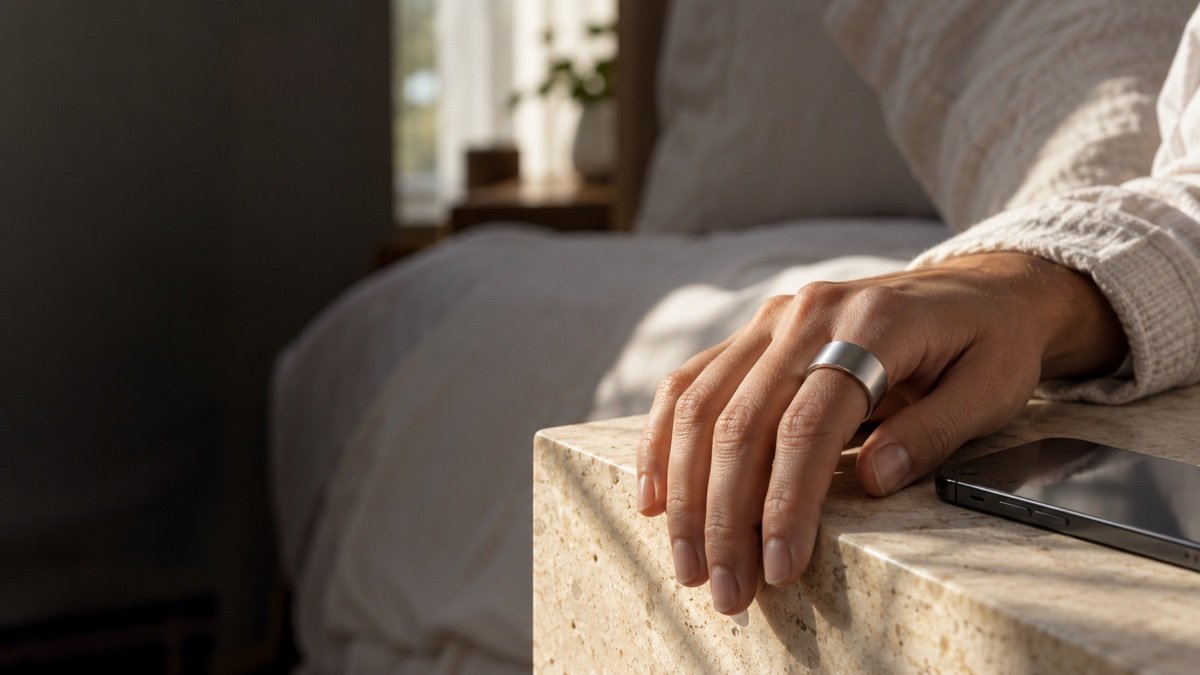
Oura Health Radar availability depends on your country, ring and membership. Oura currently lists the United States, India and United Arab Emirates as supported, with an expansion rolling out to additional markets. You need Oura Ring Gen3 or newer and an active membership; Gen2 and older rings are excluded. The feature works on iOS and Android.
This guide checks Oura’s official documentation as of 9 October 2026. Health Radar provides wellness insights, not a diagnosis or a replacement for clinical blood pressure measurements.
Supported countries and rollout status
Oura’s Feature Availability page separates countries with access from markets still receiving the rollout. Its latest list includes South Korea, which is not named in the October 6 expansion announcement.
| Country or region | Compatible ring | Features covered* | Official status |
|---|---|---|---|
| United States, India, United Arab Emirates | Gen3 or newer + active membership | Health Radar; Nighttime Breathing; Blood Pressure Signals; Nighttime BP; cuff logging | Available |
| Australia, Canada, Mexico, New Zealand | Gen3 or newer + active membership | Same feature family* | Rolling out |
| European Union countries, United Kingdom | Gen3 or newer + active membership | Same feature family* | Rolling out |
| Saudi Arabia, South Korea | Gen3 or newer + active membership | Same feature family* | Rolling out |
| Other countries or regions | A compatible ring alone is insufficient | Access not established by the cited list | Not confirmed here |
*Feature access also depends on account eligibility, settings and sufficient data. Nighttime BP and cuff logging are described in Oura’s Heart Health Hub documentation. Country support does not guarantee every card is visible immediately.
UAE availability is officially confirmed: both current support pages name the United Arab Emirates. Do not interpret “European Union” as all of Europe, or Saudi Arabia’s inclusion as support across the Gulf.
When will the rollout reach your account?
Oura’s October 6 announcement says the international expansion begins that day and continues over the coming weeks. That is a rollout window, not a promised activation date for every member. The sources checked do not give a completion date or an account-level schedule.
There are two separate waits: receiving the feature and gathering enough sleep data to populate it. Buying a newer ring does not resolve a country restriction or guarantee earlier activation.
Which Oura Rings are compatible?
Oura’s software-feature announcement and current support documentation identify Gen3 and newer generations as eligible.
| Ring generation | Hardware eligibility | Other requirements |
|---|---|---|
| Oura Ring Gen3 | Yes | Active membership, supported market and compatible app |
| Oura Ring 4 | Yes | Same requirements |
| Oura Ring 5 | Yes | Same requirements |
| Gen2 or older | No | Excluded from Health Radar |
Gen3 owners do not need to upgrade solely for Health Radar. Check software access before making a hardware purchase.
What Health Radar actually does
Health Radar brings short-term strain and longer-term heart and breathing patterns into one place. Oura’s Health Radar guide explains the dashboard and its feature settings. It is not a single health score that proves you are well.
Symptom Radar: short-term strain
Symptom Radar considers changes in temperature, respiratory rate, resting heart rate and HRV during sleep. It can flag strain without identifying its cause. For help interpreting one of those inputs, read our guide to HRV for fitness.
Nighttime Breathing: patterns across multiple nights
Nighttime Breathing summarizes detected disturbances across a 30-day window. Oura labels the prevailing pattern Steady, Mostly steady, Varied or Highly varied, with an initial pattern available after seven days of data. You can find it in the Sleep detail screen and Sleep Health Hub.
The nightly breathing graph uses oxygen-related variations to show suspected disturbances during sleep. It helps you review recurring patterns; it does not establish sleep apnea, count clinically confirmed apnea events or identify why a disturbance occurred.
Blood Pressure Signals, Nighttime BP and cuff readings
These are different functions. Blood Pressure Signals looks for patterns in nighttime optical pulse data, also called PPG. Nighttime BP presents overnight dipping patterns across 30 nights. Neither gives an actual systolic/diastolic blood pressure reading in mmHg.
Cuff logging stores readings measured elsewhere, entered manually or imported from Apple Health or Android Health Connect. Oura recommends a validated upper-arm cuff. Logged readings do not change Blood Pressure Signals, Nighttime BP or Oura scores; entering a cuff result does not calibrate the ring into a clinical monitor. Blood Pressure Signals is automatically disabled for members using Pregnancy Insights.
How to check if you have access
- Check eligibility: confirm your ring generation and active membership, then compare your country with the official list above.
- Check your account settings: Oura lists country of residence under the app’s ≡ menu → Settings. Keep your actual residence accurate.
- Update and sync: use the current Oura App, sync your ring, then look for Health Radar in My Health or the ≡ menu. Look under Heart Health for BP-related cards.
- Check the message: a missing feature and a visible feature waiting for data are different problems. Blood Pressure Signals needs at least 15 nights within its 30-day assessment window. Its neutral monitoring state is not a normal blood pressure reading.
- Check settings before troubleshooting: an opted-out feature may not assess data. If eligible access is still missing, use the support option on Oura’s linked help pages; do not assume your ring needs replacing.
The current Health Radar guide lists Danish, Dutch, English, Finnish, French, German, Italian, Norwegian, Spanish and Swedish. Check that your app language is supported, especially when reading older English-only rollout advice.
What you can—and cannot—infer
Use a repeated change as a prompt to review context: recent sleep, travel, training and how you feel. A useful note is “this pattern changed during these dates,” rather than “the ring has diagnosed a problem.” Our sleep-habits guide can help with everyday routines, while our readiness-score explainer covers using recovery data alongside your own experience.
- No alert is not an all-clear. Wellness algorithms can miss changes or flag patterns when you feel well.
- Ring trends and cuff measurements answer different questions. Do not substitute a dipping label for a measured blood pressure result.
- Data quality matters. Missing nights or poor ring fit can limit interpretation. Resolve collection problems before treating a gap as a health change.
- Symptoms take priority. Recurring breathing concerns or unexplained symptoms deserve professional assessment regardless of the app. Do not adjust medication or manage an existing condition from these wellness metrics.
This is a documentation-based availability guide, not a hands-on accuracy test. Country listings and app behavior can change; check Oura’s current pages before upgrading or relying on a particular feature.
Official sources
- Oura: Feature Availability — country status and residence settings.
- Oura: October 6 international expansion — rollout announcement.
- Oura: New Software Features — Gen3-and-newer eligibility.
- Oura: Health Radar — dashboard, language support and feature behavior.
- Oura: Heart Health Hub — Nighttime BP, cuff inputs and limitations.
- Oura: Sleep Graphs — interpreting the nightly breathing graph.