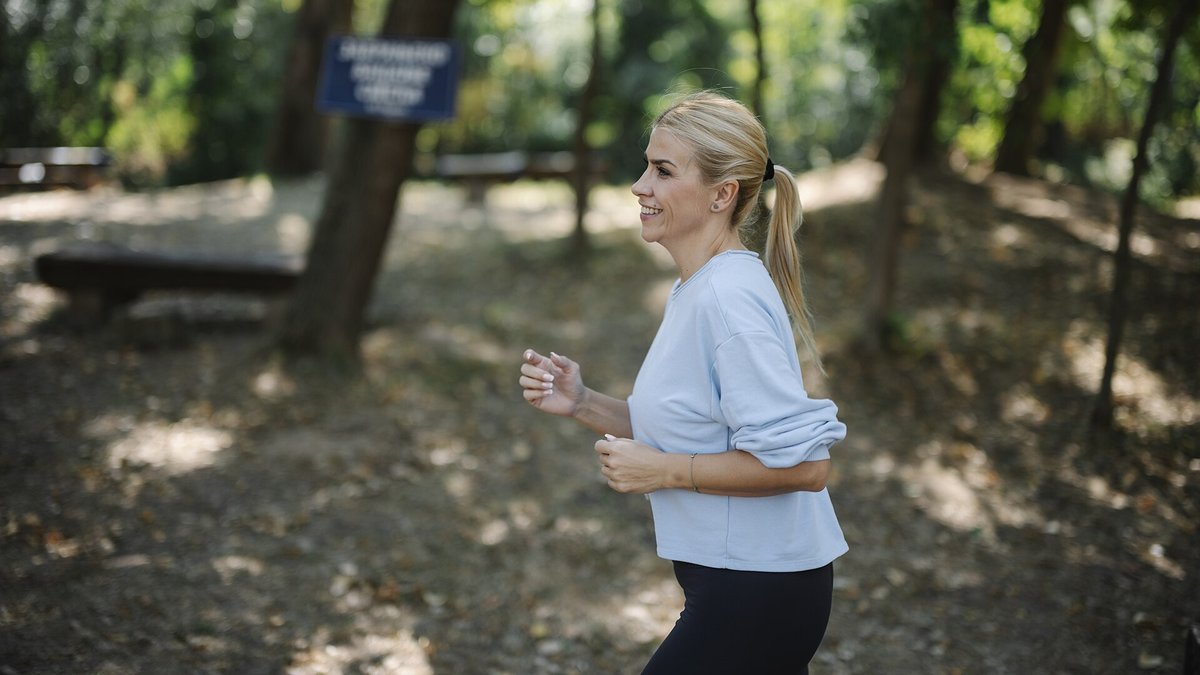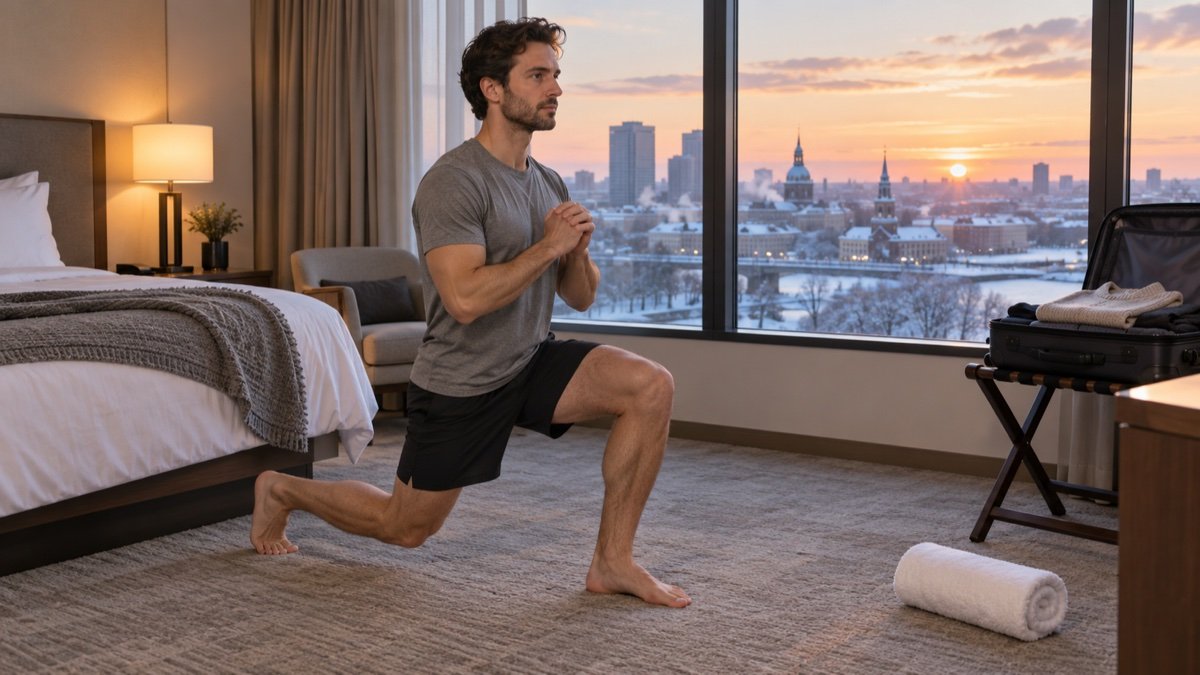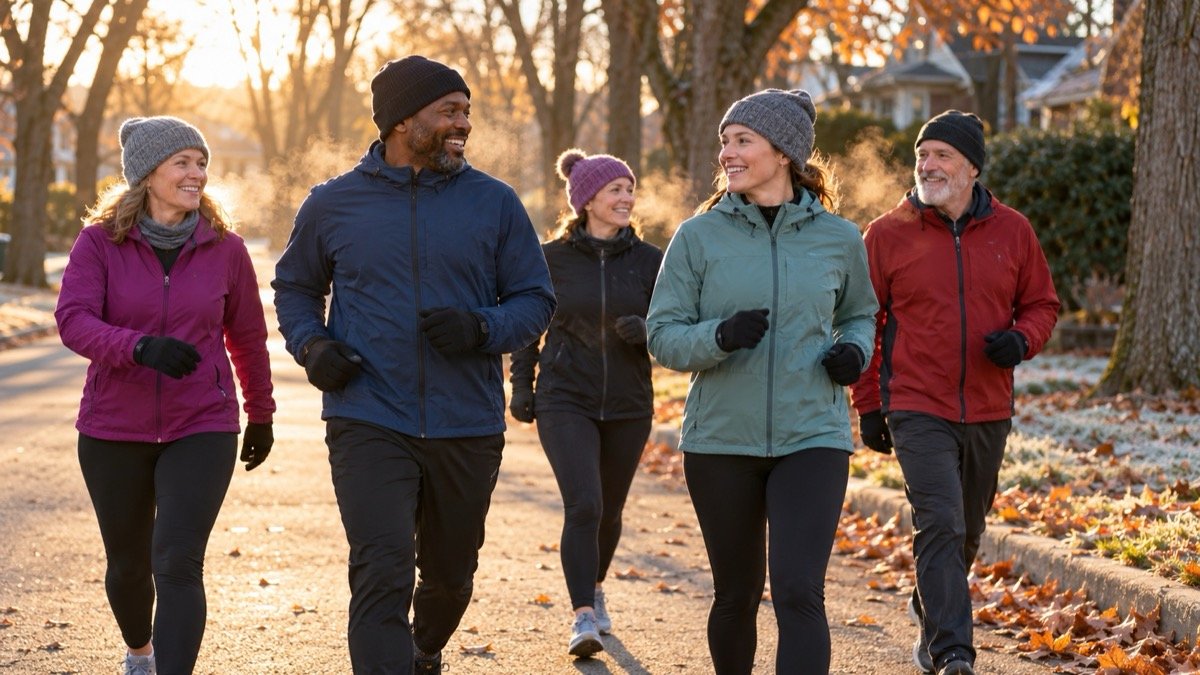


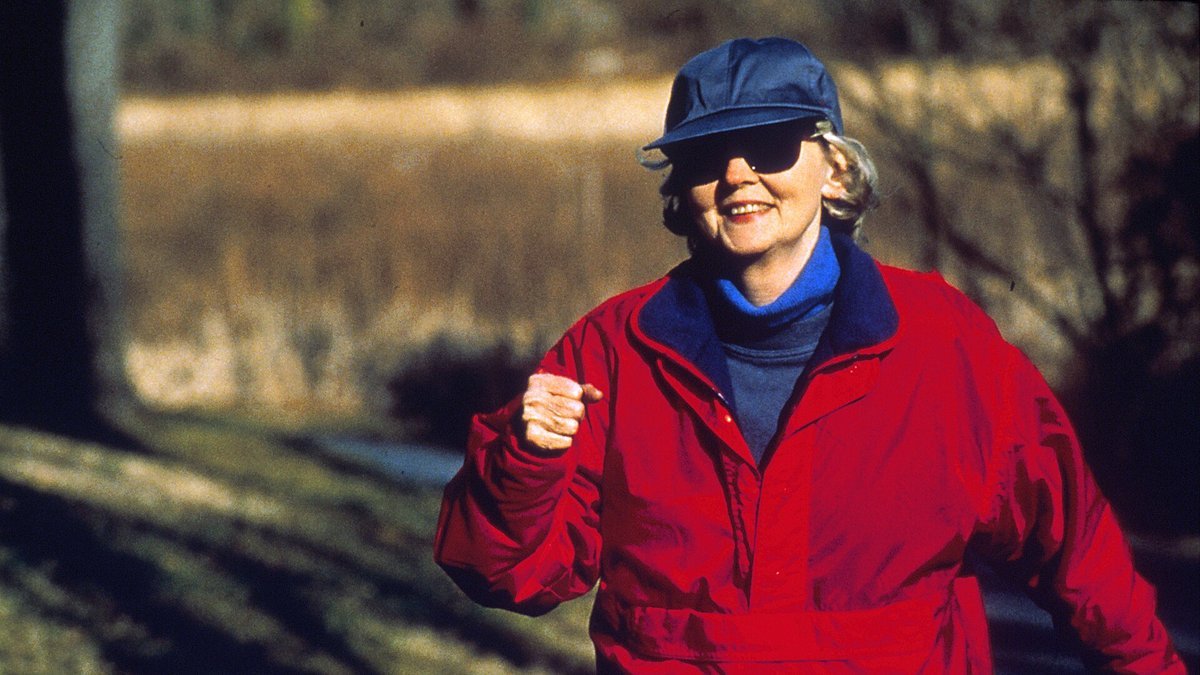
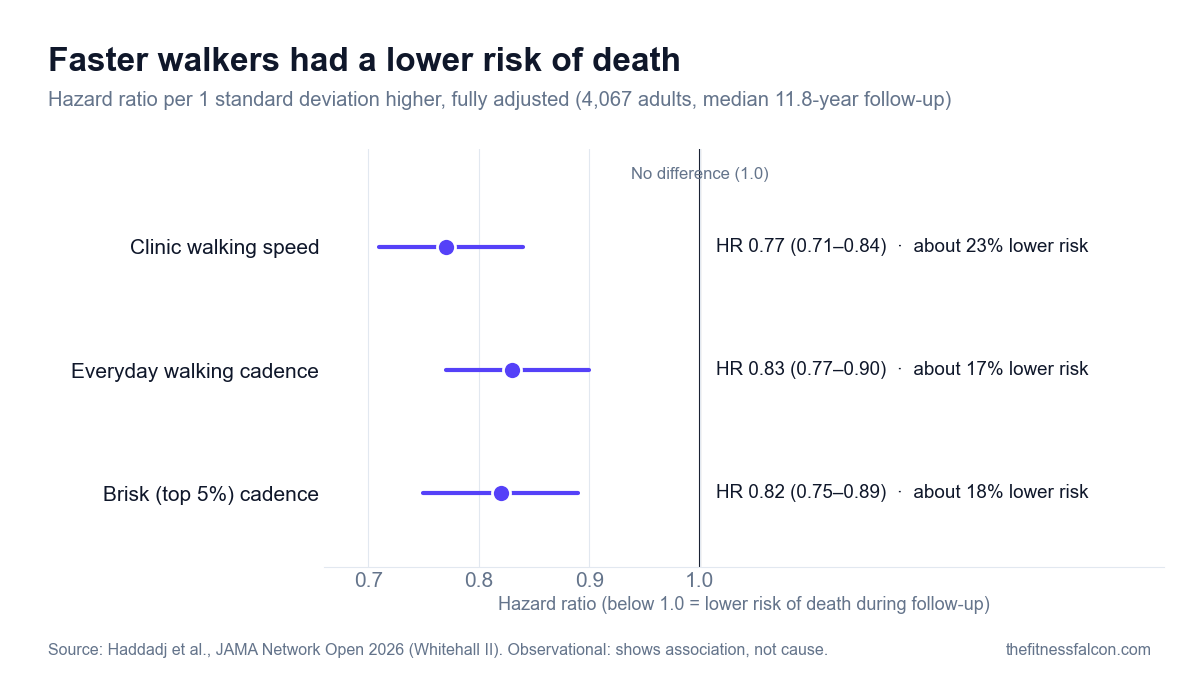
Yes, how fast you walk is linked to how long you live, but the new study shows an association, not proof that walking faster will extend your life. In a study published October 23, 2026, in JAMA Network Open, researchers followed 4,067 older adults in the UK for a median of 11.8 years. People with a faster walking speed in a short clinic test had a 23% lower risk of dying from any cause for each step up of about 0.3 m/s (0.7 mph), after accounting for age, smoking, weight, chronic diseases and other risk factors. A faster everyday step rate (cadence), measured with a wrist-worn device, was linked to a 17% to 18% lower risk.
The practical message is not to race the clock. Walking pace works as a simple readout of overall health and fitness. You can check your own pace at home and make some of your walking brisk, which counts toward the US activity guidelines.
What the new walking speed study found
The paper is "Clinical Walking Speed, Free-Living Walking Cadence, and All-Cause Mortality" by Rayane Haddadj (Norwegian University of Science and Technology), senior author Séverine Sabia (Université Paris Cité/Inserm) and colleagues. It used the Whitehall II study, a long-running cohort that began in 1985–1988 with 10,308 British civil servants. In 2012–2013, participants in an accelerometer substudy did two things:
- A clinic walking test. A nurse timed them three times as they walked a 2.44-meter (8-foot) course "at your usual walking pace." The average of the three trials gave walking speed in meters per second.
- Nine days of wearing a wrist accelerometer. From this, the researchers worked out each person's typical (median) walking cadence and their brisk-walking (95th percentile) cadence in steps per minute.
The researchers then linked participants to the UK national death register through August 2024. During follow-up, 739 people (18.2%) died.
| Measure | Group average | Risk of death per 1 SD higher | Per smaller step |
|---|---|---|---|
| Clinic walking speed | 1.2 m/s (about 2.7 mph) | HR 0.77 (95% CI 0.71–0.84): about 23% lower | HR 0.90 per 0.1 m/s faster |
| Median everyday cadence | 75 steps/min | HR 0.83 (0.77–0.90): about 17% lower | HR 0.83 per 10 steps/min |
| Brisk (95th percentile) cadence | 112 steps/min | HR 0.82 (0.75–0.89): about 18% lower | HR 0.81 per 10 steps/min |
A few details matter when reading those numbers:
- "Per 1 SD" means a step up of one standard deviation. In this group that was about 0.3 m/s (roughly 0.7 mph) for walking speed and about 10 steps per minute for cadence. A hazard ratio (HR) of 0.77 means a 23% lower rate of death at any given time over follow-up. It does not mean 23% fewer deaths overall or 23% more years of life.
- The adjustments were extensive. The final models accounted for age, sex, education, marital status, race and ethnicity, smoking, alcohol, fruit and vegetable intake, body mass index, high blood pressure, high cholesterol, daily-living limitations and the number of chronic diseases.
- Cadence mattered beyond step count. The authors report that the cadence associations "remained evident" after further adjustment for daily steps. In this group, the average was about 9,500 steps a day.
- Results were similar for women and men. Fully adjusted HRs for walking speed were 0.75 in women and 0.78 in men.
Speed vs. step rate: which predicts better?
The study's main question was technical. Can a wrist sensor stand in for the stopwatch test clinicians already use? To answer it, the researchers used the C index. This measures how well a model ranks who dies sooner: 0.5 is a coin flip and 1.0 is perfect. A model with only the standard risk factors scored 0.742. Adding clinic walking speed raised it to 0.747, and adding either cadence measure gave 0.744 to 0.745. Only walking speed produced a statistically significant improvement.
The two measures were only weakly correlated (r = 0.28 between speed and typical cadence). How fast you walk down a hallway in a clinic and how quickly you step in daily life capture different things, and both carried information. The authors conclude that either can be used in population studies, depending on the research goal.
What this study does not show
It is easy to read the headlines as "walk faster, live longer." The paper doesn't support that leap.
- It is observational. The study measured pace once and tracked deaths. It did not ask anyone to speed up. Faster walkers may simply have been healthier in ways the models did not fully capture, such as heart and lung fitness, muscle strength or early illness. An accompanying invited commentary by Davide Liborio Vetrano of Karolinska Institutet describes walking speed as "a low-technology systems biomarker of health and fragility." Pace reflects many body systems working together, and gait itself doesn't determine survival.
- The prediction gains were small. The commentary notes that the C index differences "should temper claims about improving mortality prediction," while arguing that walking speed still isn't redundant.
- The sample was narrow. Participants averaged 69 years old, 74% were men, and 92.5% were White, all drawn from a cohort of British civil servants. The authors note that the accelerometer group was healthier than the full 2012–2013 sample, and that they had no separate validation dataset. The results may not carry over directly to younger adults or more diverse US populations.
- It measured usual pace, not top speed. The clinic test captured the speed people chose naturally. That's a different thing from how fast someone can walk when pushing.
How it fits with earlier research
The finding is consistent with a large body of earlier work:
- Gait speed and survival. A 2011 pooled analysis in JAMA (Studenski et al.) combined 9 cohorts with 34,485 adults aged 65 and older. It found that each 0.1 m/s faster gait speed was linked to lower mortality (pooled HR 0.88). Survival improved across the full range of speeds. The new study's HR of 0.90 per 0.1 m/s is in line with this, as its authors note.
- Cadence as an intensity gauge. A 2018 review in the British Journal of Sports Medicine (Tudor-Locke et al.) concluded that about 100 steps per minute is a reasonable rule of thumb for moderate-intensity walking in adults. Lab studies from the same group found that 100 and 130 steps/min mark moderate and vigorous intensity in 21–40-year-olds. In 61–85-year-olds, 100, 110 and 120 steps/min corresponded to roughly 3, 4 and 5 METs, and most did not reach vigorous intensity. In the Whitehall II group, brisk cadence averaged 112 steps/min.
- Step intensity vs. step count. Not every study agrees that intensity adds anything. In a 2020 JAMA study of 4,840 US adults (Saint-Maurice et al.), more daily steps were strongly linked to lower mortality. Step intensity was not significantly associated once total steps were accounted for. The new study points the other way for cadence. The difference may come from the devices, populations and cadence definitions used, but the honest summary is that total daily movement has the most consistent evidence, and pace is a useful extra signal.
If you're deciding how many steps to aim for, see our guide to choosing between 7,000 and 10,000 steps a day.
What counts as brisk walking?
US guidance doesn't set a "safe" walking speed. It defines moderate intensity, and brisk walking falls inside it:
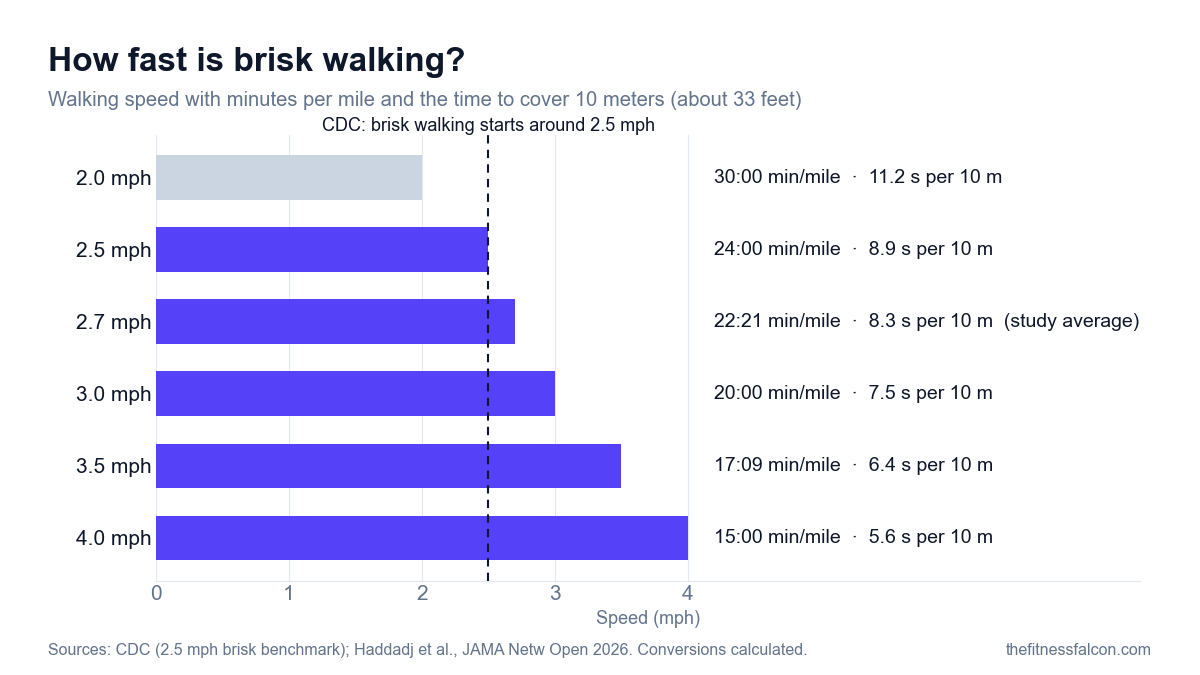
- CDC speed benchmark. The CDC lists "walking briskly (2.5 miles per hour or faster)" as moderate-intensity activity (CDC: Measuring Physical Activity Intensity).
- The talk test. At moderate intensity, you "can talk, but not sing." At vigorous intensity, you can't say more than a few words without pausing for a breath (CDC).
- Cadence. About 100 steps per minute is the research rule of thumb for moderate intensity (Tudor-Locke 2018). Individuals vary, so treat it as a guide rather than a cutoff.
- The weekly target. The Physical Activity Guidelines for Americans call for at least 150 to 300 minutes of moderate-intensity aerobic activity a week, with brisk walking as a named example. They also call for muscle-strengthening on at least 2 days a week.
| Speed (mph) | Minutes per mile | Meters per second | Time to walk 10 m | Context |
|---|---|---|---|---|
| 2.0 | 30:00 | 0.89 | 11.2 s | Below the CDC brisk benchmark |
| 2.5 | 24:00 | 1.12 | 8.9 s | CDC: brisk walking starts here |
| 2.7 | 22:21 | 1.20 | 8.3 s | Average usual pace in the Whitehall II study |
| 3.0 | 20:00 | 1.34 | 7.5 s | A comfortably brisk pace for many adults |
| 3.5 | 17:09 | 1.56 | 6.4 s | Fast walking |
| 4.0 | 15:00 | 1.79 | 5.6 s | Very fast walking; close to a jog for many people |
How to measure your own walking pace
You don't need a lab. Pick one or two of these methods and repeat them the same way every few weeks, because your own trend is more useful than comparing yourself with a study average.
- Timed 10-meter walk (usual pace). Measure 10 meters (about 33 feet) on a flat hallway or path and mark both ends. Start a few steps before the first mark so you're already at your normal pace, then time yourself from mark to mark. Divide 10 by your time in seconds to get meters per second, and use the table above to convert. Take the average of 2 or 3 tries.
- Brisk mile or track lap. On a standard 400-meter track (one lap in the inside lane is just under a quarter mile), time a lap at a pace that passes the talk test. Multiply by 4 for an approximate minutes-per-mile figure. Phone or watch GPS can do the same on a familiar route, but GPS readings can vary between devices and locations.
- 60-second step count. Once you're warmed up and walking briskly, count your steps for a full minute, or for 15 seconds and multiply by 4. If you're near 100, you're likely in moderate territory. Many fitness trackers also estimate cadence. Our comparison of Apple Watch vs. Garmin step-tracking accuracy explains why wrist counts can drift.
A sudden or unexplained slowdown in your walking is worth mentioning to your doctor, especially if it comes with new breathlessness, chest discomfort, dizziness or unsteadiness.
A simple 4-week plan to walk faster, safely
The goal is to make some of your walking brisk and build the fitness and strength that a faster natural pace reflects. This is a general starting plan, not a prescription. Adjust it to how you feel.
| Week | Walks | Main session | Also |
|---|---|---|---|
| 1 | 4 walks of 20–30 min | Record your baseline 10-m time or step count. Walk at an easy pace with 3–4 one-minute brisk segments (talk-but-not-sing) | Strength training on 2 days (for example, sit-to-stands, step-ups, wall push-ups) |
| 2 | 4–5 walks of 25–30 min | 5 brisk minutes, each followed by 2 easy minutes | Strength training on 2 days |
| 3 | 5 walks of 30 min | Two walks with 10-minute continuous brisk blocks; aim for about 100 steps/min | Strength training on 2 days |
| 4 | 5 walks of 30 min | One walk mostly brisk (about 20 minutes or more); retest your 10-m time or step count | Strength training on 2 days |
Keep building after week 4. Once five 30-minute walks a week are mostly brisk, you're at 150 minutes, the low end of the federal weekly target. Tips that help:
- Quicken your steps rather than overstriding. Shorter, quicker steps, with each foot landing under your body rather than reaching far out in front, raise your cadence.
- Use your arms. Bend your elbows and swing them naturally. Stand tall and look ahead.
- Use short walks. Brisk 10-minute walks after meals count too. See 10-minute walks after meals vs. one 30-minute walk.
- Mix in easy days. Not every walk has to be fast. Steady, conversational walking builds an aerobic base, as our guide to zone 2 cardio without a heart rate monitor explains.
- Progress slowly if you have joint, heart or lung conditions, balance problems or a recent illness. Check with your clinician first. Stop and seek care if you have chest pain, severe breathlessness or faintness.
FAQ
What walking speed is considered healthy?
There's no single official cutoff. The CDC treats 2.5 mph or faster as brisk, moderate-intensity walking. In pooled research on older adults, survival improved across the whole range of gait speeds rather than jumping at one threshold. Your own pace over time is the most useful thing to track.
Will walking faster make me live longer?
The study can't tell you that, because it was observational. What is well established is that regular moderate-intensity activity, including brisk walking, has broad health benefits, and the US guidelines recommend at least 150 minutes a week.
Is step count or walking pace more important?
Both appear useful. Total daily steps have the most consistent evidence. The 2026 study found that cadence was still linked to mortality after adjusting for steps, but an earlier US study did not find that step intensity added much once steps were counted.
How many steps per minute is brisk walking?
About 100 steps per minute is the research rule of thumb for moderate intensity in adults. In tests of 21–40-year-olds, about 130 steps per minute marked vigorous intensity.
This article is general information, not medical advice. If you have a health condition, a recent decline in mobility or symptoms during activity, talk with a qualified health professional before changing your exercise routine.
Sources
- Haddadj R, et al. Clinical Walking Speed, Free-Living Walking Cadence, and All-Cause Mortality. JAMA Network Open 2026;9(10):e2640122 (also on PubMed).
- Vetrano DL. Measuring Mobility Function in Everyday Life: Beyond the Stopwatch. JAMA Network Open 2026;9(10):e2640133 (invited commentary).
- Studenski S, et al. Gait Speed and Survival in Older Adults. JAMA 2011;305(1):50–58.
- Tudor-Locke C, et al. How fast is fast enough? Walking cadence (steps/min) as a practical estimate of intensity in adults: a narrative review. British Journal of Sports Medicine 2018.
- Tudor-Locke C, et al. Walking cadence (steps/min) and intensity in 21–40 year olds: CADENCE-adults. International Journal of Behavioral Nutrition and Physical Activity 2019.
- Tudor-Locke C, et al. Walking cadence (steps/min) and intensity in 61–85-year-old adults: the CADENCE-Adults study. International Journal of Behavioral Nutrition and Physical Activity 2021.
- Saint-Maurice PF, et al. Association of Daily Step Count and Step Intensity With Mortality Among US Adults. JAMA 2020;323(12):1151–1160.
- CDC: Measuring Physical Activity Intensity (brisk walking and the talk test).
- HHS Office of Disease Prevention and Health Promotion: Top 10 Things to Know About the Second Edition of the Physical Activity Guidelines for Americans.