

Morning runs, gym sessions, yoga or weekend cricket: if you train regularly, protein matters. The harder questions are how much you need, whether timing matters, and how to get enough from a typical Indian diet. This guide answers all three in plain language, using published nutrition guidance.
Why Protein Matters When You Exercise
Protein is made of amino acids. Your body uses them to build and maintain muscle, tendons, skin and enzymes. (New to the basics? Read what protein is and the different types.)
Exercise, especially strength training, causes small amounts of wear in muscle tissue. Over the next hours and days your body repairs and adapts, and it needs a steady supply of amino acids to do that well. Protein-rich meals also tend to keep you full for longer.
Keep three things in mind:
- It is one part of the picture. Protein works alongside training, sleep and total food intake. It is not a shortcut.
- Carbs still fuel hard sessions. Protein should complement carbohydrates, not replace them.
- Consistency beats big meals. A steady daily routine works better than a few very high-protein meals.
How Much Protein Do You Actually Need?
For healthy adults, the ICMR-NIN Nutrient Requirements for Indians (2020) set a reference intake of about 0.83 g per kg of body weight per day. That covers most of the general population.
Regular exercisers often benefit from more. The International Society of Sports Nutrition (ISSN) suggests 1.4 to 2.0 g/kg per day for most people who exercise. A widely cited 2018 meta-analysis in the British Journal of Sports Medicine found that extra protein stopped adding much to strength-training gains at about 1.6 g/kg per day.
Daily protein at a glance
| Body weight | General adult (0.83 g/kg) | Active, lower end (1.4 g/kg) | Active, higher end (1.6 g/kg) |
|---|---|---|---|
| 55 kg | about 46 g | about 77 g | about 88 g |
| 65 kg | about 54 g | about 91 g | about 104 g |
| 75 kg | about 62 g | about 105 g | about 120 g |
Treat these as ranges, not targets to hit to the gram. Your age, training load and overall diet all matter. For more worked examples, see how much protein you need per day by weight, age and goal.
Note: If you have a health condition, are pregnant, or aren't sure what suits you, ask a registered dietitian or your doctor to help set your number.
Does Timing Matter?
Your total daily intake matters more than timing. Still, how you spread protein through the day can help. The ISSN notes that 20 to 40 g per meal, every three to four hours, is a practical way to support muscle repair.
- Spread it out. Many Indian diets are light on protein at breakfast and heavy at dinner. Moving some to breakfast and lunch evens things out.
- Eat a balanced meal after training. Have protein plus carbohydrates within a couple of hours of your session.
Tip: The so-called "anabolic window" is wider than gym myths suggest, so don't panic if you eat a little later. Weighing up morning versus evening? Read the best time to consume protein.
Good Sources of Protein in an Indian Diet
Indian kitchens already have plenty of protein-rich staples. Values are approximate and vary by brand, recipe and portion.
Vegetarian options
| Food | Serving | Protein |
|---|---|---|
| Soya chunks (dry) | 50 g | about 25 g |
| Paneer | 100 g | about 18 g |
| Tofu | 100 g | about 8 to 12 g (depends on firmness) |
| Hung curd or Greek-style yoghurt | 100 g | about 8 to 10 g |
| Cooked dal | 1 katori (about 150 g) | about 7 to 9 g |
| Rajma or chole, cooked | 1 katori | about 7 to 9 g |
| Milk | 1 glass (250 ml) | about 8 g |
| Peanuts | 30 g | about 7 g |
| Roasted chana | 30 g | about 5 to 6 g |
Want more ideas? See our list of high-protein vegetarian foods.
Non-vegetarian options
| Food | Serving | Protein |
|---|---|---|
| Chicken breast, cooked | 100 g | about 28 to 31 g |
| Fish such as rohu or surmai, cooked | 100 g | about 20 to 22 g |
| Egg | 1 large | about 6 g |
A note on plant protein quality
Most plant foods are low in one or more essential amino acids on their own. The classic pairing of dal with rice or roti helps, because cereals and pulses complement each other. The ICMR-NIN Dietary Guidelines for Indians (2024) recommend combining them for this reason.
If you eat mostly vegetarian, vary your dals, dairy, soya, nuts and seeds through the week. Our guide to high-protein plant foods has more options.
A Sample High-Protein Day
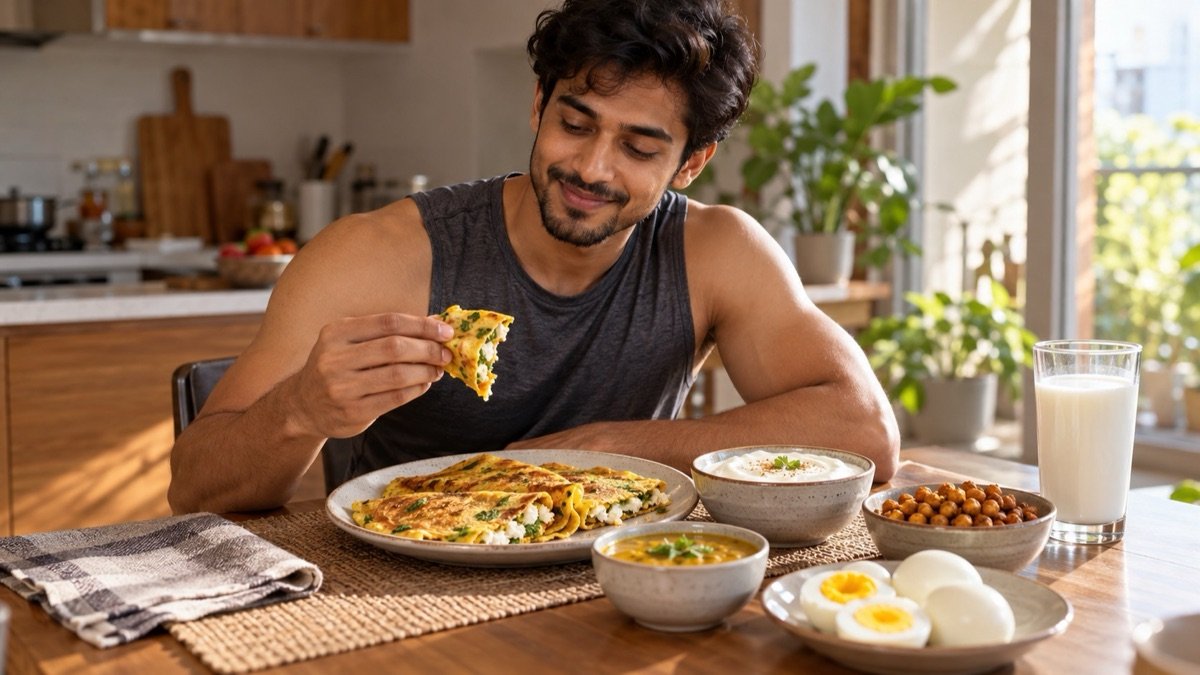
Here is an example day for someone aiming for roughly 90 to 100 g of protein. Adjust portions to your needs and appetite.
| Meal | What to eat |
|---|---|
| Breakfast | 2 moong dal chillas with paneer filling and a bowl of curd |
| Mid-morning | A handful of roasted chana and a fruit |
| Lunch | 2 rotis, a katori of rajma, mixed vegetable sabzi and salad |
| Post-workout | A glass of milk, or a smoothie made with curd and banana |
| Dinner | Grilled chicken or tofu tikka, a katori of dal, rice and sautéed vegetables |
Prefer a fully vegetarian day without supplements? Try our 100 g protein Indian vegetarian meal plan.
When a protein powder can help
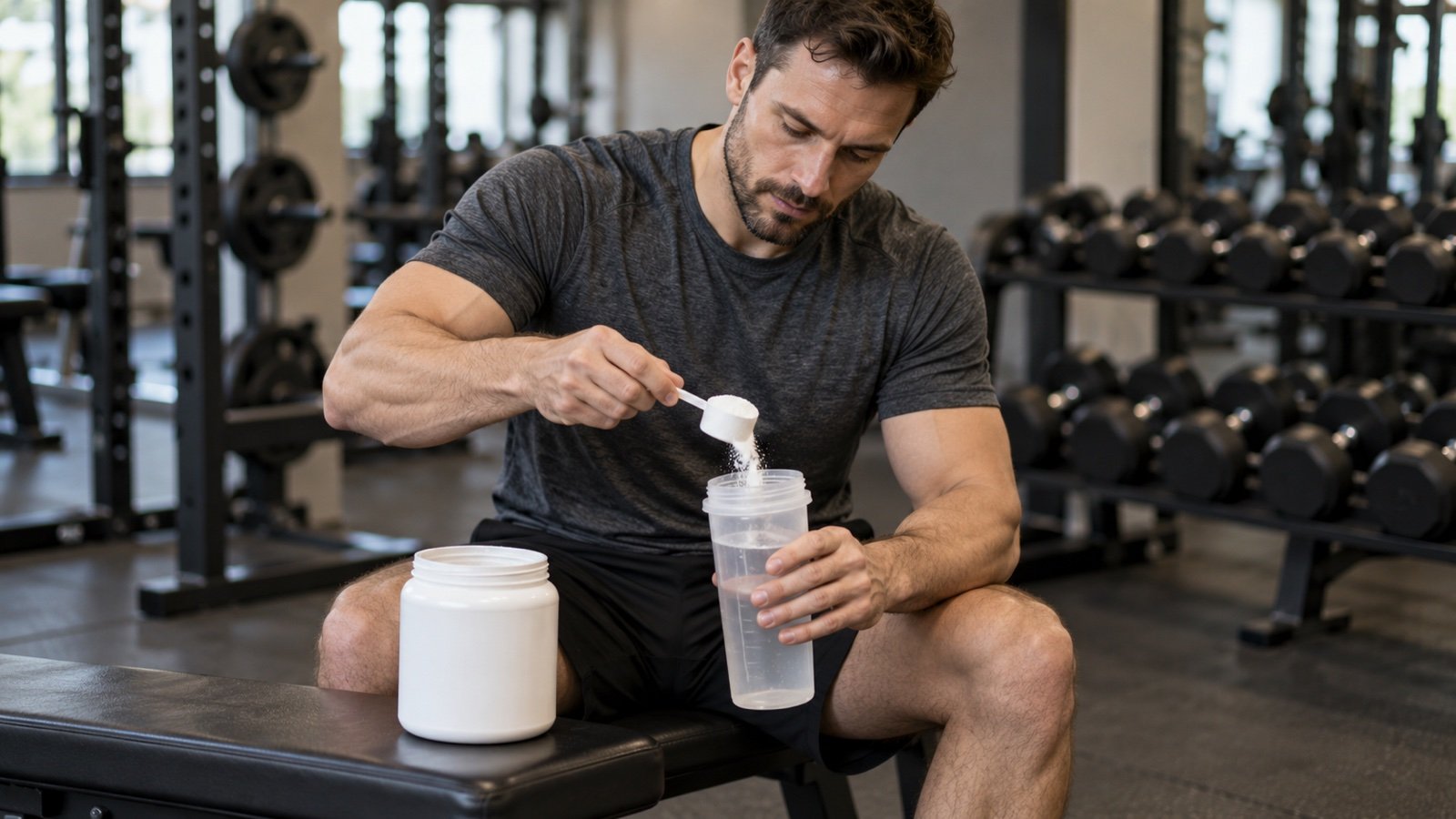
On busy days when a full meal is hard to fit in, some people top up with a protein powder. Choose a product with clear labelling and follow the serving directions on the pack. For example, Horlicks Protein Powder can be mixed into milk as a quick addition to an otherwise balanced diet.
Whole foods should still make up most of your intake.
Common Mistakes to Avoid
| Mistake | Why it matters |
|---|---|
| Back-loading protein into dinner | A light breakfast and a heavy dinner leave long gaps. Spreading intake is more practical. |
| Ignoring total calories | If you eat too little overall, your body has less to work with for recovery, however much protein you eat. |
| Relying only on supplements | Whole foods bring fibre, vitamins and minerals that a shake cannot fully replace. |
| Copying someone else's numbers | An athlete's target may not suit a beginner, and the reverse is also true. |
Frequently Asked Questions
How much protein does a 65 kg active person need?
About 91 to 104 g a day at 1.4 to 1.6 g/kg. The general adult reference intake (0.83 g/kg) works out to about 54 g.
Can vegetarians get enough protein without powder?
Yes. Paneer, curd, dal, rajma, chole, soya and tofu can cover most needs, especially when you pair cereals with pulses and spread intake across meals.
Do I need protein immediately after a workout?
No. A balanced meal with protein and carbohydrates within a couple of hours of training is enough. Total daily intake matters more than exact timing.
How much protein should I eat per meal?
The ISSN suggests roughly 20 to 40 g per meal, every three to four hours.
The Bottom Line
Bottom line: You don't need an extreme diet to meet your protein needs. Know your rough daily range, spread protein across meals, lean on dal, paneer, curd, eggs and soya, and keep the rest of your diet balanced. Consistency over weeks and months matters far more than any single meal.
Sources and References
- ICMR-National Institute of Nutrition. Nutrient Requirements for Indians: Recommended Dietary Allowances and Estimated Average Requirements, 2020.
- ICMR-National Institute of Nutrition. Dietary Guidelines for Indians, 2024.
- Jäger R, et al. International Society of Sports Nutrition Position Stand: Protein and Exercise. Journal of the International Society of Sports Nutrition, 2017.
- Morton RW, et al. A systematic review, meta-analysis and meta-regression of the effect of protein supplementation on resistance training-induced gains in muscle mass and strength in healthy adults. British Journal of Sports Medicine, 2018.
Disclaimer: This article is for general educational purposes and is not a substitute for personalised advice from a qualified health professional.
Contributed by Team Horlicks Protein India, which shares practical, evidence-informed nutrition content to help Indian families and active adults understand protein and build balanced everyday eating habits.