

You can increase fibre in an Indian diet without replacing every meal with a salad or buying a bag of expensive seeds. Start with a meal you already eat, choose one change you can repeat, and build from there.
A practical first step: add a small serving of a pulse or vegetable to a meal that lacks one, or choose a wholegrain version of a staple you use regularly. Keep that change comfortable before making the next. This guide gives meal ideas and a method for checking portions; it is not a calculated meal plan or a treatment for persistent digestive symptoms.
How much fibre should you aim for?
The NHS describes 30 g a day as UK adult guidance. It is a useful reference point, not a universal Indian prescription or a target you must reach tomorrow. The US NIDDK guidance gives 22–34 g for adults, depending on age and sex. Your medical history and tolerance also matter.
Start by looking at your current meals rather than guessing a total. Is there usually a pulse, wholegrain, fruit, or vegetable at each eating occasion? Which one is easiest to add consistently? Children need age-specific guidance; these suggestions are written for adults.
The British Dietetic Association recommends increasing fibre gradually because abrupt changes can cause gas or bloating. There is no need to compete to eat the most fibre in a day.
Six meal swaps that fit familiar Indian food
The ideas below adapt the food groups recommended by the NIDDK and the NHS. They are serving suggestions created for this article, not exact nutrient comparisons. Choose one to start, not all six together.
| If your meal usually looks like this | Try this change | Make it practical |
|---|---|---|
| Poha on its own | Add peas or a vegetable side | Use a small amount of frozen peas when time is short. |
| White toast for breakfast | Try wholemeal toast with a fruit you enjoy | Check the bread's ingredients instead of choosing by colour. |
| Rice with only a small spoon of dal | Add a modest extra serving of dal or cooked vegetables | Keep rice if you like it; improve the whole plate. |
| Roti with a paneer dish alone | Include a vegetable dish and use whole-wheat atta where suitable | Rotate vegetables rather than making one compulsory. |
| Idli or dosa without a substantial side | Serve it with vegetable-rich sambar | Make the side part of the meal, not a garnish. |
| Tea with biscuits every afternoon | On some days, have fruit or a small portion of roasted chana | Choose a portion that leaves room for your next meal. |
You do not have to stop eating rice, roti, or dosa. A meal is more than its staple. Changing a side dish can be a more workable first step than changing a food your household cooks every day.
A gradual starter plan, with no fixed deadline
This is a habit-building sequence, not a medical schedule. Stay at any stage longer if it suits you. The BDA's advice on gradual increases and individual tolerance supports taking a measured approach; the specific sequence here is our example.
- Observe a normal day. Write down meals, approximate portions, drinks, and any symptoms. Do not judge the day as “good” or “bad”; you are finding a starting point.
- Choose one repeatable change. Pick one option from the meal table. Buy only what you need for it.
- Repeat and check comfort. Keep the change for several meals before adding another. Note whether the new food and portion work for you.
- Add variety. Once comfortable, choose a different food group at another meal: for example, fruit at breakfast if your first change was dal at lunch.
- Review the whole routine. Look at portions, appetite, fluid intake, and symptoms. More changes are not automatically better.
Drink fluids regularly as you build your intake. NIDDK notes that fluid needs depend on the person and their situation. If you have been given a fluid restriction, follow that advice rather than a generic “drink several litres” rule.
Three flexible meal ideas
These are original assembly ideas, not tested recipes or a promise that a particular plate supplies 30 g of fibre. Adjust the amount to your appetite, other meals, dietary needs, and tolerance.
1. Vegetable poha with a pulse side
Prepare your usual poha with a vegetable you already buy, such as carrot or peas. If you tolerate pulses, add a small side of cooked chana rather than turning breakfast into a large mixed-bean bowl. Keep seasonings familiar so the change is easy to repeat. If mornings are busy, plan the side when you prepare another pulse dish.
Different starting point? If breakfast is normally oats or toast, keep that routine and use fruit alongside it. The purpose is a repeatable change, not a compulsory Indian breakfast.
2. A rice, dal, and sabzi lunch
Put rice, dal, and a cooked vegetable dish on the plate rather than eating rice with only the watery part of a curry. If you are increasing pulses, start with a portion you tolerate and keep the rest of lunch familiar. Do not add chana, rajma, a large raw salad, and extra bran all on the same day just to chase a number.
Household tip: if everyone shares the same rice, vary your sides instead of cooking a second pot only for yourself. It removes a planning obstacle without requiring a new staple.
3. A roti meal with two simple sides
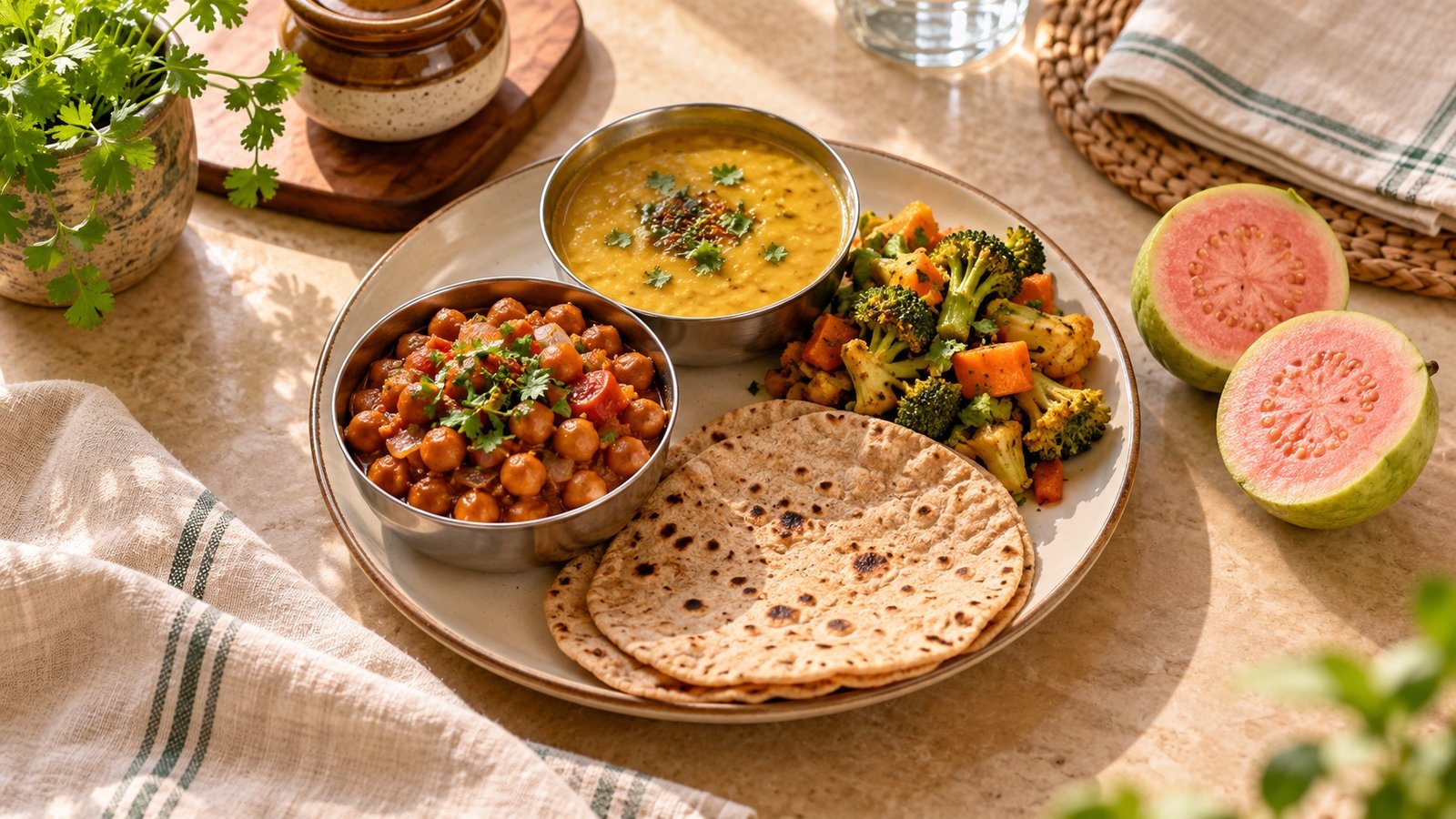
Use whole-wheat atta if it fits your diet and pair rotis with one pulse dish and one cooked vegetable dish. If you also want curd or a paneer preparation, it can remain part of the meal; it does not replace the plant-food choices in this fibre-focused example. One familiar pulse and one affordable seasonal vegetable are enough to make a workable shopping list.
Alternative: use vegetable-rich sambar with your usual idli or dosa if that is the meal you cook most often. There is no prize for changing cuisines.
Why fibre numbers for Indian dishes can be misleading
Two bowls of “dal” can use different pulses, different amounts of water, and different serving sizes. A chapati can be small or large, and its flour can be whole wheat or a blend. A number attached only to the dish name leaves out information you need.
The NHS cautions that fibre amounts depend on preparation and how much you eat. When comparing products or food records, check:
- The food state: dry ingredients and cooked foods are not interchangeable in a per-100-g comparison.
- The serving: per 100 g is not the same as per katori, chapati, packet, or plate.
- The recipe: the amount of actual pulse, vegetable, or flour matters more than the dish name.
- The label: use the portion you actually eat, not automatically the manufacturer's serving.
A worked label example: suppose a packet lists 8 g of fibre per 100 g and you eat 40 g of that product. The arithmetic is 8 × 40 ÷ 100 = 3.2 g. This is a hypothetical label, not the fibre content of a specific brand. Apply the label in the food state it describes.
If you want to estimate a homemade dish, total the fibre in its measured ingredients using a consistent food-composition source, then divide by the number of portions you actually serve. Treat the result as an estimate. Do not add an uncooked ingredient value to a cooked serving value for the same food.
What if the extra fibre makes you uncomfortable?
If symptoms begin after a large dietary change, pause further increases and make a note of what changed. Do not assume you have an intolerance from one meal or remove several food groups at once. The BDA advises individual guidance for people with IBS, diarrhoea, constipation, or conditions that restrict fibre intake. A clinician or dietitian can help choose the amount and type that fit you.
Persistent constipation is not always a fibre problem. NIDDK describes multiple possible causes and recommends medical assessment if self-care does not help. Seek prompt medical help for constipation with blood in the stool, constant abdominal pain, vomiting, inability to pass gas, or unexplained weight loss. Do not respond to those symptoms by adding another large serving of fibre.
Common questions
Do I need to buy chia seeds or a fibre supplement?
No special seed is required for the meal ideas here. Start with foods you already use and can afford. If a professional recommends a supplement for a specific reason, follow their instructions; this guide does not recommend a product or dose.
Is brown-looking bread always wholegrain?
Colour alone is not enough to make that choice. Read the ingredient list and compare fibre for the same quantity of bread. A marketing phrase on the front does not tell you how much your serving contributes.
Can I keep white rice?
Yes. You can work on the whole meal by including pulses and vegetables, and try a wholegrain staple at another meal if it suits you. A plan you can use repeatedly is more helpful than a list of swaps you dislike.
Does a higher-fibre diet guarantee weight loss or cure constipation?
No. This article gives food choices and planning tools, not a guaranteed outcome. If you are also organising vegetarian protein, our Indian vegetarian protein planning guide explores that separate question; do not treat either example as an individually prescribed diet.
Your next meal: a short checklist
- Pick one change from the meal table.
- Start with an amount you can comfortably eat.
- Keep the rest of the meal familiar.
- Repeat before adding another change.
- Get individual advice if symptoms persist or you have a prescribed dietary restriction.
Sources and editorial notes
Sources checked on 6 October 2026. Meal combinations, the starter sequence, and the label calculation are illustrative examples created for this article. No nutrient analysis of the example meals or independent clinical review is claimed. Read our editorial and corrections policy.